



|
Getting your Trinity Audio player ready...
|
Kosher Kids Left Behind? DOE Under Fire for Unequal Outreach in NYC Summer Meal Program
By: Fern Sidman
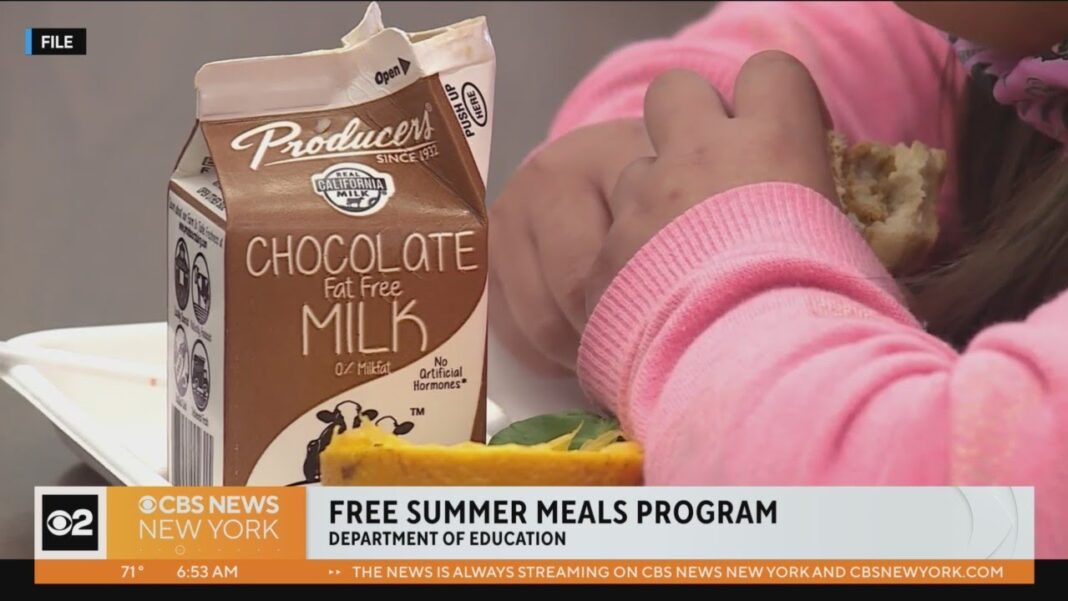
As temperatures rise and school lets out across New York City, the Department of Education has proudly rolled out its annual summer meal program—promising free breakfasts and lunches to any youth under 18 at hundreds of public locations. From pools and parks to libraries and school cafeterias, the initiative is being heralded as an egalitarian effort to combat child hunger across the five boroughs.
But as The New York Post reported on Saturday, a glaring omission has ignited controversy: while halal meals are featured prominently across the DOE’s digital and physical promotional materials, kosher food—vital for observant Jewish children—is not advertised at all and must be “specially ordered,” according to education officials.
The disparity has led Jewish advocacy groups and community members to accuse the city of failing to provide equitable access to religiously appropriate food. Karen Feldman, a veteran DOE educator and co-founder of the NYCPS Alliance, expressed sharp dismay.
“The DOE’s clear promotion of halal options alongside silence on kosher meals highlights a gap that needs urgent attention,’’ Feldman told The New York Post. “Jewish families who keep kosher deserve the same outreach to feel fully included in this important program.”
While halal meals are openly listed at more than 25 locations across the city and are available to anyone who arrives, kosher meals are not included on the DOE’s website or distributed materials. Officials told The Post that kosher meals can be made available upon request, but added, somewhat defensively, “We do not currently have any applications for kosher meals.”
Critics say that’s no excuse for the lack of visibility. “It’s a self-fulfilling prophecy,” Feldman argued. “If parents don’t even know kosher food is an option, why would they request it?”
This isn’t the first time the DOE has faced scrutiny over religious food equity. During the height of the COVID-19 pandemic in 2020, the City Council’s Jewish Caucus confronted Mayor Bill de Blasio’s administration for similarly omitting kosher options in a free citywide meal initiative. Following public outcry, the city added limited kosher availability—but advocates say the commitment has remained tenuous ever since.
The DOE, in its current rollout, has not clarified how it procures or prepares halal or kosher foods, nor has it disclosed whether these are freshly made, prepackaged, or contracted through third-party vendors.
Jenna Lyle, a DOE spokeswoman, issued a broad statement celebrating the program’s return. “We are thrilled that our summer meals program is returning this year, making sure that our youngest New Yorkers are fed and nourished,” she said. But she declined to elaborate on questions posed by The New York Post regarding kosher inclusion and food sourcing.
The stakes are not trivial. As Gabriel Aaronson, director of policy and research for the non-profit advocacy group Teach Coalition, pointed out, more than 105,000 students are currently enrolled in private Jewish day schools across the city. While DOE doesn’t track religious affiliation among public school attendees, it’s estimated that as many as 100,000 public school students are Muslim—roughly 10% of enrollment—indicating a large and diverse cohort of religiously observant children.
Importantly, poverty does not discriminate by religion. According to the Metropolitan Council on Jewish Poverty, over 325,000 New Yorkers rely on their services, which include culturally appropriate emergency food—both kosher and halal. A significant percentage of observant Jewish families live at or below the poverty line and often depend on free meal programs during the summer months when school is out.
“To ignore kosher needs is to marginalize an entire segment of New York City’s vulnerable youth,” Aaronson told The Post. “We’re not asking for special treatment. We’re asking for equal treatment.”
The DOE’s halal offerings, detailed in public menus, include items such as egg and cheese sandwiches, waffles, chicken tenders, pizza, beef patties, and falafel—all labeled as compliant with Islamic dietary laws. These meals are distributed freely and require no advance notice or paperwork.
In contrast, kosher meals—when requested—feature more modest options: breakfast includes a muffin, granola or cereal, yogurt, an apple, and milk; lunch consists of hummus, tuna or egg salad, whole wheat bread, grape tomatoes, apple, and milk. Though technically available, these meals remain obscured by a bureaucratic hurdle: the parent or guardian must know to request them first.
At the heart of the debate is a question of civic parity. For many parents and community leaders, the issue is not that halal meals are available and celebrated, but that kosher meals are hidden behind a wall of silence.
“If the city can actively promote halal meals with signage, online maps, and targeted outreach, then why is kosher kept as a whispered secret?” asked Feldman.
With a school food budget of $600 million annually, according to DOE estimates, critics argue that the city can and should afford to extend visibility, availability, and dignity to all religiously observant children—not just those in more politically vocal or organized constituencies.
As New York City enters another summer of economic uncertainty, food insecurity, and cultural flux, the fight over a simple sandwich becomes something larger: a referendum on the city’s commitment to fairness, inclusion, and the equal dignity of every child.
For now, though, if your child keeps kosher, you’ll have to ask—and hope the system remembers you exist.
