



|
Getting your Trinity Audio player ready...
|
By: Bob Meister
In the labyrinthine corridors of Brooklyn’s state courts, where the gravity of the law is meant to anchor justice firmly in place, a case involving more than $2 million in allegedly missing investor funds has instead become a spectacle of recusals, procedural detours, and mounting public unease. As The New York Post reported on Wednesday, at least four Brooklyn judges have now stepped aside from a single, festering lawsuit—an extraordinary development that has raised uncomfortable questions about conflicts of interest, political influence, and the integrity of the judicial process itself.
The case at the center of this legal maelstrom involves a pair of international investors, a Brooklyn attorney entrusted with their money, and a longtime Democratic power broker whose shadow looms large over local politics. What began as a seemingly straightforward escrow arrangement has metastasized into a saga that reads less like a routine civil dispute and more like a cautionary tale about the fragility of public trust when the justice system appears to bend inward upon itself.
According to accounts first detailed by The New York Post, the controversy traces back to last year, when Swiss investor Angelos Metaxas and a New Zealand-based firm, Pertshire Investments LP, placed approximately $2 million into escrow. The funds were deposited with Brooklyn attorney Mark David Graubard, ostensibly to demonstrate financial bona fides for a prospective business venture involving real estate investor Sam Sprei, a figure with documented ties to former Brooklyn Democratic Party chairman Frank Seddio.
The arrangement, on its face, was unremarkable. Escrow accounts exist precisely to safeguard funds pending the completion—or collapse—of business negotiations. Yet when the deal failed to materialize and the investors sought the return of their money, the situation took an alarming turn. They allege that Graubard stalled repeatedly and refused to provide even basic proof that the funds remained intact.
As The New York Post has reported, the investors signaled their intent to alert authorities to what they believed might constitute theft. It was at this juncture that the legal terrain shifted dramatically. Rather than the matter proceeding through conventional investigative channels, Seddio initiated a lawsuit in Brooklyn Supreme Court—an action that swiftly resulted in a restraining order blocking the investors from pursuing recovery efforts or reporting the matter further.
To critics, the maneuver appeared calculated, a procedural gambit designed to freeze the status quo and place the investors on the defensive. To supporters, it was a legitimate legal strategy. But as The New York Post report indicated, what followed strained credulity even among seasoned court observers.
Judicial recusals are not uncommon; judges routinely withdraw from cases to avoid even the appearance of impropriety. But four recusals in a single case—five judges assigned in total—are exceedingly rare, particularly in a matter that has yet to reach substantive adjudication.
The most recent round of recusals unfolded with almost theatrical timing. Brooklyn Supreme Court Judge Richard Montelione stepped aside on Tuesday, just as he was reportedly poised to issue an arrest warrant related to the missing funds and consider sanctions against Seddio. The reason was a newly revealed conflict: Seddio had retained attorney Arthur Aidala—or, as clarified in later reporting, an attorney coincidentally representing Montelione in an unrelated lawsuit challenging the state’s judicial retirement rules.
The overlap was sufficient to trigger immediate recusal. Montelione’s withdrawal, however, was only the opening act. Within hours, Judge Richard Velasquez also recused himself, offering no public explanation. The case was then reassigned yet again, landing in the courtroom of Judge Francios Rivera, now the fifth jurist to preside over the matter.
The optics, as The New York Post report observed, are troubling. Each recusal, individually defensible, collectively paints a picture of a system struggling to maintain the appearance of impartiality in a case entangled with political prominence.
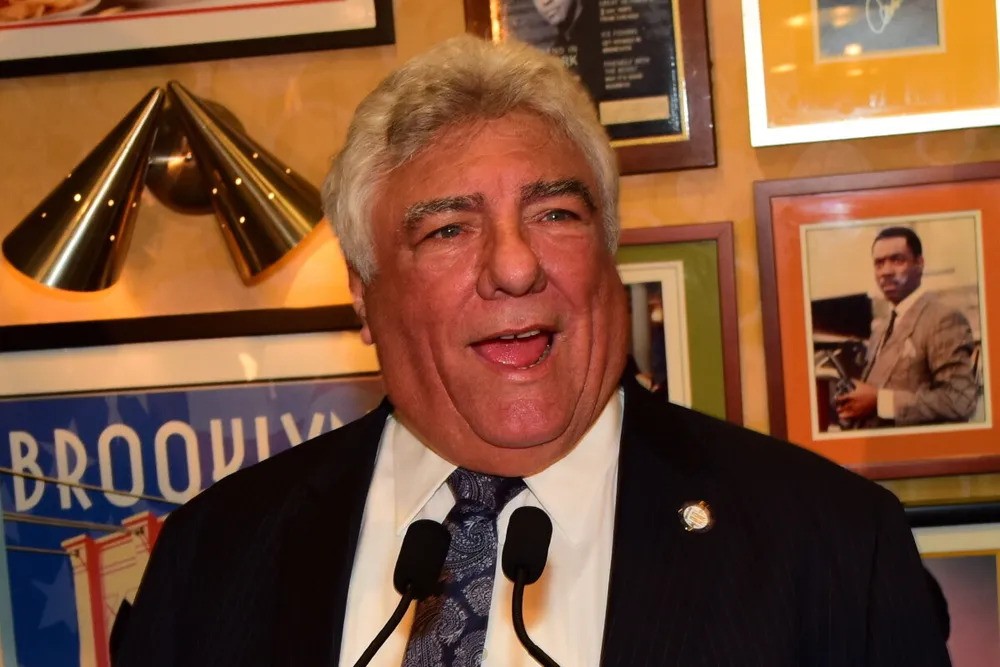
At the center of the storm stands Frank Seddio, a former Brooklyn Democratic Party chairman whose influence once extended deep into the borough’s political machinery. Seddio has consistently downplayed his role in the dispute, insisting that he has “nothing to do with this case” and dismissing the investors with characteristic bluntness.
“Oh really, I had no idea,” Seddio told The New York Post when informed of the conflict that prompted Montelione’s recusal. “I thought that case was dismissed.” He went further, expressing confidence in Judge Rivera and praising him as “one of the best judges on the bench.”
Seddio has also sought to distance himself from Graubard, despite records indicating that the two men have appeared together in at least two other state court lawsuits. “If you brought him into my office now,” Seddio told The New York Post, “he’d have to reintroduce himself.”
Such statements, while emphatic, have done little to quell skepticism. For critics, the repeated recusals and procedural delays reinforce the perception that political proximity can warp the ordinary flow of justice, even if no explicit wrongdoing is ultimately proven.
Neither Graubard nor his attorney, Israel Goldberg, responded to requests for comment, a silence that has only deepened suspicion. As The New York Post has chronicled, the investors’ frustration has spilled into federal court, where they have filed a separate lawsuit alleging a coordinated effort to obstruct their attempts to reclaim the escrowed funds.
Attorney Lauren Zimmerman of Selendy Gay, representing the investors, has not minced words. “No person, let alone an attorney who wishes to remain one, would go to these lengths—violating multiple court orders and being held in contempt for doing so—to avoid providing a few simple records unless those records show something he absolutely does not want others to see,” Zimmerman said, according to The New York Post report.
Her remarks cut to the heart of the matter. At stake is not merely the fate of $2 million, but the credibility of a legal system that relies on transparency and compliance to function.
Beyond the immediate parties, the case has become a proxy for larger anxieties about governance and accountability in New York City. As The New York Post has repeatedly emphasized, public confidence in institutions erodes not only when corruption is proven, but when processes appear opaque, inconsistent, or overly accommodating to insiders.
The unusual carousel of judges has fueled speculation, even as no evidence has emerged of coordinated misconduct. Yet perception matters. For ordinary citizens watching from afar, the question is not whether every recusal was justified—it likely was—but why so many were necessary in the first place.
Legal scholars note that high-profile defendants often generate conflicts simply by virtue of their extensive professional networks. Still, the concentration of recusals in this case is difficult to dismiss as mere coincidence. Each withdrawal delays resolution, prolongs uncertainty, and amplifies the sense that justice is slipping through procedural cracks.
Now under the stewardship of Judge Francios Rivera, the case enters yet another chapter. Whether Rivera can steer the matter toward substantive resolution remains to be seen. What is clear is that the scrutiny will not abate.
For the investors, the objective is simple: the return of their money, or at least a clear accounting of its whereabouts. For the courts, the challenge is more profound—demonstrating that even in cases touching political power, the rule of law remains paramount.
As attorney Zimmerman put it, “We are hopeful that the state court system will not tolerate this type of brazen abuse of its process—that it won’t let the public believe that the rule of law has no place in New York City.” Her words, echoed in The New York Post’s coverage, resonate beyond this single dispute.
In Brooklyn, where judicial robes and political ties have collided in unusually visible fashion, the coming months may determine whether this case becomes a footnote in legal history—or a defining example of how fragile public trust can be when justice appears to hesitate at its own threshold.