



|
Getting your Trinity Audio player ready...
|
By: Carl Schwartzbaum
The Kennedy dynasty, long a fixture in American political life, may soon have a new heir entering the electoral arena. Jack Schlossberg, the only grandson of President John F. Kennedy, announced Sunday that he is forming a committee to explore a run for New York’s 12th Congressional District. The seat, suddenly open following Rep. Jerry Nadler’s decision not to seek an 18th term, has already drawn intense interest. But the entry of a Kennedy scion, just 32 years old, promises to transform an already crowded race into a national spectacle.
According to a report that appeared on Sunday in The New York Post, Schlossberg’s announcement follows weeks of speculation and a curious prelude: a poll posted on his Instagram account. Ninety-one percent of his followers, he said, encouraged him to take the plunge into electoral politics. For a figure who has straddled the line between serious political commentator and social media eccentric, the move was at once expected and eyebrow-raising.
Schlossberg’s entry into the race represents the continuation of a political dynasty that, for decades, has captivated the American imagination. As the son of Caroline Kennedy, former U.S. Ambassador to Japan and current envoy to Australia, Schlossberg carries a name that evokes the legacy of Camelot, even if his own resume is more eclectic.
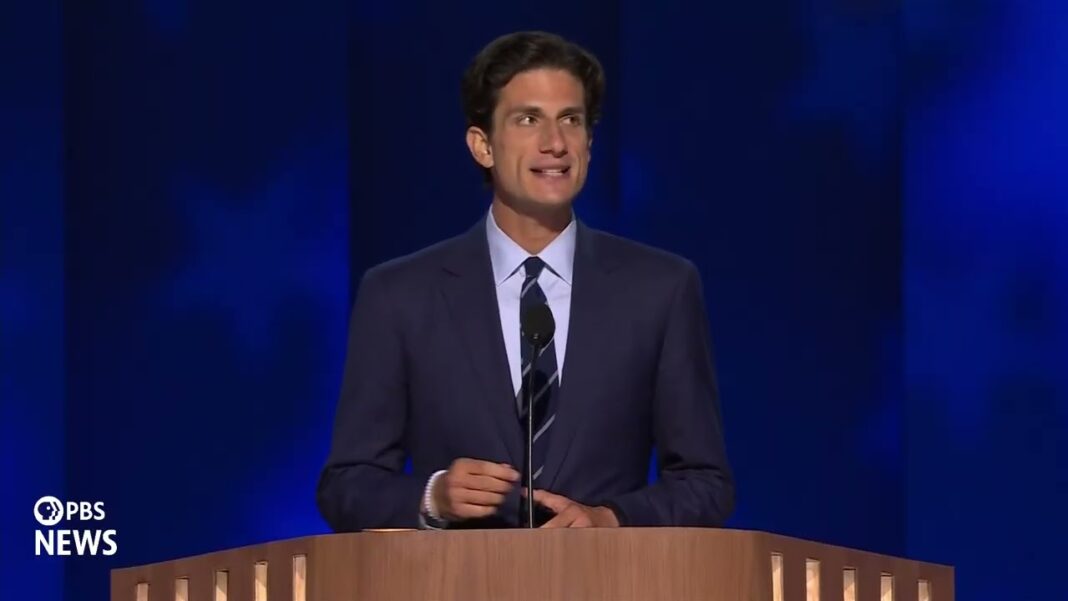
A graduate of Harvard and Yale Law School, Schlossberg has spoken at Democratic National Conventions and carved out a modest role as a political commentator. Yet his public persona has also been defined by unconventional antics, which The New York Post has covered extensively — from foul-mouthed tirades against Elon Musk’s Department of Government Efficiency (DOGE) to bizarre musings about whether Vice President J.D. Vance’s wife is “hotter” than his grandmother, Jacqueline Kennedy Onassis.
The contradictions in Schlossberg’s public life — part serious thinker, part oddball internet presence — will now come under sharper scrutiny as he weighs a run in one of the country’s most closely watched congressional districts.
Rep. Jerry Nadler’s retirement announcement after 18 terms in Congress set off a scramble among New York Democrats. The veteran lawmaker, a stalwart progressive who chaired the House Judiciary Committee during Donald Trump’s first impeachment, was expected to run again. His decision to step aside has cracked open a rare opportunity in a Manhattan district that has historically been a Democratic stronghold.
As Axios first reported and The New York Post report reiterated, Schlossberg’s move immediately reshaped the field. Nadler has already signaled support for Assemblyman Micah Lasher, a well-connected figure in New York politics who is expected to inherit much of Nadler’s institutional backing. Also in the race is Liam Elkind, a 26-year-old community organizer and nonprofit leader who has pitched himself as the energetic face of a younger Democratic generation.
The addition of Schlossberg, however, brings not just another competitor but a political celebrity whose candidacy will draw national media, donors, and scrutiny.
Ironically, just days before Schlossberg’s exploratory committee was announced, Nadler himself dismissed the idea of a Kennedy successor in his seat. In remarks highlighted by The New York Post, Nadler criticized Schlossberg as a “nepo baby” with little to show for himself.
“Well, there’s nothing particularly good or bad about a Kennedy holding my seat,” Nadler said on CNN. “But the Kennedy, unlike Schlossberg, should be somebody with a record of public service, a record of public accomplishment, and he doesn’t have one. And so, I don’t think he’s going to be a candidate in the end, and he certainly is not going to be a major candidate.”
That skepticism reflects a broader sentiment in New York politics: that name recognition, while powerful, is not enough to win in a city where political alliances, grassroots organizing, and credibility within progressive circles matter as much as celebrity lineage.
If Schlossberg does run, he will bring with him a complicated track record in the public eye. His criticisms of his uncle, Robert F. Kennedy Jr. — currently serving as Secretary of Health and Human Services in President Trump’s administration — have been widely circulated. Schlossberg has accused him of betraying both science and the Kennedy family legacy with his longstanding vaccine skepticism and political realignment.
At the same time, Schlossberg has courted controversy through social media rants that often veer into the absurd. Earlier this year, he lashed out at Musk’s DOGE initiative, telling the billionaire on X (formerly Twitter) to “eat s—t,” a moment The New York Post described as emblematic of his unpredictable online persona.
These antics, while entertaining to some, could prove damaging in a congressional campaign where discipline and gravitas are valued.
Despite the eccentricities, Schlossberg has made strategic inroads with top Democrats in New York. Senate Majority Leader Chuck Schumer tapped him last month to join the America 250 Commission, tasked with preparing for the nation’s 250th anniversary celebrations. The appointment signaled that, for all his quirks, Schlossberg is viewed by party leadership as a figure worth cultivating.
According to the information provided in The New York Post report, Schlossberg has also been quietly building relationships with influential New York Democrats, leveraging his Kennedy name while seeking to position himself as part of a younger generation ready to assume leadership.
If he makes the run official, Schlossberg will face an uphill battle in a district that is both competitive and highly scrutinized. Micah Lasher, widely seen as Nadler’s heir apparent, will carry the blessing of much of the Democratic establishment. Liam Elkind, though younger and less known, has already carved out a profile as a reform-minded activist critical of the old guard.
For Schlossberg, the challenge will be proving that his candidacy is more than dynastic branding. As The New York Post report pointed out, he has yet to hold elected office or accumulate a record of public service. His law degree and high-profile family name may impress, but they will not automatically secure votes in a district where local issues and grassroots networks dominate.
The Kennedy name remains one of the most powerful in American politics, but it carries both advantages and burdens. On the one hand, Schlossberg will enjoy instant recognition, the ability to raise money nationally, and the aura of a family synonymous with liberal Democratic politics. On the other hand, he will face inevitable skepticism about whether he has earned his place or is merely trading on his family’s history.
The New York Post has long documented how the “nepo baby” label, once reserved for Hollywood, has seeped into politics. Schlossberg’s candidacy may become a test case for whether voters are still swayed by dynastic ties or demand concrete records of service and accomplishment.
At 32, Schlossberg has time on his side. He is young enough to make mistakes and recover, and his entry into the 12th District race could be framed as part of a generational shift. But the stakes are high. If he falters badly, the Kennedy brand could suffer further erosion, reinforcing the notion that the family’s political magic has faded. If he succeeds, however, it could mark the beginning of a new chapter for the dynasty, this time rooted in New York City rather than Massachusetts.
According to the report in The New York Post, Schlossberg’s flirtation with public office has already sparked chatter across the city’s political landscape. Whether his exploratory committee becomes a full-fledged campaign will depend on how he calculates the risks and opportunities in the coming weeks.
Jack Schlossberg’s decision to explore a run for Congress in New York’s 12th District sets up what could be one of the most closely watched House races in the country. With Jerry Nadler stepping aside after more than three decades, the field is wide open. Schlossberg’s presence ensures that the race will be infused with national attention, nostalgia for the Kennedy legacy, and fierce debates about merit, dynasty, and the future of the Democratic Party.
As The New York Post report observed, Schlossberg embodies both the promise and the peril of political celebrity: a young man with elite credentials, famous lineage, and a flair for the unorthodox — but also someone with little public service record and a penchant for controversy. Whether voters in Manhattan will embrace him as the heir to a legendary political family or dismiss him as a “nepo baby” remains to be seen.
What is clear is that Schlossberg has already succeeded in making a race that was going to be competitive into one that is destined to be a political and media spectacle. In the coming months, New York will decide whether Camelot still has a place in the House of Representatives.

Who didn’t see this coming? Unwelcome, for sure and dumb as a brick.