



|
Getting your Trinity Audio player ready...
|
Edited by: TJVNews.com
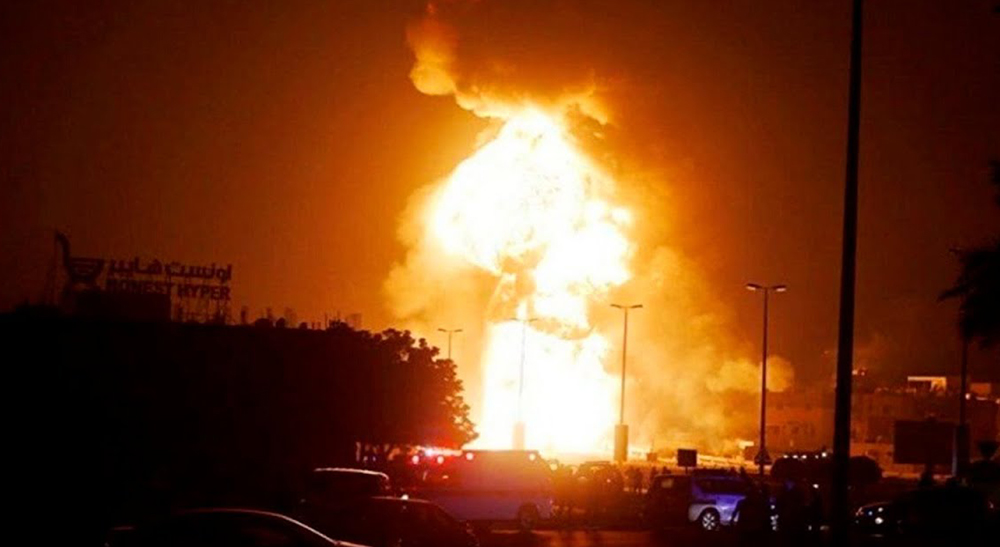
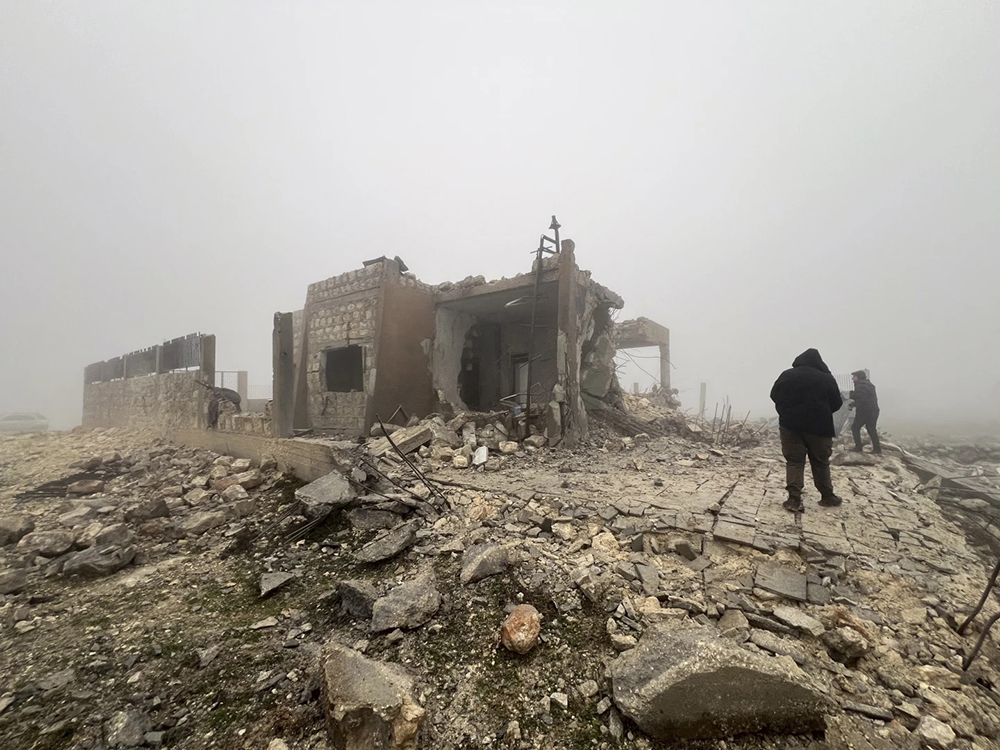
Iran fired missiles late Monday at what it claimed were Israeli “spy headquarters” near the U.S. Consulate in the northern Iraqi city of Irbil, and at targets linked to the terror group Islamic State in northern Syria, as was reported by the Associated Press.
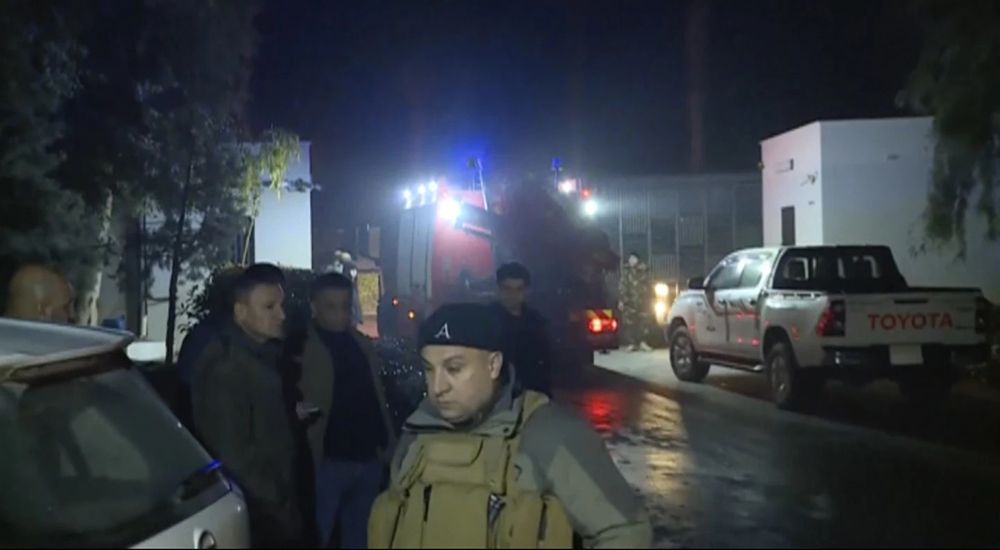
Four civilians were killed and six injured after missiles hit an upscale area near the consulate in Irbil, the seat of Iraq’s semi-autonomous Kurdish region, according to the security council of the Kurdish regional government.
Iran’s Revolutionary Guards said in a statement that it had hit a headquarters of Mossad, the Israeli intelligence agency, in the Kurdish region of Iraq, according to the AP report. Another statement said it had fired a number of ballistic missiles at “terrorist operations,” including Islamic State targets, in Syria and destroyed them.
The AP noted that Israel did not immediately acknowledge the attack in Irbil and its embassy in Washington did not return a request for comment on the Iranian allegation regarding the Mossad.
The strikes come at a time of heightened tensions in the region and fears of a wider spillover of the ongoing war in Gaza.
Since the outbreak of the Israel-Hamas war on Oct. 7, Iranian-backed militias in Iraq have launched near-daily drone attacks on bases housing U.S. forces in Iraq and Syria, which the groups have said was in retaliation for Washington’s support of Israel, and in an attempt to force U.S. troops to leave the region, as was indicated in the AP report.
The United States strongly condemns “Iran’s reckless missile strikes” in Irbil, said State Department spokesman Matthew Miller. He said the attacks “undermine Iraq’s stability.”
A U.S. defense official who spoke to the AP on condition of anonymity to discuss details that had not been made public said the U.S. tracked the missiles, which hit in northern Iraq and northern Syria, and no U.S. facilities were struck or damaged in the attacks. The official said initial indications were that the strikes were “reckless and imprecise.”
However, the full extent of the damage from the strikes could not be independently assessed.
An Iraqi security official said Irbil was targeted with “several” ballistic missiles but did not give further details. The AP report also said that an official with an Iranian-backed Iraqi militia said 10 missiles fell in the area near the U.S. Consulate. He said the missiles were launched by Iran’s Revolutionary Guards. Both officials spoke to the AP on condition of anonymity.
Peshraw Dizayi, a prominent local businessman with a portfolio that included real estate and security services companies, was killed in one of the Irbil strikes along with members of his family, according to a post on X, formerly known as Twitter, by Mashan al-Jabouri, a former Iraqi member of parliament, the AP reported. Al-Jabouri said that one of the missiles had fallen on Dizayi’s “palace, next to my house, which is under construction on the road to the Salah al-Din resort.”
Other regional political figures also confirmed Dizayi’s death.
According to the information provided in the AP report, in 2022, Iran claimed responsibility for a missile barrage that struck in the same area near the sprawling U.S. Consulate complex in Irbil, saying it was retaliation for an Israeli strike in Syria that killed two members of its Revolutionary Guard.
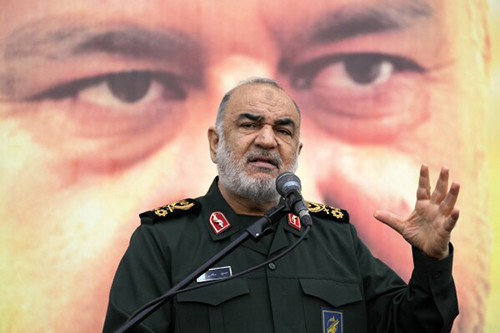
Iran’s strike in northern Syria late Monday came after the Islamic State group claimed responsibility earlier this month for two suicide bombings targeting a commemoration for an Iranian general slain in a 2020 U.S. drone strike. The AP said that the attack in Kerman killed at least 84 people and wounded an additional 284 at a ceremony honoring Revolutionary Guard Gen. Qassem Soleimani.
Last month, Iran accused Israel of killing a high-ranking Iranian general, Seyed Razi Mousavi, in an airstrike on a Damascus neighborhood.
Also on Tuesday, the AP reported that the U.S. launched a new strike against the Yemen-based Houthis, hitting anti-ship missiles in the third assault on the Iranian-backed group in recent days, a U.S. official said.
The strike came as the Iranian-backed Houthis claimed responsibility for a missile attack against the Malta-flagged bulk carrier Zografia in the Red Sea, the AP said. No one was injured. The vessel had been heading north to the Suez Canal when it was attacked, the Greek Shipping and Island Policy Ministry said.
This latest exchange suggested there has been no let-up in Houthi attacks on shipping in the region, despite the massive U.S. and British assault on the group on Friday, bombing more than 60 targets in 28 locations using warship- and submarine-launched Tomahawk missiles and fighter jets, as was indicated in the AP report.
The Houthis’ military spokesman, Brig. Gen. Yahya Saree, said in a pre-recorded statement that it fired after the ship’s crew refused to answer warning calls and that the vessel was heading for a port in Israel, the report in the AP noted. According to the shipping tracking website Vessel Finder, Zografia was bound for Suez, Egypt.
The Zografia, managed by a Greek firm, had no cargo onboard and sustained only material damage, the ministry said. As per the AP report, the crew included 20 Ukrainians, three Filipinos and one Georgian. Satellite-tracking data analyzed by The Associated Press showed the Zografia still moving after the attack.
The U.S. official said no other details were available yet on the American strike against the missiles, including the precise location. The official spoke to the Associated Press on the condition of anonymity because the operation had not been made public.
The British military’s United Kingdom Maritime Trade Operations, which monitors incidents in the Mideast’s waterways, earlier acknowledged an attack in the vicinity of the Zografia.
Amid the latest attacks, the AP reported that U.S. Navy SEALs seized Iranian-made missile parts and other weaponry from a ship bound for Yemen’s Houthi rebels in a raid last week that saw two of its commandos go missing, the U.S. military said Tuesday.
The raid marks the latest seizure by the U.S. Navy and its allies of weapon shipments bound for the rebels, who have launched a series of attacks now threatening global trade in the Red Sea and Gulf of Aden over Israel’s war on Hamas in the Gaza Strip, according to the information provided in the AP report. The seized missile components included types likely used in those attacks.
The attacks, U.S.-led retaliatory strikes and the raid all have raised tensions across the Middle East, which also saw Iran conduct ballistic missile strikes in Iraq and Syria.
The SEAL raid happened Thursday, with the commandos launching from the USS Lewis B. Puller backed by drones and helicopters, with the U.S. military’s Central Command saying it took place in the Arabian Sea, the AP noted.
The SEALs traveled in small special operations combat craft driven by naval special warfare crew to get to the boat. The AP reported said that as they were boarding it in rough seas, around 8 p.m. local time, one SEAL got knocked off by high waves and a teammate went in after him. Both remain missing.
The SEALs found cruise and ballistic missile components, including propulsion and guidance devices, as well as warheads, Central Command said. It added that air defense parts also were found.
“Initial analysis indicates these same weapons have been employed by the Houthis to threaten and attack innocent mariners on international merchant ships transiting in the Red Sea,” Central Command said in a statement, as was reported by the AP.
Images released by the U.S. military analyzed by the AP showed components resembling rocket motors and others previously seized. It also included what appeared to be an anti-ship cruise missile with a small turbojet engine, a type used by the Houthis and Iran.
The U.S. Navy ultimately sank the ship carrying the weapons after deeming it unsafe, Central Command said. The ship’s crew of 14 have been detained.
As it pertains to the Israel-Hamas war, it was also reported on Tuesday that a recently published article in the New York Times said that the length of the Hamas terror tunnels in the Gaza Strip is between 560 and 700 kilometers (350 to 435 miles), significantly longer than the estimates of the Israeli security system before the outbreak of the current war with Hamas, as was noted in a report on the Israel National News web site.
Until December, the security establishment estimated that the length of the tunnels was about 400 kilometers (250 miles). The INN report indicated that senior officials in the intelligence system told the New York Times that according to the latest estimates based on discoveries made in the course of the war, the length of the tunnels is actually between 560 and 700 kilometers.
The INN report also said that the officials also told the New York Times that there are close to 5,700 different tunnel shafts leading to the underground tunnel network.
The NYT said that senior officials in the political and military system as well as American officials were surprised by the extent and depth of the tunnels built by Hamas with money granted to improve the lives of Gazans, according to the INN report.
A document from 2022, according to the report, showed that Hamas allocated a million dollars just for tunnel doors, excavation sites, and other expenses in the Khan Yunis area.
The security officials said that according to current estimates, there are tunnels with a total length of about 160 kilometers under Khan Yunis alone, INN reported.
The report on the INN web site said that Dr. Daphné Richemond-Barak, an expert on tunnel warfare at Reichman University, told the New York Times that “if you want to destroy Hamas, you must destroy the tunnels.”
According to the report, the tunnels are divided into two types. The first type is used by Hamas for its headquarters located deeper in the tunnel infrastructure. The second type of tunnel is used by the terrorists themselves and is of a shallower depth underground.
The first type of tunnel is also designed to allow the Hamas leaders to remain inside them for extended periods of time and are more luxurious in nature, INN reported,
It was also reported that the IDF managed to locate a list of various houses in the Gaza Strip that host tunnel shafts, which has assisted in the efforts to destroy Hamas’ tunnel infrastructure.
On Tuesday, INN also noted that in a coordinated operation of the IDF’s 646th Brigade and the Yahalom Unit, the forces dismantled a strategic Hamas underground route, which was located underneath the Salah al-Din Road and crossed under Wadi Gaza.
The route, which stretches for hundreds of meters and is approximately nine meters deep, was used by Hamas for the transfer of terrorists from the northern to the southern Gaza Strip, the INN report said.
Due to the forces’ operation in the area, an alternative route was opened.
IDF forces carried out a targeted raid on Hamas high-ranking officials’ offices in Khan Yunis, the IDF Spokesperson’s Unit announced Tuesday evening.
“IDF commando forces have been operating in the Khan Yunis area in order to locate and dismantle terror infrastructure. Before the operation, the fire array provided precision fire, striking a number of targets, including Islamic Jihad headquarters,” the IDF stated, as was reported by INN,
The special forces carried out a targeted raid on the offices of a number of Hamas’ Southern Khan Yunis Battalion’s high-ranking commanders. In the targeted raid on the office of the Southern Khan Yunis Battalion Commander, the forces located many weapons, ammunition, and grenades, as per the INN report. Additionally, the forces identified lookout cameras belonging to Hamas, which were destroyed.
The forces conducted targeted raids on large amounts of terror infrastructure in southern Khan Yunis. The INN report said that during the operation, the forces engaged in close-quarters combat and eliminated a terrorist squad. The soldiers enlisted on October 7th and fought in the Gaza Envelope, after which they joined the operation in the northern Gaza Strip, in the Shati area, and in the city of Khan Yunis. The IDF commando forces left the Gaza Strip, and will continue to the Judea and Samaria Division, where they will operate according to the situational assessments.