



|
Getting your Trinity Audio player ready...
|
Hurricane Erin Spurs Two-Day Ban on Swimming at NYC Beaches Amid Rip Current Warnings
By: Fern Sidman
New York City’s coastline will be off-limits to swimmers midweek as the city braces for the effects of Hurricane Erin, a powerful Category 2 storm sweeping up the Atlantic and threatening to bring perilous rip currents and pounding surf to the region. Officials announced Tuesday that all city beaches would prohibit swimming on Wednesday and Thursday, marking the most significant storm-related restrictions of the summer.
According to a report that appeared on Tuesday in The New York Daily News, Mayor Eric Adams and Parks Department Commissioner Iris Rodriguez-Rosa unveiled the ban during a Tuesday afternoon briefing, framing the move as a matter of public safety rather than precautionary bureaucracy. While the beaches themselves will remain open for sunbathing, walking, and other land-based recreation, the waters will be strictly off-limits.
“We strongly urge all New Yorkers to heed these warnings and not risk their lives by entering the water,” Rodriguez-Rosa said in a statement carried by The New York Daily News. She emphasized that lifeguards and Parks Enforcement Patrol officers will be stationed along major beaches, including the Rockaways, Coney Island, and Staten Island’s South Beach, to enforce the prohibition.
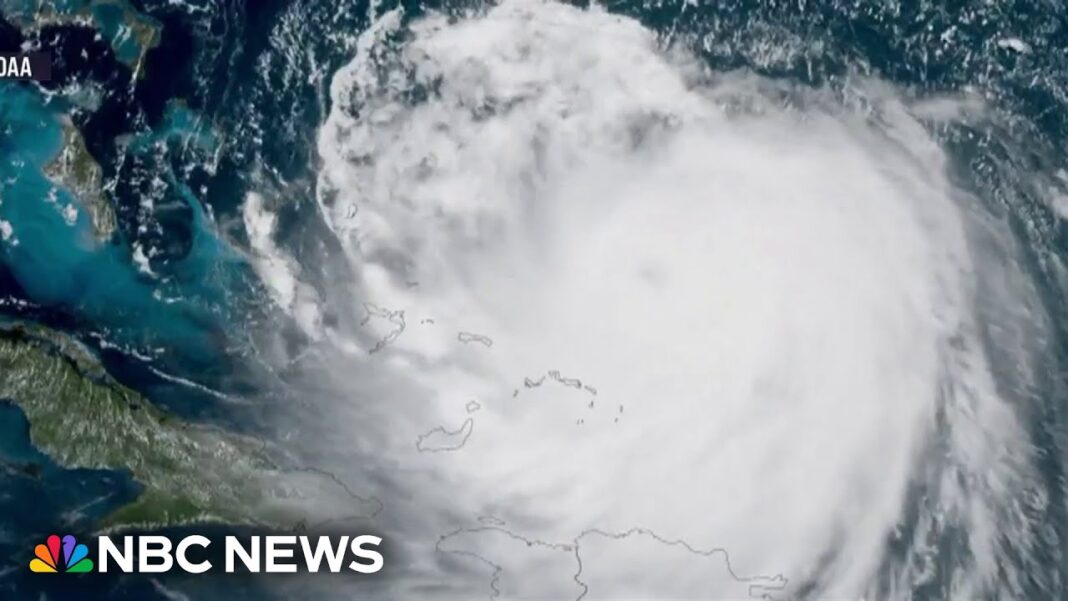
Hurricane Erin, the first Atlantic hurricane of the season, intensified into a Category 2 storm Tuesday morning as it surged north from the Caribbean. With sustained winds of 105 miles per hour and gusts strong enough to topple weak infrastructure, Erin has become a focal point of East Coast weather advisories.
As reported by The New York Daily News, the National Hurricane Center forecasted that Erin would roar past the Bahamas late Tuesday before tracking northwestward into open waters between Bermuda and the United States mainland on Wednesday and Thursday. Though the storm’s center is expected to remain far offshore, forecasters cautioned that its sheer size and intensity will still create dangerous conditions for the Atlantic seaboard, particularly New York, New Jersey, and Long Island.
The National Weather Service has already issued a high surf advisory through Thursday for all Atlantic Ocean beaches, predicting waves that could build between 11 and 15 feet. More concerning, however, are the life-threatening rip currents generated by Erin’s massive swells, which could sweep swimmers and surfers into treacherous offshore waters.
Governor Kathy Hochul, speaking Tuesday, reminded residents that the state has weathered its share of devastating hurricanes in recent memory, from Sandy in 2012 to Ida in 2021. While Erin is not expected to make landfall, Hochul stressed the need for vigilance.
“New Yorkers are no strangers to hurricanes — that is why I’m urging those living in areas that may be impacted to stay safe and exercise caution until the hurricane tapers off later this week,” Hochul said in remarks cited by The New York Daily News.
By Tuesday afternoon, Erin was positioned roughly 650 miles southwest of Bermuda. Meteorologists projected that while its eye would veer east of the U.S. coastline, its outer bands would nonetheless deliver tropical-force winds, rain squalls, and pounding surf to New York and New Jersey. Such conditions, forecasters noted, are more than enough to imperil swimmers and small craft.
In New Jersey, Governor Phil Murphy issued a similar warning, urging residents and tourists to avoid entering the ocean altogether. “Hurricane Erin is expected to cause dangerous rip currents along the Shore for the next several days. Please avoid swimming in the ocean, especially when lifeguards are not present. It is more important that you stay alive than get one more beach day before the end of summer,” Murphy wrote on X, as quoted by The New York Daily News.
The New York City Parks Department reinforced these messages, distributing flyers and advisories across coastal communities, while also preparing lifeguard patrols to engage directly with beachgoers. Officials acknowledged that enforcing such a prohibition is challenging, given the allure of late-summer weather and the limited number of weekends remaining in the season. But they warned that even seasoned swimmers are no match for the intensity of Erin’s currents.
Despite its current categorization, Erin’s path remains dynamic. Meteorologists explained to The New York Daily News that while the storm is likely to weaken as it moves northward into cooler waters, its impact on surf conditions is more predictable. Long-period swells generated by such storms travel thousands of miles and can pound coastlines long after the system has passed.
This phenomenon means that even if Erin veers farther east than projected, New York and New Jersey’s beaches will still endure dangerous surf through the weekend. Experts compared the storm’s potential coastal effects to those seen during Hurricane Franklin in 2023, when a distant storm system nonetheless created deadly rip currents along the Eastern Seaboard.
City officials underscored that the ban is rooted in lifesaving precedent. In past years, drownings and near-drownings along Rockaway Beach and Coney Island have tragically underscored the dangers of rip currents. According to data reviewed by The New York Daily News, rip currents account for the majority of beach-related fatalities nationwide.
Mayor Adams sought to put the closure in context: “We know New Yorkers love our beaches, especially in August. But we have to balance recreation with reality. These waters are simply unsafe right now, and no one should put themselves or our first responders at risk.”
In addition to lifeguards, Parks Enforcement Patrol officers will be authorized to issue summonses to anyone ignoring the ban. City Hall confirmed that NYPD Harbor Patrol units will also be monitoring waters for unauthorized swimmers, surfers, or boaters in distress.
Beyond Wednesday and Thursday, officials will reevaluate conditions to determine whether the ban should be extended. Erin’s trajectory, coupled with local tidal patterns and wind shifts, will dictate how long New York’s beaches remain hazardous.
The New York City Office of Emergency Management has encouraged residents to monitor updates through Notify NYC, the city’s emergency alert system, and to follow guidance from local authorities. They also warned of the potential for minor coastal flooding in low-lying areas during high tide cycles.
While rainfall totals are not expected to reach levels that would trigger widespread flooding inland, forecasters told The New York Daily News that localized downpours could produce slick road conditions and minor travel disruptions, particularly on Wednesday evening.
Hurricane Erin’s arrival has also reignited broader discussions about the Atlantic hurricane season, which typically peaks in late August and September. Meteorologists interviewed by The New York Daily News noted that warmer-than-average sea surface temperatures have created fertile conditions for storm formation this year. Erin, they said, is unlikely to be the last major storm of 2025.
For city leaders, the temporary beach closures highlight the delicate balance between maintaining public amenities and safeguarding residents. While the economic impact of prohibiting swimming at New York’s iconic beaches for two peak-season days may be felt by concessionaires and vendors, the overarching priority remains public safety.
Hurricane Erin’s projected path offshore may spare New York City from the most devastating consequences of a direct strike, but the storm’s far-reaching effects are nonetheless serious. With rip currents expected to surge and waves cresting at up to 13 feet, the city’s decision to suspend swimming at all beaches reflects a measured response to a tangible threat.
As The New York Daily News emphasized in its coverage, officials at every level — from Mayor Adams to Governor Hochul and their New Jersey counterparts — are united in one message: the ocean is not safe, and lives must not be risked for recreation.
Whether Erin weakens or intensifies in the coming days, the storm serves as a stark reminder that New York remains vulnerable to the volatility of the Atlantic. For now, the beaches will be places for walking, sunbathing, and reflection — but not for swimming. And for residents, the hope is that caution today ensures safety tomorrow.
