



|
Getting your Trinity Audio player ready...
|
How a Possible Colossal Storm Is Paralyzing America’s Skies and Rippling Through Florida’s Airports
By: Abe Wertenheim
As a vast and volatile winter storm system unfurls across the continental United States, the nation’s air travel network is entering a phase of cascading disruption that extends far beyond the storm’s frozen footprint. According to a report on Friday at VIN News, travelers departing from Miami, Fort Lauderdale, Palm Beach, and Orlando are already bracing for widespread delays and cancellations, despite the paradox of fair skies and mild temperatures across Florida itself. The storm, massive in both scale and consequence, is transforming distant snowfall and ice into immediate logistical chaos for travelers in the Sunshine State.
At Miami International Airport, Fort Lauderdale-Hollywood International Airport, Palm Beach International Airport, and Orlando International Airport, the scene has been one of growing uncertainty and quiet anxiety. Passengers have been forced to adjust itineraries, rebook connections, and prepare for disruptions that have nothing to do with local weather and everything to do with a sprawling atmospheric system advancing across the Midwest, South, Mid-Atlantic, and Northeast. VIN News reported that airport officials are already seeing an accelerating pattern of weekend cancellations, with additional disruptions expected as the storm expands its reach.
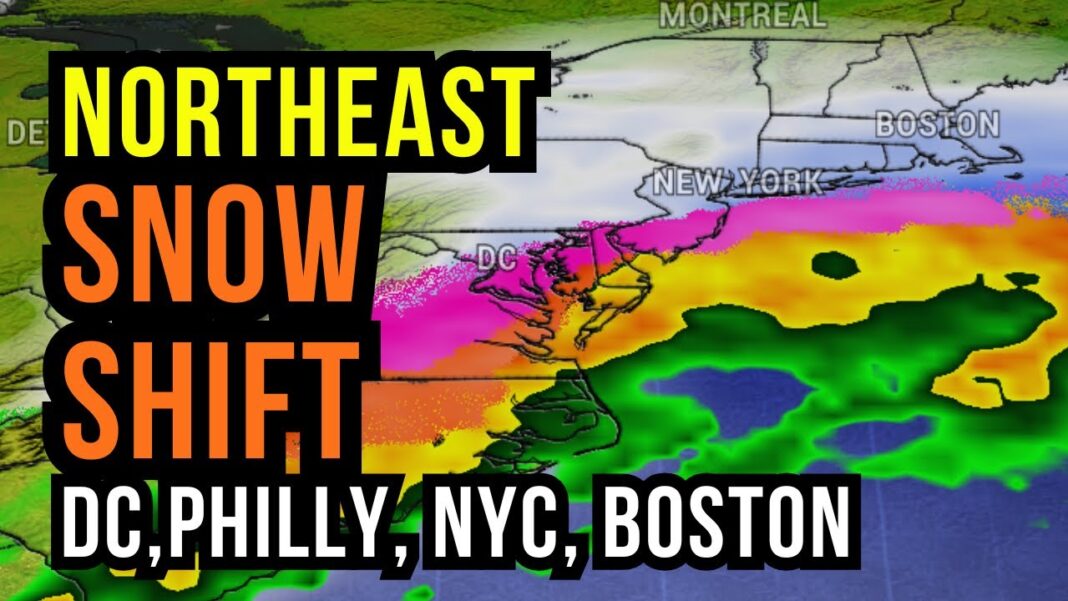
This storm is not a localized weather event. Meteorologists describe it as a continental-scale system, stretching roughly 1,500 miles and threatening more than 40 states with a lethal combination of heavy snow, freezing rain, and extreme cold. The VIN News report emphasized that this is not merely a snowstorm, but a complex, multi-hazard event capable of paralyzing transportation infrastructure, triggering power outages, and immobilizing entire regions. In the South and Mid-Atlantic, ice accumulation alone could prove catastrophic, snapping power lines and rendering highways impassable. Farther north, cities are preparing for what may become some of the most significant snowfall totals in years.
Florida, while spared the physical impact of winter conditions, is nevertheless deeply entangled in the storm’s consequences. Modern air travel is built on interconnected hubs, synchronized schedules, and tightly coordinated aircraft rotations. When major aviation centers falter, the disruption radiates outward. The VIN News report noted that airlines have already begun trimming schedules in anticipation of operational collapse in storm-affected regions, particularly on routes connecting through major hubs forecast to experience severe weather.
Atlanta, Dallas, Chicago, Washington, and New York—pillars of the national aviation network—are expected to suffer the most severe disruptions. These cities function as arteries in America’s air travel circulatory system. When they clog, the effects are systemic. Flights bound for Florida are delayed. Departures from Florida are canceled. Aircraft are stranded in storm zones. Crews are unable to reposition. Maintenance schedules collapse. The result is a domino effect that reaches even the most temperate corners of the country.
VIN News reported that major airlines, including Delta Air Lines, American Airlines, United Airlines, and Southwest Airlines, have already issued travel advisories, allowing customers to change or rebook flights without penalty. These advisories are not merely customer service gestures; they are strategic damage-control measures designed to reduce congestion, manage passenger volume, and preserve operational flexibility as the storm system evolves.
Inside Florida’s terminals, the atmosphere reflects a peculiar dissonance. Travelers move through brightly lit concourses under clear skies, while departure boards flash delays caused by blizzards hundreds or thousands of miles away. According to the information provided in the VIN News report, this disconnect has created confusion for passengers unfamiliar with how deeply interdependent the national air travel system has become. A flight canceled in Chicago can cancel a flight in Miami. A grounded aircraft in New York can delay a departure in Orlando. Weather has become a national phenomenon, not a local one.
Airport officials across Florida have confirmed that cancellations are already mounting, with more expected as the storm progresses. VIN News has reported that airlines are preemptively reducing schedules, a strategy that reflects lessons learned from past weather catastrophes. Rather than attempting to maintain full operations and collapsing under the weight of cascading delays, carriers are choosing controlled contraction—fewer flights, fewer passengers, fewer logistical failures.
This approach, while disruptive, is often less chaotic than reactive shutdowns. Yet for travelers, the experience is no less stressful. Family visits, business travel, religious observances, and vacation plans are all being reshaped by a storm that may never touch Florida soil. The VIN News report highlighted this phenomenon: in the era of hyper-connected transportation systems, geography no longer defines vulnerability. Infrastructure does.
The storm’s scale is what makes it particularly dangerous. Emergency declarations have already been issued in multiple states, as transportation agencies prepare for icy roads, closed highways, and prolonged hazardous conditions. Forecasters warn that ice accumulation in parts of the South and Mid-Atlantic could produce widespread power outages, leaving millions without electricity in freezing temperatures. In the North, heavy snowfall threatens to overwhelm municipal services and cripple urban mobility.
VIN News has underscored that the aviation sector is especially vulnerable to these multi-hazard storms. Snow immobilizes runways. Ice grounds aircraft. Wind disrupts landing patterns. Cold affects mechanical systems. Crew scheduling collapses under federal duty-time regulations. Air travel is a precision machine, and extreme weather destabilizes every component simultaneously.
Florida’s airports, though meteorologically untouched, are operationally exposed. Miami International Airport, one of the world’s busiest international gateways, is particularly sensitive to disruptions in northern hubs. Fort Lauderdale-Hollywood International Airport, Palm Beach International Airport, and Orlando International Airport serve as major domestic connectors, making them highly susceptible to network-wide disturbances. VIN News reported that aviation officials are already preparing for prolonged delays that could extend beyond the storm itself, as airlines struggle to reposition aircraft and crews once conditions improve.
The storm is expected to move offshore early next week, but aviation officials caution that the end of snowfall does not mean the end of disruption. Recovery phases often take days, sometimes weeks, as airlines untangle the logistical knots created by mass cancellations. Aircraft must be redistributed. Crews must be reassigned. Maintenance backlogs must be cleared. Passenger volumes must be rebalanced. The VIN News report noted that this recovery period is often the most chaotic phase, as systems attempt to return to equilibrium.
For travelers in Florida, the practical implications are immediate. Missed connections, extended layovers, canceled flights, and uncertain rebooking timelines have become the new reality. VIN News has urged travelers to monitor airline alerts closely, allow extra time for connections, and remain flexible with travel plans. Yet even vigilance cannot guarantee stability when the entire national aviation network is under strain.
This storm also exposes a deeper truth about modern infrastructure: resilience is no longer local. It is systemic. Florida’s weather may be calm, but its transportation systems are embedded in a continental network vulnerable to disruption anywhere along its chain. The VIN News report emphasized this interdependence, framing the current crisis as a case study in how climate, infrastructure, and globalization intersect.
There is also a symbolic dimension to the disruption. Airports are often perceived as spaces of order, efficiency, and predictability—controlled environments governed by schedules, algorithms, and logistics. Extreme weather shatters that illusion, reminding travelers that even the most technologically advanced systems remain subordinate to natural forces.
As the storm expands across the United States, Florida’s airports have become peripheral casualties of a national meteorological event. The terminals are not buried in snow, but they are buried in delays. The runways are dry, but the skies are congested. The weather is warm, but the system is frozen.
VIN News has framed the unfolding situation as a warning as much as a disruption. Climate volatility is increasing. Storm systems are growing larger, more complex, and more destructive. Infrastructure networks, designed for stability, are being forced to operate in an era of instability. Aviation, in particular, sits at the intersection of these forces—global, interconnected, and acutely sensitive to disruption.
For the millions of Americans planning to travel in the coming days, the storm represents more than inconvenience. It represents uncertainty. Plans dissolve. Schedules collapse. Expectations shift. Travel becomes improvisation.
And for Florida’s airports, the message is clear: geography no longer guarantees immunity. In a connected nation, every storm is everyone’s storm.
As VIN News continues to monitor the evolving situation, one reality dominates the narrative: this is not simply a winter storm. It is a national systems crisis, unfolding in real time, reshaping travel, testing infrastructure, and exposing the fragile interdependence of modern mobility.
Clear skies over Miami cannot stop a blizzard in Chicago from grounding a flight in Fort Lauderdale. Sunshine in Orlando cannot override ice in Atlanta. Palm trees and beaches offer no defense against a frozen runway in New York.
Winter, in the age of interconnected systems, no longer respects borders—geographic, climatic, or logistical.
And as this storm surges across the continent, it is rewriting the rules of travel, reminding the nation that in a networked world, disruption anywhere becomes disruption everywhere.