



|
Getting your Trinity Audio player ready...
|
By: Jason Ostedder
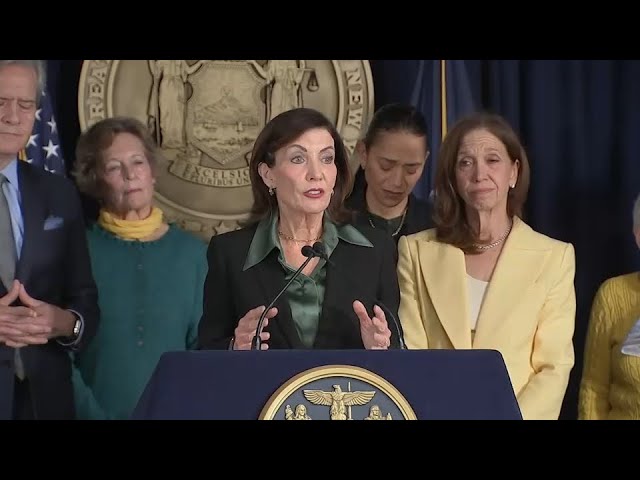
In a moment that will reverberate through courtrooms, hospital corridors, houses of worship, and family living rooms alike, New York Governor Kathy Hochul on Friday signed into law legislation permitting medical aid in dying for terminally ill residents with a prognosis of six months or less to live. The enactment marks one of the most consequential changes to the state’s medical and moral landscape in a generation, situating New York among a growing cohort of U.S. jurisdictions that have legalized the practice under carefully circumscribed conditions. Reuters, which reported the development as it unfolded on Friday, framed the moment as a culmination of years of advocacy, legal contestation, and ethical debate over how society understands autonomy, suffering, and the boundaries of medical care at the end of life.
The statute establishes a regulated pathway by which eligible patients may obtain a prescription for medication intended to hasten death, while embedding safeguards designed to prevent coercion, abuse, or precipitous decisions made under duress. According to the information provided in the Reuters report, the law requires that individuals seeking medical aid in dying be terminally ill, mentally competent, and residents of New York State. The governor emphasized that the legislation does not compel any physician or religiously affiliated healthcare institution to participate, preserving the conscience rights of providers who object on moral or religious grounds.
In her signing statement, Hochul framed the measure as an extension of bodily autonomy and compassionate care, asserting that New York would “stand firm in safeguarding New Yorkers’ freedoms,” including the right of the terminally ill to confront death with dignity rather than prolonged agony.
The legislation’s procedural architecture is designed to slow the process sufficiently to ensure deliberation while not erecting insurmountable barriers for patients whose time is measured in weeks or months. Reuters reported that the law mandates a five-day waiting period between the writing and filling of the prescription, alongside compulsory mental health evaluations for those seeking the medication. These provisions reflect the state’s attempt to reconcile two imperatives that often appear in tension: the protection of vulnerable individuals from subtle pressures to end their lives prematurely, and the recognition that terminal illness can entail forms of suffering that many patients find intolerable despite the best efforts of palliative care.
The passage of this law places New York in the company of twelve other U.S. states and the District of Columbia that have legalized some form of physician-assisted dying, with Oregon’s 1994 statute standing as the earliest and most frequently cited precedent. The Reuters report contextualized New York’s move within this broader national trend, noting how legislative models have been refined over decades to address concerns raised by critics and lessons learned from jurisdictions that implemented similar policies earlier. In each case, the core ethical dilemma remains the same: whether the medical profession’s obligation to relieve suffering can, in narrowly defined circumstances, encompass assistance in dying without eroding the foundational commitment to preserve life.
The significance of the new law is heightened by New York’s own legal history on the matter. In 2017, the state’s Court of Appeals rejected a lawsuit asserting that mentally competent, terminally ill patients possessed a constitutional right to physician-prescribed lethal medication, holding instead that doctor-assisted suicide remained illegal under existing statutes. That ruling underscored the judiciary’s deference to the legislature on questions of such moral gravity. The court’s decision effectively placed the responsibility for any change squarely in the hands of lawmakers, who, after years of incremental debate and shifting public opinion, have now acted. The contrast between the court’s earlier refusal to recognize such a right and the legislature’s subsequent decision to codify it illustrates the dynamic interplay between legal doctrine, democratic deliberation, and evolving social norms.
For advocacy organizations that have labored for decades to normalize the concept of medical aid in dying, the signing of the bill represents both vindication and the beginning of a new phase of work. The Reuters report quoted End of Life Choices New York, one of the leading groups in the state championing the cause, whose executive director Mandi Zucker characterized the law as a “mile marker” along a “long and winding road” toward what she described as fairness and dignity for families confronting terminal illness.
The organization has announced plans to embark on a statewide education campaign over the coming months, aiming to inform both patients and healthcare providers about the law’s parameters, eligibility criteria, and procedural safeguards. Such outreach is widely seen as essential, given the complexity of the statute and the potential for misunderstanding among those who may confuse medical aid in dying with euthanasia or other end-of-life practices.
Yet the law’s passage has also sharpened lines of dissent among religious leaders, disability advocates, and segments of the medical community who warn that even the most carefully constructed safeguards cannot fully insulate vulnerable individuals from implicit pressure to choose death. Critics argue that in a healthcare system strained by resource constraints and unequal access to palliative care, the availability of assisted dying risks becoming a tacit suggestion rather than a freely chosen option. While Reuters has documented how similar concerns have been voiced in other states, New York’s decision has intensified these debates in a state that prides itself on both progressive social policy and robust protections for minority communities.
Governor Hochul, in articulating her rationale, sought to preempt such critiques by emphasizing the law’s voluntary nature and the explicit protections for providers who decline participation. Reuters reported that the statute contains provisions ensuring that no healthcare professional or religiously affiliated facility can be compelled to offer medical aid in dying. This accommodation reflects a broader effort to maintain pluralism within the healthcare system, acknowledging that deeply held beliefs about the sanctity of life vary widely even among those committed to alleviating suffering. By embedding conscientious objection into the law, lawmakers have attempted to balance respect for individual autonomy with respect for moral diversity.
The residency requirement, another notable feature highlighted by Reuters, underscores New York’s intention to limit the law’s reach to its own population, forestalling the emergence of so-called “death tourism.” Proponents argue that restricting eligibility to residents ensures that the policy is applied within a framework of long-term patient-provider relationships, reducing the risk of exploitation. Opponents counter that residency requirements may create inequities for those who seek relief but lack the means or documentation to establish formal residency, particularly among marginalized populations.
The law’s implementation will also test the capacity of New York’s healthcare infrastructure to integrate end-of-life options into existing palliative care frameworks. Reuters has previously reported on the uneven availability of hospice and palliative services across the state, with rural and low-income communities often facing significant barriers to access. Advocates for medical aid in dying stress that the practice is intended as a last resort, to be considered only after comprehensive palliative care options have been explored. Whether the healthcare system can ensure that patients truly have access to such alternatives remains an open question, one that will likely shape public perceptions of the law’s ethical legitimacy in the years ahead.
From a political standpoint, the enactment of medical aid in dying legislation reflects broader currents within New York’s governance, where debates over bodily autonomy have been particularly salient in recent years. Reuters’ coverage of the signing situates the law alongside other measures championed by Hochul’s administration that emphasize personal freedom and patient rights. Yet the governor’s invocation of autonomy also invites scrutiny of how such principles intersect with the state’s obligations to protect life, particularly among populations at risk of depression, isolation, or inadequate healthcare. The mandatory mental health evaluations embedded in the law can be read as an attempt to reconcile these competing concerns, ensuring that requests for aid in dying are not driven by untreated psychiatric distress rather than by the realities of terminal illness.
The cultural resonance of New York’s decision extends beyond its borders. As Reuters noted in its report, each additional state that legalizes medical aid in dying contributes to a gradual normalization of the practice within American society. This incremental expansion, however, has not produced a national consensus. Instead, it has deepened a patchwork of laws that reflect divergent moral intuitions across regions and political cultures. In some states, legislatures continue to resist any move toward legalization, citing fears of a slippery slope toward broader acceptance of euthanasia. In others, advocacy groups are already pressing to expand eligibility criteria beyond terminal illness, raising further ethical questions about where the line should be drawn.
For families confronting the imminence of death, the law’s abstract debates acquire an intensely personal dimension. Reuters has frequently highlighted how stories of prolonged suffering, loss of dignity, and the desire for control at life’s end have animated the push for reform. At the same time, opponents recount narratives of individuals who found meaning, reconciliation, or unexpected relief in the final months of life, cautioning against policies that might truncate such possibilities. The coexistence of these narratives underscores the law’s emotional complexity: it seeks to offer an option, not a prescription, in circumstances where no choice is unburdened by pain.
As New York prepares to operationalize the statute, attention will turn to the regulatory frameworks governing physician participation, pharmacy dispensing protocols, and data collection on the law’s use. The Reuters report observed in other jurisdictions that transparency and rigorous oversight are crucial to maintaining public trust in medical aid in dying regimes. The extent to which New York commits resources to monitoring outcomes, investigating complaints, and publishing comprehensive reports will likely shape both domestic and national perceptions of the policy’s success or failure.
In the end, the signing of the medical aid in dying law represents not a resolution of the ethical tensions surrounding death and autonomy, but an institutional acknowledgment that these tensions must be navigated rather than avoided. Reuters’ reporting captures the moment as a convergence of legal evolution, advocacy persistence, and political will. Whether the law will ultimately be remembered as a compassionate extension of patient rights or as a fraught experiment in redefining medicine’s role at the threshold of death will depend on how faithfully its safeguards are implemented and how sensitively its provisions are communicated to the public. What is certain is that New York has now inscribed into law a profound statement about how it understands dignity at life’s end, inviting both commendation and critique in equal measure as the state steps into uncharted moral terrain.

Sick. Depraved. Beyond disgusting. Demonstrates an absolutely total disregard for the value of human life.