



|
Getting your Trinity Audio player ready...
|
From City Hall to Crypto: Eric Adams Reemerges in Times Square With a ‘NYC Token’ to Battle Antisemitism
By: Andrew Carlson
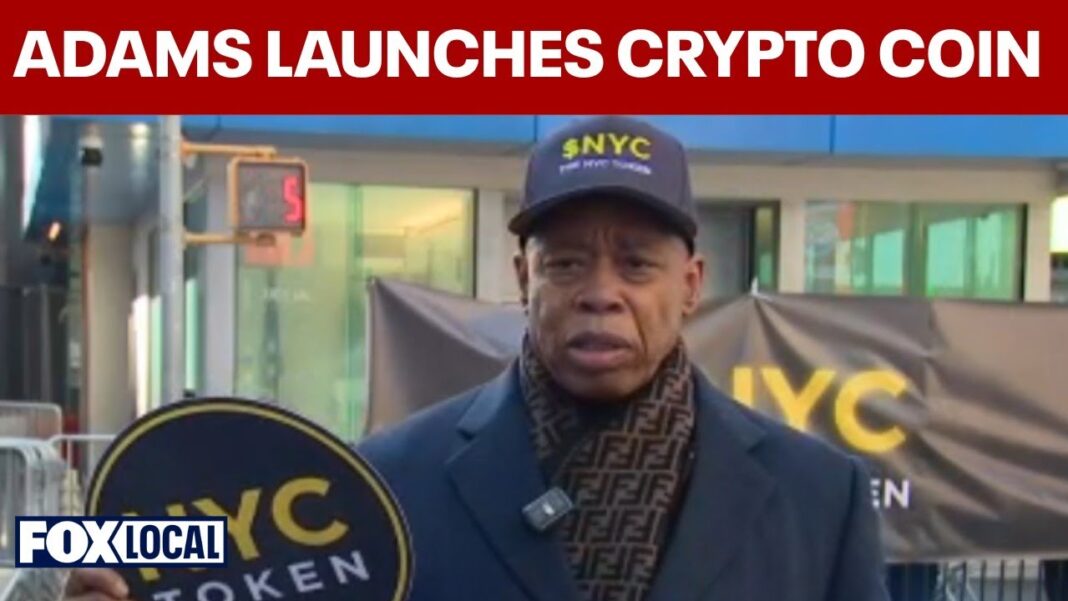
Just days after vacating Gracie Mansion and slipping into what aides once described as a long-anticipated period of “global travel,” former Mayor Eric Adams returned to New York City on Monday with the theatrical flair that defined his tenure. Standing beneath the LED glare of Times Square, before a knot of bewildered reporters and curious passersby, Adams unveiled his latest and most surreal venture yet: the “NYC Token,” a cryptocurrency he claims will combat antisemitism, teach civic virtue, and somehow revolutionize municipal governance.
The New York Post, which chronicled Adams’ announcement in real time, described the scene in a report on Monday as a spectacle befitting a man whose political currency has always been swagger. Less than two weeks after leaving office, Adams had already reinserted himself into the public imagination with a unique proposal.
“One focus we have on this New York City coin is to use the revenue generating to address anti-Americanism, antisemitism, to teach our children how to embrace the blockchain technology of how to run cities correctly,” Adams told reporters, according to The New York Post report.
It was a sentence only Adams could deliver with a straight face: part policy, part sermon, part Silicon Valley white paper.
The former mayor’s infatuation with cryptocurrency is hardly new. The New York Post has long documented Adams’ fascination with blockchain technology, crystals, and other metaphysical curiosities. During his first year in office, Adams famously took his early mayoral paychecks in cryptocurrency, touting digital assets as the future of urban finance. He cultivated high-profile friendships with figures such as Brock Pierce, the Bitcoin billionaire and former child actor from The Mighty Ducks, positioning himself as the mayor who would make New York the “crypto capital of the world.”
That ambition, like so many of Adams’ initiatives, fizzled quietly amid a parade of scandals, administrative missteps, and mounting criticism over public safety and housing. Now, free from the constraints of office, he appears determined to revive that dream on his own terms.
Adams told The New York Post he is one of three creators behind the “NYC Token,” stressing that Pierce is not involved. Yet when reporters attempted to examine the project’s website, they found it largely barren—no biographies of the creators, no governance framework, no financial disclosures. The page contained only two vague slogans and a link to follow the token’s X account.
The optics were not reassuring.
According to Adams, profits generated by the token will be funneled into an unnamed nonprofit organization, which will then fund groups combating antisemitism. Historically Black Colleges and Universities, he added, will also “somehow” be involved, though he offered no concrete details.
“I’ve talked about it often, I want to get on our college campuses and make sure that we start the process of having our young people appreciate our country today,” Adams said, as quoted by The New York Post.
For Jewish leaders who have spent years pleading for tangible policy responses to rising antisemitism in New York City—enhanced policing, prosecution of hate crimes, protections around houses of worship—the notion that blockchain speculation could substitute for governance stirred their collective imagination.
“This isn’t a plan. It’s a press conference,” one community activist told The New York Post privately. “We don’t need a token. We need leadership.”
Asked directly whether the initiative might amount to little more than a crypto-grift wrapped in the language of tolerance, Adams offered assurances that he would not take a salary—“at this time.”
“I’m not taking a salary at this time,” he said. “Down the line, if you take the determination of doing so, we will reveal that.”
The New York Post report noted the ambiguity in his phrasing, raising eyebrows among finance experts who say transparency is the bare minimum for any project claiming philanthropic intent. In the volatile and frequently scandal-plagued world of cryptocurrency, the absence of a clear governance structure is not merely a red flag; it is a blaring siren.
Yet Adams seemed unbothered. He regaled reporters with tales of his recent travels—Dubai, the Congo—casting himself as a global ambassador for New York-style “levels of services,” a phrase he repeated with trademark flourish.
The jet-set former mayor teased future partnerships with foreign governments, suggesting that the NYC Token could be exported abroad as a model for urban governance. To critics, this sounded less like policy innovation than personal reinvention: Eric Adams as international blockchain missionary.
If Adams hoped his successor would welcome the project, he miscalculated. When The New York Post asked newly inaugurated Mayor Zohran Mamdani whether he intended to purchase any NYC Tokens, the response was as terse as it was devastating.
“No,” Mamdani said, smiling.
That single syllable captured the chasm between the city’s present and its immediate past. Where Adams reveled in performative futurism, Mamdani has promised a back-to-basics administration focused on housing, transit, and public safety—problems that resist both slogans and speculative finance.
For Adams, the unveiling of the NYC Token is more than a pet project; it is an attempt to rewrite the narrative of his mayoralty. His final months in office were marred by federal investigations into his campaign finances, relentless media scrutiny, and a collapse in approval ratings. The New York Post chronicled the unraveling with characteristic relish, portraying a mayor whose bravado could no longer mask mounting dysfunction.
Now, freed from City Hall but unwilling to relinquish the spotlight, Adams is once again leaning into the qualities that made him famous: audacity, mysticism, and a near-religious faith in technology.
Whether the NYC Token ever materializes into a functioning entity remains uncertain. Crypto markets are notoriously unforgiving, and projects lacking transparency rarely survive first contact with serious investors. But the symbolism of Adams’ return—less than a fortnight after leaving office, launching a digital coin to fight hatred—speaks volumes.
