



|
Getting your Trinity Audio player ready...
|
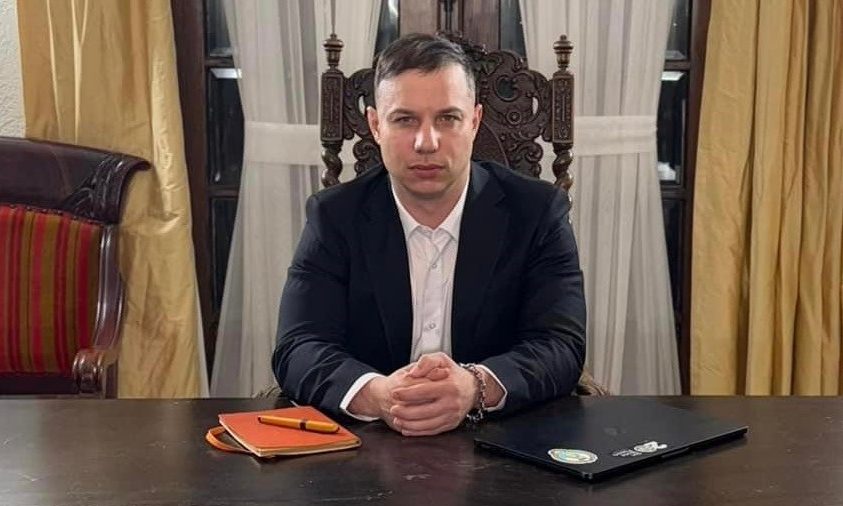
An exclusive in-depth interview with Anthony Constantino, respected entrepreneur, CEO of Sticker Mule, and congressional candidate for New York’s 21st District
By: Fern Sidman
In an era when politics increasingly resembles performance art and governance feels secondary to fundraising and spectacle, Anthony Constantino cuts a strikingly different figure. Known nationally as the CEO of Sticker Mule, one of the most successful privately held e-commerce manufacturing companies in the United States, Constantino has spent his career building systems, solving operational problems, and navigating competitive markets—not political machines.
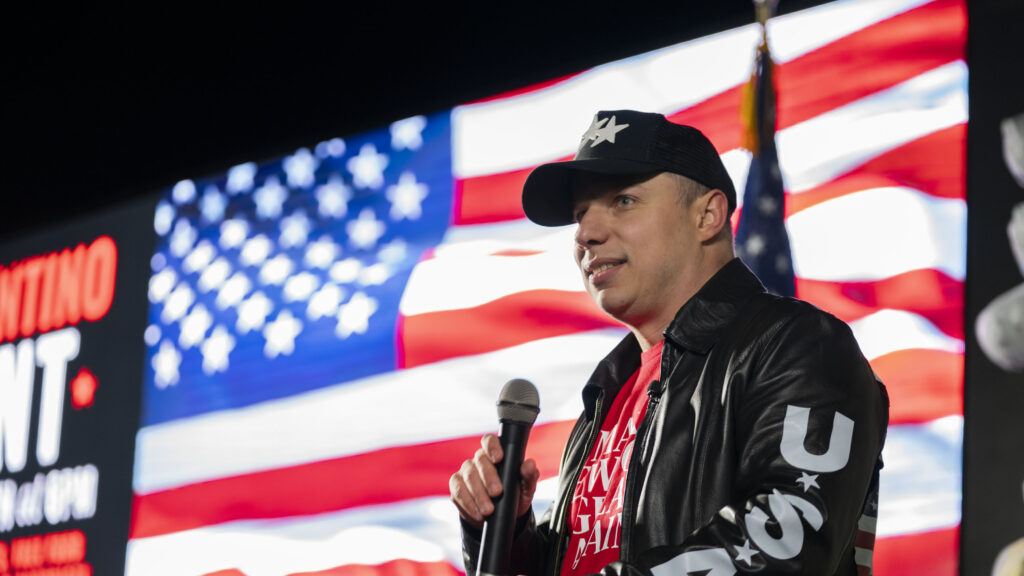
Now, he is stepping into one of the most challenging political arenas in the country: New York’s 21st Congressional District, a region that spans vast rural terrain, border communities, agricultural centers, and underserved infrastructure corridors in the North Country. His campaign does not look or sound like a conventional political operation. It sounds like a corporate turnaround strategy applied to public life.
The Jewish Voice sat down with Constantino to understand not just his policy positions, but the philosophy driving them—his worldview, his motivations, and his belief that business logic can succeed where politics has failed.
Q: You’ve said repeatedly that businesspeople solve problems, while politicians manage them. What do you mean by that distinction?
“Business doesn’t reward excuses,” Constantino said. “If something is broken, you fix it—or you go out of business. That’s the difference. In politics, failure is often rewarded with more power, more donations, and more media attention. Career politicians don’t live in a system of consequences. They live in a system of incentives that reward stagnation.”
“In business, customers leave if you fail them. In politics, donors stay—even when politicians fail voters. That creates a completely inverted accountability structure.”
This distinction, he argues, is foundational to his candidacy. Constantino does not see Congress as a prestige destination, but as a dysfunctional organization in need of operational reform.
“Government should function like a service provider,” he says. “If you can’t deliver value to the people you serve, you don’t deserve the job.”
Q: You’ve openly aligned yourself with President Trump. Why is that connection central to your campaign?
“Because he governs like a builder, not a bureaucrat,” Constantino declared. “Trump identifies problems and acts. He doesn’t wait for consensus panels, donor class approvals, or political theater. He moves.”
He contrasts that decisiveness with what he calls “career-politician paralysis.”
“Most politicians spend their time fundraising, attending dinners, taking photos, managing optics, and enriching themselves. That’s not leadership. That’s maintenance of a system designed to preserve power, not solve problems.”
Constantino added, “Trump disrupted that model. That’s why I support him. Not because he’s perfect, but because he operates outside the political caste system. That matters.”
Q: You’re self-funding your campaign. Why was that decision so important to you?
“Because dependence creates obedience,” Constantino said flatly.
“When your campaign is funded by donors, special interests, PACs, and institutions, you are owned. You don’t belong to voters anymore—you belong to whoever writes the checks.”
Self-funding, he explains, is not about wealth—it’s about independence.
“I answer to the people of New York’s 21st District, to President Trump, and to my own moral compass. No donors. No lobbying firms. No financial leverage.”
He added, “Career politicians are easily controlled because politics is their livelihood. This isn’t my livelihood. It’s my service.”
Q: You’ve already experienced intense political pressure through your business. How did that shape you?
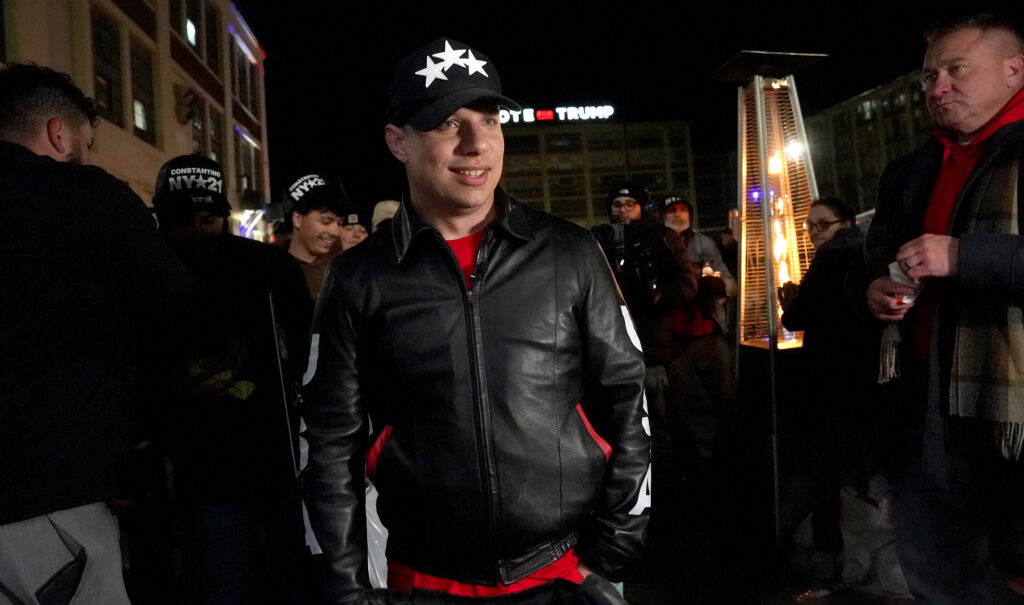
“When I endorsed President Trump to my five million customers and put up a ‘Vote for Trump’ sign, the entire Democratic Party apparatus came after my company. Boycotts. Pressure campaigns. Attacks,” Constantino recalled.
He doesn’t frame it as victimhood—he frames it as proof of resilience.
“They tried to intimidate me. It didn’t work. And that taught me something important: if you can survive coordinated political pressure in business, you can survive it in politics.”
He added, “Fear is the control mechanism of corrupt systems. Once fear stops working, the system collapses.”
Q: Polling suggests you’re leading significantly. Why do you think your message resonates?
“Because people are exhausted,” said Constantino. “They’re tired of politicians who talk in abstractions while their lives get more expensive, their services get worse, and their communities hollow out.”
He points to what he sees as the core emotional reality of the district.
“People feel abandoned. They feel ignored. They feel managed instead of represented.”
His message, he believes, cuts through because it’s operational, not ideological. “I don’t speak in slogans. I speak in systems.”
Q: Let’s talk about economics. You’ve framed your platform around putting more money back into people’s pockets. How?
“Waste elimination,” he answers immediately. “Efficiency. Growth.”
He ties rising costs directly to policy failures.
“New York absorbed over 800,000 illegal immigrants. That strains housing, healthcare, education, infrastructure, and public services. Scarcity increases costs. That’s basic economics.”
But he also targets regulation.
“Insane food regulations. insane green energy regulations. insane restaurant regulations. insane utility regulations. These policies don’t help working people—they crush them.”
As a CEO, he views regulation through an operational lens. “Every regulation has a cost. Someone pays for it. And it’s always the consumer.”
Q: Infrastructure is a major issue in the North Country. How do you address that?
“Connectivity is economic destiny,” Constantino said. “Without reliable high-speed internet and cell service, you cannot attract remote jobs, digital businesses, or modern investment. People leave. Young families leave. Talent leaves.”
He frames broadband not as a luxury, but as a survival necessity. “If you want communities to grow, they must be connected to the modern economy.”
Q: You’ve spoken strongly about sealing the northern border. Why is that a priority?
“Because borders define sovereignty,” he said. “Drugs, crime, terrorism, and low-wage labor don’t stop at political speeches. They stop at enforcement.”
He emphasized coordination with federal leadership. “I will work directly with President Trump to secure the northern border. Period.”
Q: Agriculture is central to this district. What does ‘treat farmers fairly’ mean in practical terms?
“Equal treatment,” he replied. “No special carve-outs. No rigged subsidies. No predatory solar farm deals that exploit landowners.”
Constantino framed farming not as nostalgia, but as national security. “Food independence is national security. When farmers fail, nations weaken.”
Q: You’ve taken a strong stance on constitutional rights. Why is that central to your platform?
“Because rights aren’t negotiable,” Constantino said. “Democrats have stripped Second Amendment rights in New York and continuously attack First Amendment protections nationally. That’s not governance—that’s control.”
He added, “A free society cannot exist without free speech and self-defense.”
Q: You’ve also talked about growing the Republican Party differently than the establishment model. What does that mean?
“It means opening the doors,” he said. “The establishment boxes out newcomers, innovators, outsiders. That kills movements.”
Constantino believes expansion comes from trust, not purity tests. “If we deliver results, moderates, independents, and even Democrats will listen.”
Q: You’ve emphasized constituent services as a priority. Why does that matter?
“Trust is built through service,” he answered. “If people call your office and get ignored, they stop believing in the system.”
He wants his congressional office to function like a customer service operation. “Listen. Respond. Solve. Follow up,” he added.
Q: Your final vision seems larger than policy—it’s about reversing decline. How do you describe that mission?
Constantino’s tone shifts from strategic to philosophical.
“New York has lost hope,” he said quietly. “People are leaving. Businesses are leaving. Families are leaving.”
His goal, he said, is not just economic recovery—but psychological revival. “Inspire people to live here again. Create momentum. Create belief.”
He concluded: “I’m not a politician. I’m someone who gets things done. I will listen, respond, and act. And I will fight for this district without fear, without donors, and without compromise.”
As the conversation concluded one thing became clear: Anthony Costantino is not running as a traditional candidate. He is running as a systems engineer for public life—a CEO translating corporate discipline into political ambition.
Whether voters ultimately choose that model remains to be seen. But his candidacy represents something increasingly rare in modern politics: a figure who is not seeking entry into the political class, but confrontation with it.
And in a district long defined by neglect, distance from power, and infrastructural decline, that alone may be the panacea it has been waiting for.