



|
Getting your Trinity Audio player ready...
|
By: Nick Carraway
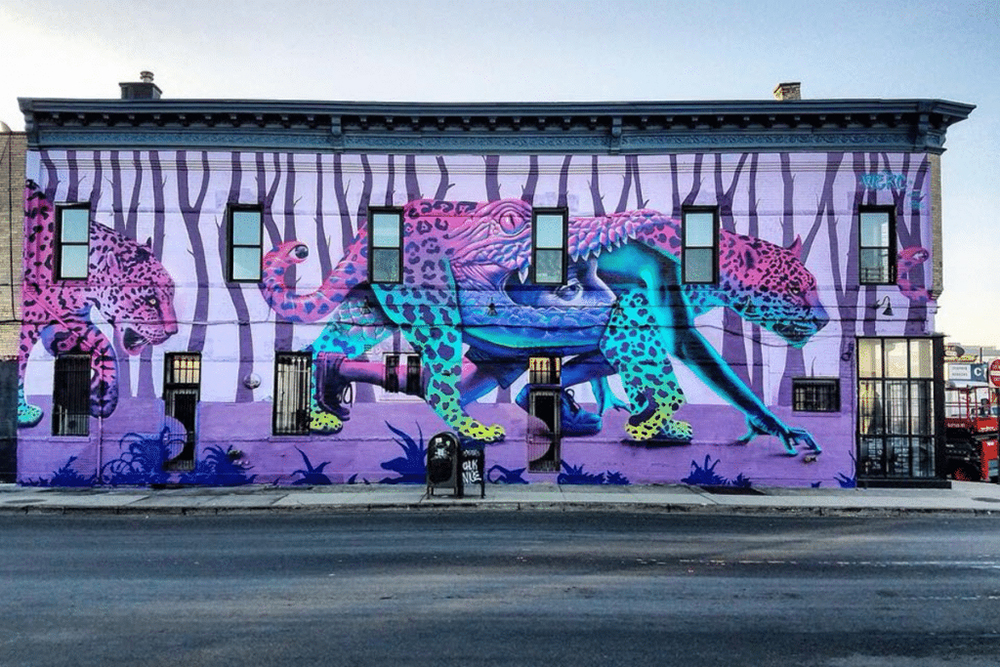
French travelers are emerging as the most reliable supporters of New York City’s graffiti and street art tours, even as international tourism to the Big Apple is projected to take a serious hit this year. The New York Post first reported that Bushwick, Brooklyn—a former industrial hub now famous for its walls covered in elaborate murals—has become a destination of choice for French art lovers, sustaining a niche business while other foreign visitors pull back.
Tour guides in Bushwick told the Post that while many of their usual international clients—from Germany, Israel, Canada, and China—have sharply declined, French visitors remain eager to book walking tours. Audrey “Byte” Connolly, who has worked with Graff Tours for nearly a decade, explained that Paris and New York share a deep cultural connection around graffiti. “There are so many people in France that are obsessed with graffiti and street art: it’s been a huge part of our business for years,” Connolly said.
The New York Post first reported that the city is bracing for nearly 2 million fewer international visitors in 2025, according to New York City Tourism + Conventions. That projected drop represents close to $4 billion in lost revenue. Yet in Bushwick, French demand has remained unusually strong, helping sustain local businesses from trendy thrift shops to family-run restaurants that rely on European travelers.
French tourist Antoine Jacquet, 23, made the trip from Dijon and told the Post he believes foreign travel will “probably pick up with the new mayor Zohran Mamdani,” the Democratic nominee for mayor, because “his policies are more based out of Europe than to America.” Jacquet admitted that U.S. immigration hurdles have become more complicated under President Donald Trump, but insisted the graffiti tours were worth the trip.
Gabe Schoenberg, president of Graff Tours, stressed to the New York Post that French enthusiasm has been critical as overall bookings fall. He estimates the company has seen a 10% drop in foreign customers compared to last year, but without the French, the decline would have been worse. “Tourism has big downstream effects: it affects hotels, small businesses, and the local economy,” Schoenberg said.
Even with French demand, Graff Tours has been forced to adapt. The Post reported that the company is now turning to domestic travelers, promoting its tours through targeted social media ads. While some Americans have embraced graffiti as art, Connolly admitted many locals remain skeptical, saying, “They’re being told to fear New York and everything about it.”
Schoenberg told the New York Post that broader political and economic conditions are also dragging on foreign tourism. He cited international backlash over Trump’s policies, escalating airfare, rising food costs, and tariff-related price fears as reasons why many potential visitors are staying home. “Even for a New Yorker, prices are going up exponentially,” he said, suggesting that city-level incentives might be needed to help.
Still, Graff Tours has found ways to diversify. Beyond its walking tours, the Bushwick site offers spray-painting workshops and has hosted high-profile corporate events for Meta, L’Oréal, and Samsung. Schoenberg admitted these classes now generate more reliable income than the tours themselves. “If I was relying on tours in general, I don’t think I would still be in business.”
For now, Bushwick’s graffiti walls continue to draw French art lovers in droves.
