



|
Getting your Trinity Audio player ready...
|
By: Jeff Gorman
In a city where economic precarity is never far from the surface and grocery prices have become a quotidian source of anxiety, two unlikely competitors have chosen an audacious stage for their latest corporate duel: the supermarket aisle. This week in New York City, the rival online prediction-market platforms Kalshi and Polymarket transformed the most mundane of urban rituals—food shopping—into a high-visibility marketing spectacle, offering free or reimbursed groceries in a bid to capture public attention and market share. As Business Insider reported on Tuesday, the gambit reflects not only the ferocity of competition in the rapidly expanding prediction-markets sector, but also the evolving choreography of tech-driven marketing in a metropolis where affordability has become a political flashpoint.
The initiative began with Kalshi, a federally regulated prediction-market platform that has been eager to distinguish itself as both compliant and consumer-facing in an industry still struggling to define its public image. On Monday, Feb. 2, Kalshi reimbursed shoppers up to $50 for grocery purchases at a Manhattan supermarket. The scene, as recounted in the Business Insider report, bore the hallmarks of a carefully calibrated publicity stunt: long lines snaking through aisles, shoppers documenting their windfall on social media, and a company message that blended populist flair with brand evangelism.
Kalshi executives framed the promotion as an introduction to their platform at a time when food inflation remains a palpable strain on household budgets. The symbolism was unmistakable. In a city where the price of a bag of groceries can feel like a referendum on economic stewardship, Kalshi positioned itself as a benevolent interloper, offering temporary relief while inviting consumers into the world of regulated prediction markets.
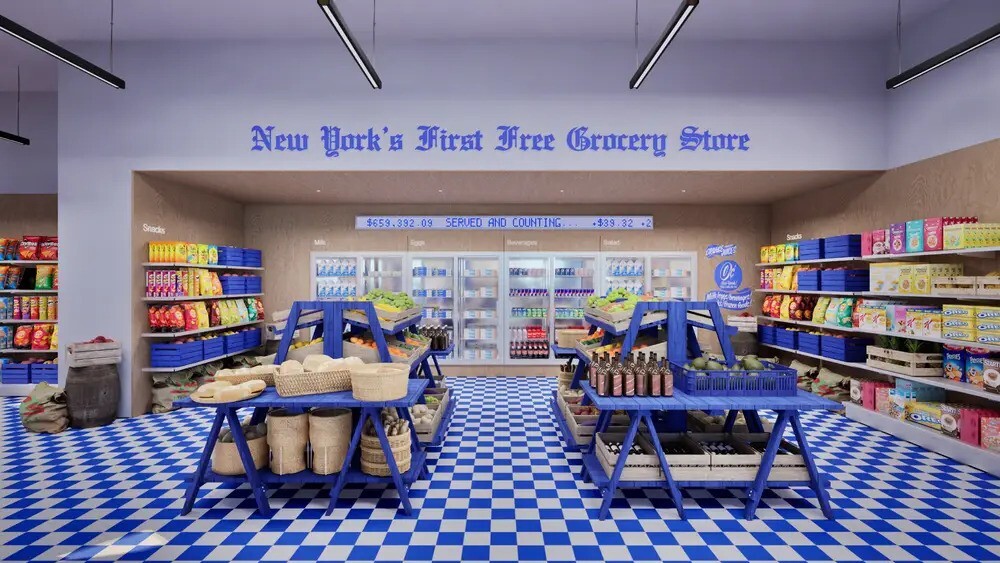
Polymarket, Kalshi’s offshore-based rival and a favorite haunt of political bettors, signaled that it would not be outdone. According to the Business Insider report, the company plans to escalate the theatrics later in the week by opening a temporary “free grocery store” pop-up in New York City, where shoppers will be able to take food at no cost. The company has said it intends to pair the promotion with a donation to a city food bank, a gesture that appears designed to preempt criticism that the stunt trivializes hunger or instrumentalizes poverty for brand recognition. In doing so, Polymarket is staking out a parallel narrative: one that merges the iconography of generosity with the disruptive ethos of a tech startup operating beyond U.S. regulatory boundaries.
At one level, the spectacle is a testament to the intensifying rivalry between two firms vying for dominance in a nascent but fast-growing industry. Prediction markets, which allow users to trade on the outcomes of real-world events ranging from elections to economic data and geopolitical developments, have moved from the fringes of online gambling into a contested space at the intersection of finance, forecasting, and entertainment.
Business Insider has chronicled how these platforms, once dismissed as niche curiosities, are now drawing the attention of regulators, investors, and political operatives alike. The grocery-store gambits underscore how aggressively these companies are seeking to penetrate the public consciousness, particularly in urban centers where early adopters and media amplification converge.
Yet the choice of groceries as a promotional medium is laden with social and political resonance. New York City, under Mayor Zohran Mamdani’s administration, has been embroiled in debates over affordability and the rising cost of living. While City Hall has not publicly commented on the stunts, the Business Insider report noted that the optics of free food being dispensed by tech startups—rather than delivered through public policy—have not gone unnoticed.
In a metropolis where economic inequality is not an abstraction but a daily lived reality, the sight of corporate actors stepping into what many view as a governmental vacuum invites both curiosity and unease. The promotions raise uncomfortable questions about the privatization of social relief, even when such relief is fleeting and transactional.
From a marketing perspective, the tactic is both brazen and shrewd. Supermarkets are among the few truly universal public spaces left in the urban ecosystem, frequented by residents across socioeconomic strata. By inserting themselves into this quotidian ritual, Kalshi and Polymarket ensured that their brands would be encountered not as abstract digital platforms but as tangible presences in the lived experience of New Yorkers. The Business Insider report observed that the long lines and social media buzz surrounding Kalshi’s reimbursement event transformed the promotion into a spectacle that extended far beyond the confines of the store. In an age where virality is currency, the image of free groceries functions as a powerful narrative hook.
The strategy also reveals something about the evolving ethos of Silicon Valley–style disruption. Where earlier generations of tech companies sought to “move fast and break things,” today’s startups often frame their interventions in the language of social utility. Kalshi’s emphasis on federal regulation and consumer education, juxtaposed with Polymarket’s promise of charitable donations, suggests an awareness that legitimacy in the prediction-markets arena will hinge not only on technological prowess but also on public trust. The Business Insider report highlighted how regulatory scrutiny remains a defining feature of this sector, with questions about legality, consumer protection, and market manipulation still unresolved. Against this backdrop, the optics of generosity may serve as a form of reputational insurance.
Critics, however, are likely to view the stunts with skepticism. The spectacle of affluent tech entrepreneurs dispensing groceries in a city grappling with food insecurity risks being read as performative rather than substantive. Even with the addition of food bank donations, the promotions may appear to some as a marketing veneer over deeper structural inequities. Such initiatives, while eye-catching, do little to address the systemic drivers of affordability crises, from housing costs to wage stagnation. In this sense, the grocery giveaways become a mirror reflecting the broader tension between private innovation and public responsibility in contemporary urban governance.
For Kalshi and Polymarket, the immediate payoff is visibility. In a crowded digital marketplace where attention is the most coveted commodity, the conversion of supermarket aisles into branding theaters represents a clever, if controversial, escalation of promotional tactics. Both companies see these stunts as part of a broader push to normalize prediction markets as mainstream financial instruments rather than fringe gambling products. By associating their platforms with something as elemental as food, they are attempting to domesticate an otherwise abstract concept, embedding it in the rhythms of everyday life.
The longer-term implications, however, extend beyond the fortunes of two rival firms. The episode illuminates how the boundaries between commerce, spectacle, and social policy are increasingly porous. When tech startups deploy philanthropic gestures as marketing tools, they blur the line between altruism and advertisement. Business Insider’s coverage suggests that such strategies are likely to proliferate as companies seek ever more inventive ways to differentiate themselves in saturated markets. For policymakers and civic leaders, the challenge will be to discern when private initiatives complement public efforts and when they risk supplanting them in ways that distort priorities.
In the end, the free groceries of this week may be remembered less for the calories they provided than for the questions they raised. They offer a vignette of a city at the intersection of innovation and inequality, where even the act of buying bread can become a stage for corporate rivalry. As the Business Insider report underscored, the prediction-markets industry is still writing its origin story in the public imagination.
Whether supermarket stunts will be remembered as a clever footnote in that narrative or as a harbinger of a more unsettling fusion of commerce and social relief remains an open question. What is certain is that, for a brief moment, the aisles of New York’s grocery stores became the front lines of a new kind of market contest—one fought not with algorithms alone, but with the promise of a free dinner.
