



|
Getting your Trinity Audio player ready...
|
Fractures on the Far Left: Mamdani’s Endorsement of Brad Lander Sparks Socialist Revolt in New York Politics
By: David Avrushmi
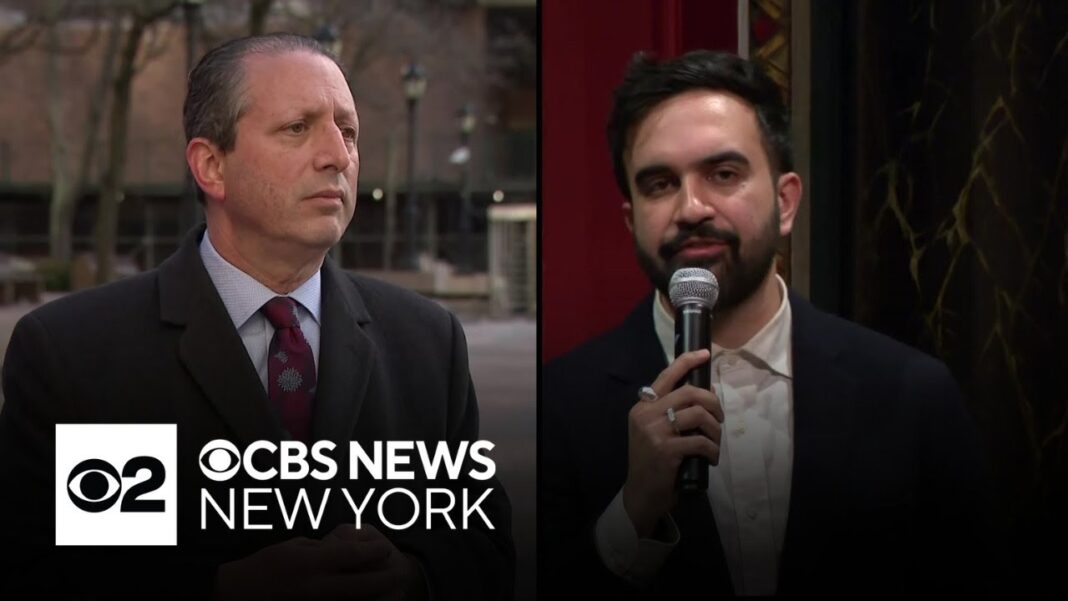
They are, quite literally, seeing red. New York City’s tightly knit but increasingly volatile constellation of radical socialists has erupted into open rebellion after their de facto standard-bearer, Mayor-elect Zohran Mamdani, broke ranks and endorsed outgoing City Comptroller Brad Lander’s congressional bid—over one of their own ideological compatriots. As first reported and extensively detailed in a report on Wednesday in The New York Post, the episode has exposed deep fault lines within the city’s far-left ecosystem and threatens to undermine Mamdani’s carefully assembled political coalition before he has even taken office.
At the center of the uproar is Lander’s formal announcement on Wednesday morning that he will mount a Democratic primary challenge against Rep. Dan Goldman in New York’s 10th Congressional District. The Manhattan-based seat had long been viewed as fertile ground for the progressive left and had also been quietly eyed by City Council member Alexa Avilés, a fellow Democratic Socialist of America (DSA) member and ideological ally of Mamdani. Instead, Mamdani’s decision to throw his support behind Lander—a progressive, but not a DSA member—has detonated what The New York Post report described as a full-blown meltdown among the city’s socialist activists.
Within hours of Lander’s announcement, social media platforms favored by the DSA lit up with outrage. One self-identified member derided the move as “crazy maneuvering by Zohran and a complete failure for DSA,” a sentiment echoed widely in online activist circles and quoted by The New York Post. Another incredulous commenter summarized the perceived betrayal more bluntly: “So basically Zohran, a DSA member, is gonna be endorsing Brad Lander, who is not a DSA member, over Alexa Avilés, a DSA member, in NY-10.”
The backlash was not confined to anonymous accounts. David-Desyrée, a member of the NYC-DSA Citywide Leadership Committee, publicly rebuked Mamdani on X, accusing him of abandoning the very organization that propelled him to prominence. “I’m so beyond disappointed in Zohran for backing Lander and sidestepping the organization that got him elected,” Desyrée wrote, in comments highlighted by The New York Post. One particularly unvarnished post from within the movement dispensed with euphemism altogether: “Also f— Brad Lander.”
The language, while coarse, underscored a deeper grievance: for many DSA activists, Mamdani’s ascent was meant to herald a new era in which the movement’s candidates would be elevated and protected by one another. His endorsement of Lander—seen by many as a consummate insider progressive rather than a revolutionary socialist—has been interpreted as a betrayal of that pact.
Avilés herself had never formally declared a run for Congress, but as The New York Post reported, she was widely rumored to be preparing a primary challenge against Goldman. Lander’s announcement, however, coupled with Mamdani’s backing and the endorsement of Vermont Sen. Bernie Sanders, appears to have effectively frozen her out.
In a carefully worded statement responding to the news, Avilés bowed out of contention. “In recent weeks, I have received an outpouring of support from community members encouraging me to run for Congress,” she wrote. “However, after conversations with family and movement, I have decided that there is far too much to be done at home in Brooklyn and at City Hall.” She concluded by thanking “my comrade in the NYC-DSA” and insisting that “the fight for a dignified city has only just begun.”
Yet, as The New York Post report observed, the tone of the statement did little to quell speculation that Avilés had been nudged aside by forces far more powerful than personal deliberation. To her supporters, the episode smacked less of voluntary withdrawal and more of political displacement.
The intrigue surrounding Mamdani’s endorsement is compounded by the back story between him and Lander. According to sources cited in The New York Post report, Lander had initially hoped to secure a senior role in the incoming Mamdani administration. During the closing days of the Democratic mayoral primary, the two cross-endorsed each other, signaling what appeared to be a strategic alliance between progressive factions.
That alliance, however, reportedly unraveled after Mamdani clinched victory. Sources told The New York Post that a falling out between the two derailed Lander’s City Hall ambitions, prompting him to pivot toward Congress. In this telling, Mamdani’s endorsement of Lander’s congressional bid may represent a calculated consolation prize—support for a different office in exchange for clearing the field of a more ideologically rigid challenger.
For DSA activists, the maneuver has reinforced suspicions that Mamdani is increasingly willing to subordinate movement loyalty to political expediency.
The Lander endorsement is not an isolated incident. As The New York Post report noted, Mamdani has previously intervened in other high-profile intra-left contests, often to the chagrin of his own ideological allies. Most notably, he reportedly worked behind the scenes to discourage fellow DSA member Councilman Chi Ossé from pursuing a primary challenge against House Minority Leader Hakeem Jeffries. Ossé ultimately abandoned the bid, a decision that further fueled accusations that Mamdani selectively deploys his influence to shape outcomes rather than empower grassroots challengers.
To critics within the socialist movement, these episodes reveal a pattern: Mamdani, they argue, is less interested in building an independent DSA power structure than in positioning himself as a broker capable of negotiating with moderates and establishment progressives alike.
From a broader political perspective, Mamdani’s calculus is not without logic. As The New York Post has repeatedly pointed out, his electoral success rested on a fragile alliance of moderate Democrats, progressives, and socialists. Maintaining that coalition requires constant balancing—an exercise that inevitably produces casualties.
Backing Lander, a well-known progressive with citywide name recognition and deep ties to institutional Democrats, may help Mamdani reassure moderates uneasy about his socialist affiliations. Yet the move risks alienating the very activists who provided the ground troops, enthusiasm, and ideological fervor that powered his rise.
“The endorsement could end up dogging Mamdani as he tries to hold together an unstable alliance,” The New York Post warned, noting that the socialist base is both vocal and unforgiving when it perceives disloyalty.
The fallout has forced the NYC-DSA to confront uncomfortable questions about its relationship with elected officials. Is the organization a disciplined movement capable of enforcing loyalty, or merely a loose network whose members are free to chart their own paths once in power? The Mamdani-Lander episode suggests the latter, a realization that has unsettled activists accustomed to viewing electoral victories as collective achievements.
For Mamdani, the controversy calls attention to the perils of leadership within an ideologically diverse coalition. His ascent made him a symbol of socialist momentum; his actions now reveal the constraints of governing—and aspiring to govern—within a city as politically complex as New York.
As The New York Post report indicated, the anger directed at Mamdani is not merely about one endorsement or one congressional race. It reflects a deeper anxiety within the far left: that proximity to power inevitably blunts radicalism, and that leaders who once spoke the language of movement politics may, when faced with real authority, choose pragmatism over purity.
Whether Mamdani can weather this storm remains to be seen. What is clear, however, is that his decision to back Brad Lander has done more than reshape a single congressional contest. It has exposed the fault lines within New York’s socialist movement and signaled that the era of unquestioned unity on the far left may already be drawing to a close—a development The New York Post suggests could have lasting implications for the city’s political future.