



By: Fern Sidman
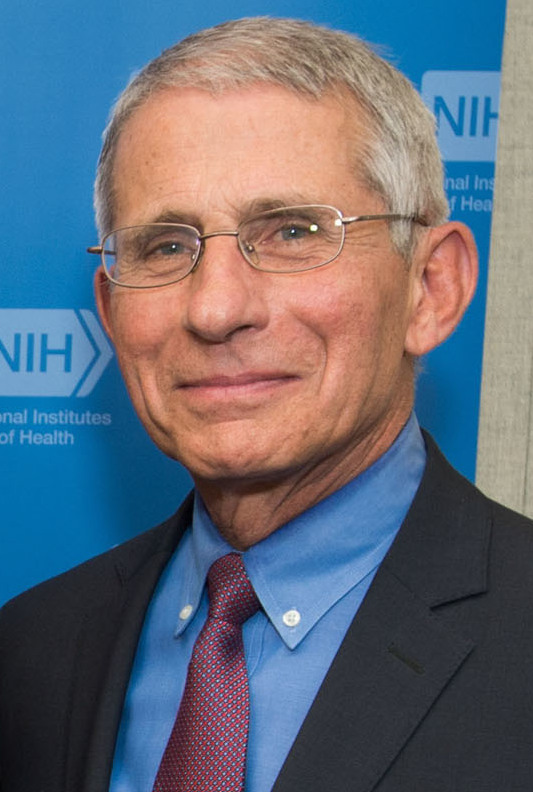
The man whose face and distinctive voice have now become a familiar sight to Americans who are consistently tuned in to President Trump’s daily press briefings on the COVID-19 pandemic is none other than Brooklyn native, Dr. Anthony Fauci.
As the director of the National Institute of Allergy and Infectious Diseases under six presidents, Dr. Fauci, 79, is an expert epidemiologist who has been the voice and a repository of knowledge as the nation battles against the rapidly-spreading Coronavirus that has claimed so many lives.
Fauci was born in the Bensonhurst section of Brooklyn. According to a report on the brooklynpaper.com web site, He then moved with his parents to Dyker Heights where his folks (Stephen and Eugenia Fauci) opened an eponymously named pharmacy on 13th Avenue and 83rd Street. As a young boy, Fauci delivered prescriptions to customers of his parents’ pharmacy and got a first-hand education on medicine.
Having been appointed to the White House Coronavirus Task Force by President Trump, Dr. Fauci has become a celebrity of sorts as he is prominently featured at the daily White House press briefing and can be seen as a guest on a panoply of television talk shows.
According to a study conducted by Business Insider, he has been hailed as the person who is the number one source for trustworthy information on this enigmatic and reprehensible virus.
According to the NIAID website, Dr. Fauci oversees an extensive portfolio of basic and applied research to prevent, diagnose, and treat established infectious diseases such as HIV/AIDS, respiratory infections, diarrheal diseases, tuberculosis and malaria as well as emerging diseases such as Ebola and Zika.
He was one of the principal architects of the President’s Emergency Plan for AIDS Relief (PEPFAR), a program that has saved millions of lives throughout the developing world.
Dr. Fauci also is the longtime chief of the Laboratory of Immunoregulation. He has made many contributions to basic and clinical research on the pathogenesis and treatment of immune-mediated and infectious diseases. He helped pioneer the field of human immunoregulation by making important basic scientific observations that underpin the current understanding of the regulation of the human immune response.
In addition, Dr. Fauci is widely recognized for delineating the precise ways that immunosuppressive agents modulate the human immune response. He developed effective therapies for formerly fatal inflammatory and immune-mediated diseases such as polyarteritis nodosa, granulomatosis with polyangiitis (formerly Wegener’s granulomatosis), and lymphomatoid granulomatosis. A 1985 Stanford University Arthritis Center Survey of the American Rheumatism Association membership ranked Dr. Fauci’s work on the treatment of polyarteritis nodosa and granulomatosis with polyangiitis among the most important advances in patient management in rheumatology over the previous 20 years.
Dr. Fauci has made seminal contributions to the understanding of how HIV destroys the body’s defenses leading to its susceptibility to deadly infections. Further, he has been instrumental in developing treatments that enable people with HIV to live long and active lives. He continues to devote much of his research to the immunopathogenic mechanisms of HIV infection and the scope of the body’s immune responses to HIV.
In a 2019 analysis of Google Scholar citations, Dr. Fauci ranked as the 41st most highly cited researcher of all time. According to the Web of Science, he ranked 8th out of more than 2.2 million authors in the field of immunology by total citation count between 1980 and January 2019.
Dr. Fauci has delivered major lectures all over the world and is the recipient of numerous prestigious awards, including the Presidential Medal of Freedom (the highest honor given to a civilian by the President of the United States), the National Medal of Science, the George M. Kober Medal of the Association of American Physicians, the Mary Woodard Lasker Award for Public Service, the Albany Medical Center Prize in Medicine and Biomedical Research, the Robert Koch Gold Medal, the Prince Mahidol Award, and the Canada Gairdner Global Health Award. He also has received 45 honorary doctoral degrees from universities in the United States and abroad.
Dr. Fauci is a member of the National Academy of Sciences, the National Academy of Medicine, the American Academy of Arts and Sciences, and the American Philosophical Society, as well as other professional societies including the American College of Physicians, the American Society for Clinical Investigation, the Association of American Physicians, the Infectious Diseases Society of America, the American Association of Immunologists, and the American Academy of Allergy, Asthma & Immunology. He serves on the editorial boards of many scientific journals; as an editor of Harrison’s Principles of Internal Medicine; and as author, coauthor, or editor of more than 1,300 scientific publications, including several textbooks.
As was reported on the brooklynpaper.com web site, Fauci attended Catholic schools while living in New York City. During his elementary school years he attended Our Lady of Guadalupe Academy in Bensonhurst and then moved on to Regis High School on the Upper East Side of Manhattan.
It was there that Fauci captained the school’s basketball team and graduated in 1958. He then went to the College of the Holy Cross, graduating in 1962 with a Bachelor of Arts in classics. Fauci then attended medical school at Cornell University Medical College where he graduated first in his class with a Doctor of Medicine in 1966. He then completed an internship and residency at the New York Hospital-Cornell Medical Center.
In 1968, Fauci joined the National Institutes of Health as a clinical associate in the Laboratory of Clinical Investigation (LCI) at the National Institute of Allergy and Infectious Diseases.[8] In 1974, he became Head of the Clinical Physiology Section, LCI, and in 1980 was appointed Chief of the Laboratory of Immunoregulation. He has turned down several offers to lead his agency’s parent, the NIH, and has been at the forefront of US efforts to contend with viral diseases like HIV, SARS, the 2009 swine flu pandemic, MERS, Ebola and COVID-19.
He was awarded the Presidential Medal of Freedom by President George W. Bush for his extensive research and findings on outbreaks of global diseases that have proven to be fatal.
In terms of stepping up to the plate in combatting the COVID-19 outbreak, Fauci has consistently voiced his concerns for such precautionary health measures as staying at home, scrupulously practicing social distancing, and domestic travel bans among other related matters.
He recently commented that President Trump’s recent order to extend the self-isolation tract until the end of April was a “wise and prudent decision.”
Fauci is clearly a staunch advocate of mitigation in the fight against the deadly virus that has ravaged the nation and the world and recently said that it is having the desired effect as less people are entering New York City hospitals for treatment for the virus and less people are in hospital intensive care units.