



|
Getting your Trinity Audio player ready...
|
By: Fern Sidman
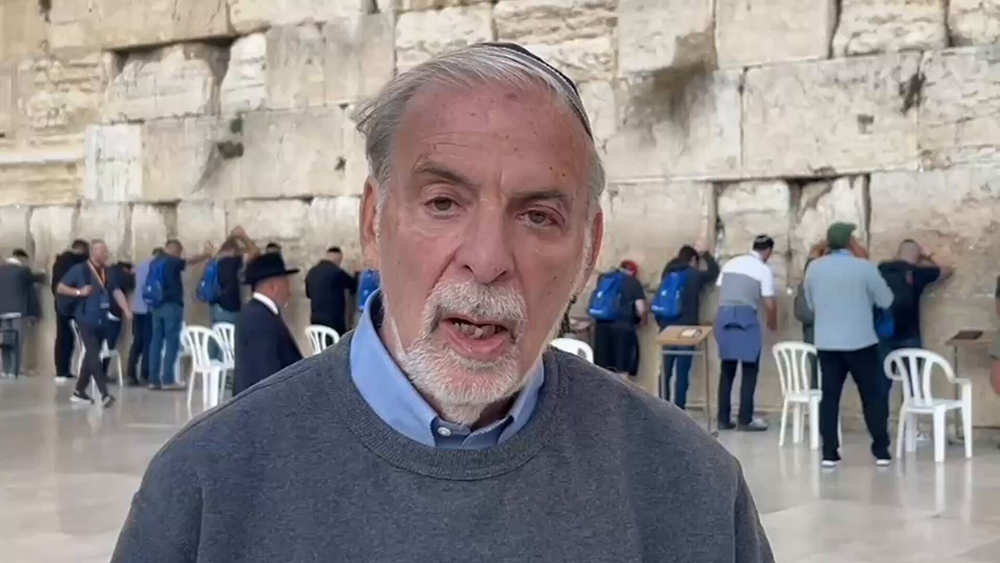
In a dramatic twist in New York City’s volatile mayoral race, Dov Hikind, one of the most influential Orthodox Jewish voices in city politics, has abandoned his long-standing support for Republican candidate Curtis Sliwa and thrown his weight behind former Governor Andrew Cuomo — a move designed, he said, to block the “radical and dangerous rise” of Democratic Socialist frontrunner Zohran Mamdani.
The decision, first reported in The New York Post on Sunday, shines a proverbial spotlight on a growing sense of urgency within New York’s Orthodox Jewish community, which views Mamdani’s candidacy as an existential threat to the city’s future and to the safety of its Jewish residents.
“I have nothing but good things to say about Curtis,” Hikind told The New York Post. “But at the end of the day, it’s very clear that Curtis can’t win. I don’t want New York to disappear. Mamdani is a threat to the well-being of every New Yorker. He will destroy New York.”
Hikind’s endorsement of Cuomo — a Democrat running as an independent after losing the party’s nomination to Mamdani in June’s ranked-choice primary — represents a stunning political reversal for the veteran activist. Hikind, founder of Americans Against Antisemitism and a former Democratic assemblyman representing Borough Park and Midwood from 1983 to 2018, has long been one of the city’s most vocal supporters of law-and-order conservatism, often aligning with Republican candidates who promised to combat crime and antisemitism.
His public pivot away from Sliwa, the red-beret-wearing founder of the Guardian Angels, has sent shockwaves through Orthodox neighborhoods across Brooklyn and Queens, where voters had largely viewed Sliwa as the most reliable defender of Jewish security and values in recent years.
But as Hikind explained to The New York Post, his decision was driven not by affinity for Cuomo but by the stark arithmetic of political reality. With Mamdani leading by double digits in recent polls and Sliwa trailing in a distant third, Hikind said it was time to consolidate opposition around the only candidate with a plausible path to victory.
“Cuomo is not a good guy,” Hikind conceded in his interview with The New York Post, “but he’s the only one who can stop Mamdani. If it’s Mamdani or Cuomo, it has to be Cuomo.”
At the center of Hikind’s move lies profound concern over Mamdani’s anti-Israel record and association with radical political movements, which cross the line into virulent antisemitism. As The New York Post reported, Mamdani has publicly supported the Boycott, Divestment, and Sanctions (BDS) movement targeting Israel and once vowed to arrest Israeli Prime Minister Benjamin Netanyahu as a “war criminal” if he were to visit New York City.
“The Jews I know are in an absolute panic,” Hikind told The New York Post.
Mamdani, a 34-year-old Uganda-born assemblyman representing Astoria, has built his campaign around sweeping promises to defund the NYPD’s Strategic Response Group, abolish cash bail entirely, and redirect billions in city funds from policing to social welfare programs.
But it is his rhetoric on Israel and Zionism that has most alarmed Jewish voters. In statements documented by The New York Post, Mamdani has repeatedly accused Israel of “genocide” in Gaza and described Zionism as “a racist ideology.” His alignment with far-left activists and anti-Israel protest movements has placed him squarely at odds with the city’s Jewish population — including many progressives who otherwise share his views on housing, healthcare, and education.
Hikind, who has spent decades confronting antisemitic incidents and organizing solidarity campaigns for Israel, said Mamdani’s record made him “unfit to lead a city with the largest Jewish population outside of Israel.”
“He’s not just anti-Israel,” Hikind said. “He’s anti-Jewish identity itself. He supports people and movements that glorify terrorism. That’s not just politics — that’s hatred.”
For Cuomo, Hikind’s endorsement could prove a critical moment in his political rehabilitation after his resignation from the governor’s office in 2021 amid sexual harassment allegations and pandemic-related controversies. While the former governor remains a polarizing figure, The New York Post noted that he continues to command deep reservoirs of loyalty among traditional Democrats, older voters, and segments of the Jewish community that remember his record of strong ties with Israel and consistent condemnation of antisemitism.
Though Hikind admitted to having “issues” with Cuomo — calling him “not a good guy” — he told The New York Post that personal misgivings pale in comparison to the threat posed by Mamdani.
“This isn’t about liking Cuomo,” Hikind said. “It’s about saving New York from collapse. If the choice is between a flawed but competent leader and a socialist radical who sides with Israel’s enemies, the decision is easy.”
Cuomo, who entered the race as an independent after losing the Democratic primary, has attempted to recast himself as a centrist alternative to both Mamdani’s far-left socialism and Sliwa’s hard-right populism. His campaign has emphasized restoring public safety, supporting law enforcement, and defending New York’s Jewish communities from rising antisemitic attacks — positions that have drawn renewed interest from moderates across party lines.
The New York Post reported that Cuomo has quietly courted endorsements from Orthodox leaders, viewing their dense voting blocs in Brooklyn and Queens as essential to mounting a late challenge. Hikind’s public backing may now open the floodgates for other Orthodox groups to follow.
Despite Hikind’s endorsement, The New York Post noted that the race remains stacked in Mamdani’s favor. The latest polling shows the Democratic Socialist maintaining a double-digit lead over Cuomo, with Sliwa further behind. Analysts told The Post that Mamdani’s advantage is largely the product of a divided anti-Mamdani vote, as Cuomo and Sliwa compete for overlapping blocs of centrist, conservative, and pro-Israel voters.
If the race were a two-person contest, polls suggest, Mamdani’s margin would narrow significantly. But as things stand, the split opposition virtually guarantees the socialist candidate a plurality on Election Day.
“Wake up, New York!” Hikind urged in his remarks to The New York Post. “Every vote that’s not for Cuomo is a vote that helps Mamdani. This is not about party loyalty anymore — it’s about the survival of the city.”
The showdown between Mamdani, Cuomo, and Sliwa has become a referendum on the ideological soul of New York City. Mamdani’s insurgent campaign, powered by grassroots activists and leftist organizations, has drawn energy from disillusioned young voters who see him as a symbol of political renewal. Cuomo, meanwhile, represents institutional stability and a return to pragmatic governance, while Sliwa continues to rally traditional conservatives frustrated by rising crime and moral decline.
As The New York Post report observed, Hikind’s defection from Sliwa to Cuomo signals that even among staunch conservatives, ideological purity is giving way to strategic survival. Orthodox leaders, long accustomed to political independence, now face a stark choice: back a tarnished centrist with a fighting chance, or stand on principle and risk a socialist takeover of City Hall.
For Dov Hikind, the decision is not about political perfection but existential necessity. As he told The New York Post, New York stands “at the edge of a precipice,” and the city’s Jewish community cannot afford to gamble with its future.
“I’ve known Cuomo a long time. He’s not my hero,” Hikind said. “But I know what’s at stake. If Mamdani wins, it’s the end of New York as we know it.”
With just days left until Election Day, Hikind’s endorsement injects new energy into Cuomo’s uphill battle. Yet as The New York Post report noted, it may also mark a sobering moment of clarity: in a city defined by ideological extremes, the fight for its identity may depend not on loyalty, but on survival.

Born in Manhattan in 1934, i am old enough to recall when Dov Hikind wass a lieutenant in Rabbi Meir Kahane’s Jewish Defense League which the US Justice Dept. determined to be a terrorist organization and whose sister organization in Israel was banned from participating in election politics for the same reason. He is fortunate to have escaped prosecution for his activities within the JDL but, while longer of tooth and relatively, less dangerous than he was in the past, he is the last person who should be telling New Yorkers how to vote.