



|
Getting your Trinity Audio player ready...
|
By: Fern Sidman
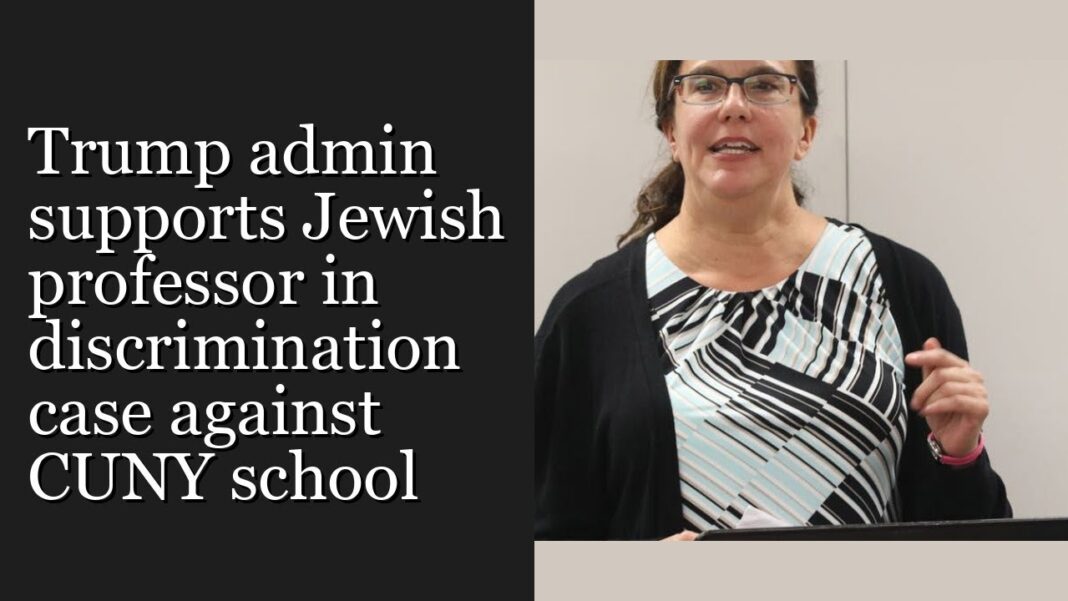
In a major development that could reshape how universities address antisemitism, the U.S. Department of Justice has formally intervened in a civil rights lawsuit brought by Professor Leah Garrett against Hunter College, lending significant weight to allegations that the CUNY institution failed to protect her from a hostile environment fueled by antisemitic protests. As reported by VIN News, the case is emerging as a high-profile test of the federal government’s commitment to combating Jew-hatred on American campuses.
Professor Garrett, who heads the Jewish Studies Center at Hunter College, filed her federal lawsuit late last year. According to her complaint, she endured persistent harassment in the wake of Hamas’s October 7 massacre in Israel. The complaint describes a campus environment where antisemitic imagery—such as bloody Stars of David and vandalized posters of Israeli hostages—was routinely displayed by protestors. Despite her repeated requests for the university to remove these incendiary materials, Garrett claims Hunter officials refused, citing administrative delays and bureaucratic red tape.
Now, the Justice Department has weighed in, directly challenging the school’s defense that such displays were protected under the First Amendment. In its recent court filing, the DOJ argued that constitutional protections for speech cannot override federal civil rights laws designed to ensure safe, non-hostile educational and professional environments. As the VIN News report noted, the DOJ emphasized that under Title VI of the Civil Rights Act, publicly funded schools have a legal obligation to address and remedy any behavior that creates a hostile atmosphere for students or staff based on race, religion, or national origin.
“The First Amendment does not immunize a federally funded university from liability when it fails to respond to discriminatory harassment,” the DOJ stated—marking a rare and pointed intervention by the federal government in a university-level civil rights dispute.
Brooke Goldstein, founder and executive director of The Lawfare Project, which is representing Professor Garrett, welcomed the DOJ’s involvement. In a statement shared with VIN News, Goldstein called the move “a critical step toward holding public institutions accountable for enabling antisemitism to fester unchallenged.” She added that the DOJ’s filing affirms what Jewish students and faculty have been saying for months: that antisemitic harassment is not merely offensive speech, but a violation of federal law when it creates a toxic learning or work environment.
Hunter College responded with a brief statement expressing its commitment to a “safe and inclusive campus,” but declined to comment further, citing the ongoing nature of the litigation. Still, the growing attention on the case has placed the Manhattan-based CUNY school under intense scrutiny, especially as other CUNY campuses have faced similar controversies over their handling of antisemitic incidents.
This lawsuit is not unfolding in isolation. As VIN News has reported extensively, the Trump administration has made tackling antisemitism on college campuses a key priority. In recent months, federal officials have pulled hundreds of millions of dollars in funding from prestigious institutions such as Harvard University and Columbia University, following investigations into their failure to protect Jewish students from targeted hate during pro-Hamas campus demonstrations.
In addition, the administration has signaled its willingness to take even more aggressive measures, including the possible revocation of visas for foreign students involved in unlawful or disruptive protests that cross into intimidation or hate speech.
Professor Garrett’s case could set a crucial precedent. Should the court find that Hunter College’s inaction constituted a violation of civil rights law, universities nationwide may be forced to reevaluate their responses to rising antisemitism, the VIN News report explained. Many Jewish students and faculty say the climate on campuses has drastically worsened since October 7, with administrators frequently reluctant to take meaningful action for fear of backlash or accusations of stifling political speech.
One thing is clear: the federal government’s involvement in Garrett’s case has raised the stakes for universities across the country. With the DOJ now firmly asserting that antisemitism cannot hide behind free speech claims, higher education institutions may soon be held to a much higher standard of accountability.
