



|
Getting your Trinity Audio player ready...
|
By: Fern Sidman
By any measure, the message was chilling in its bluntness. Killing Israel’s consul general in New York, it declared, would take “one minute with a single bullet.” It was not a metaphor, not an overheated figure of speech, but an explicit death threat transmitted across borders and continents, landing squarely in the inbox of one of Israel’s most senior diplomatic representatives in the United States.
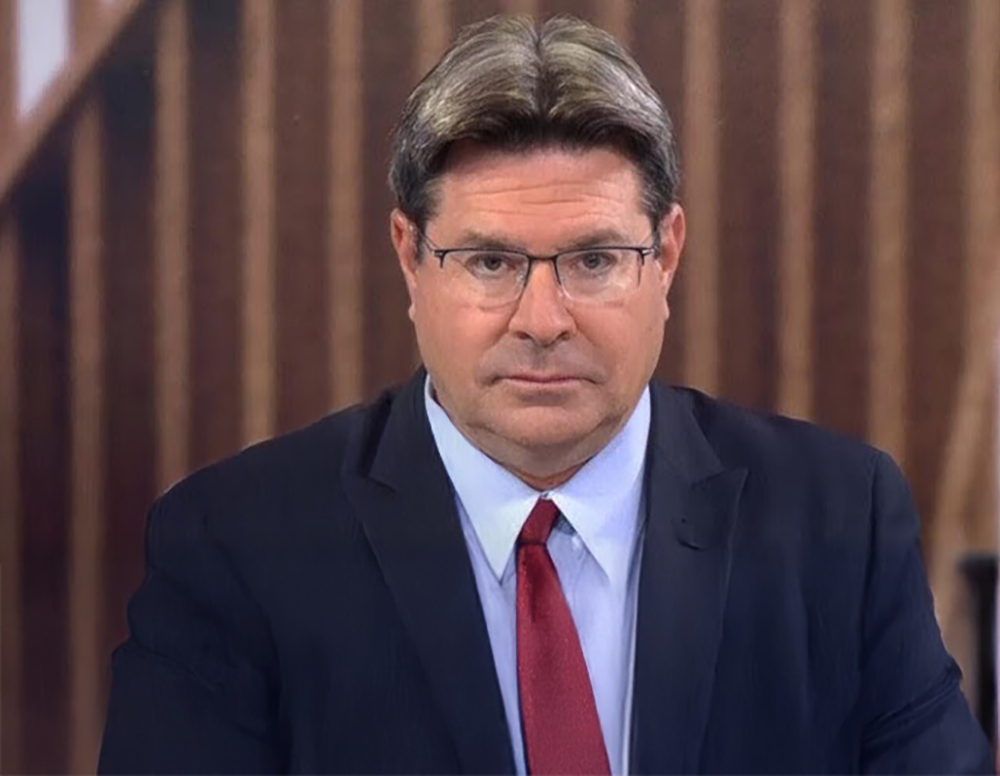
According to law-enforcement officials, New York police have now identified the sender: a Turkish national named Amra Melek, currently believed to be in Turkey and holding a valid U.S. visa. The messages, authorities say, were directed at Ofir Akunis, Israel’s consul general in New York, and were laced with escalating threats tied explicitly to Akunis’ public criticism of Turkey. As VIN News reported on Thursday, the case has rapidly drawn the attention of U.S. federal authorities, Israeli security officials, and the FBI, underscoring the gravity with which such threats against diplomats are treated.
The episode, first revealed through law-enforcement sources offers a stark illustration of how geopolitical tensions increasingly spill into personal intimidation, digital harassment, and threats of violence—often delivered from afar, yet no less serious for their virtual transmission.
Investigators say the messages sent by Melek were not vague or rhetorical. They were precise, personal, and menacing. According to sources familiar with the investigation, Melek warned Akunis to “watch his words,” adding that continued criticism of Turkey would “lead to your end.” The threat escalated when Melek wrote explicitly that killing the consul general would take “one minute with one bullet.”
When Akunis responded with a brief and pointed reply—“Really? Is that a warning?”—the answer was even more ominous. “Interpret it however you want,” Melek allegedly wrote. “If you continue like this, I will destroy you.”
Law-enforcement officials told VIN News that this exchange, preserved and reviewed by investigators, left little doubt about the sender’s intent. While no immediate physical attempt followed the messages, authorities stressed that credible threats against diplomats constitute serious federal offenses, particularly when motivated by political or nationalist ideology.
“This is not protected speech,” one law-enforcement source told VIN News. “Once you cross into explicit threats of violence against a foreign diplomat, you are in criminal territory.”
Beyond the threats themselves, investigators were struck by the ideological framing embedded in the messages. According to officials briefed on the case, Melek interwove his warnings with nationalistic assertions about Turkey’s historical role, claiming that the Ottoman Empire had protected Jews and that Israelis therefore “owe gratitude” to Turkey.
Authorities said these statements were not conciliatory but accusatory, delivered alongside explicit threats as a way of asserting moral superiority while justifying intimidation. VIN News has reported that investigators view this rhetorical combination—historical grievance paired with violent threat—as increasingly common in politically motivated harassment cases.
“This wasn’t just personal rage,” one source explained. “It was wrapped in a narrative about national honor, historical debt, and perceived insult. That makes it more dangerous, not less.”
The messaging appears to reflect broader regional tensions, particularly amid strained relations between Israel and Turkey and heightened emotions surrounding Middle Eastern geopolitics. While Turkish officials have not commented on the specific case, the rhetoric mirrors a wider pattern in which political disputes are personalized and weaponized against individual representatives abroad.
Threats against diplomats are not new, but the speed and ease with which such threats can now be delivered has transformed the security landscape. As VIN News has documented, social media platforms, encrypted messaging apps, and direct digital communication channels have made it easier than ever for individuals to reach high-profile targets.
What distinguishes this case, according to law-enforcement officials, is the directness of the threat and the identification of a named individual with a known location and nationality. Melek, investigators say, is currently believed to be in Turkey, and information regarding his identity and communications has been forwarded to U.S. authorities for further action.
At this stage, no arrest has been made. However, officials emphasized that the United States and Turkey maintain an extradition agreement, a fact that could become significant if U.S. prosecutors decide to pursue formal charges.
“Threats against foreign diplomats are taken extremely seriously,” a federal law-enforcement source told VIN News. “The location of the suspect does not place him beyond the reach of the law.”
The involvement of the FBI reflects the seriousness of the case. According to sources cited by VIN News, both Israeli security officials and the FBI have been fully briefed, and the matter is being treated as a potential federal offense with international implications.
Under U.S. law, threats against foreign officials can trigger severe penalties, particularly when they involve interstate or international communications. Prosecutors also examine whether such threats constitute terrorism-related offenses when motivated by political ideology.
Legal experts told VIN News that even absent an immediate plot, explicit threats can support criminal charges if prosecutors determine they were intended to intimidate or coerce a foreign official in the performance of his duties.
“The law does not require a bullet to be fired,” one former federal prosecutor explained. “The threat itself, if credible, can be enough.”
In a statement issued following the revelation of the threats, the Israeli Consulate in New York emphasized its confidence in both Israeli and American security services. According to the report at VIN News, the consulate underscored that the incident would not deter Akunis from carrying out his diplomatic mission.
“Threats and incitement will not deter the consul general from representing the positions of the State of Israel and the Jewish people,” the statement read, “even in the face of the most hostile elements.”
Security around the consul general and consulate staff has not been publicly detailed, but sources familiar with standard diplomatic protocols say such incidents typically trigger heightened protective measures, both visible and unseen.
For Akunis, a seasoned politician and former Israeli cabinet minister, the episode underscores the personal risks increasingly borne by diplomats in an era of polarized politics and transnational activism. As VIN News has noted in prior reporting, Israeli officials abroad have faced a surge in threats and harassment since the escalation of regional conflicts, often fueled by online radicalization.
While the Melek case stands out for its stark language, experts warn it is part of a broader pattern. Diplomats from multiple countries have reported increased harassment, threats, and intimidation linked to geopolitical disputes. The digital sphere, analysts say, has lowered the threshold for such behavior while amplifying its psychological impact.