



|
Getting your Trinity Audio player ready...
|
By: Meyer Wolfsheim
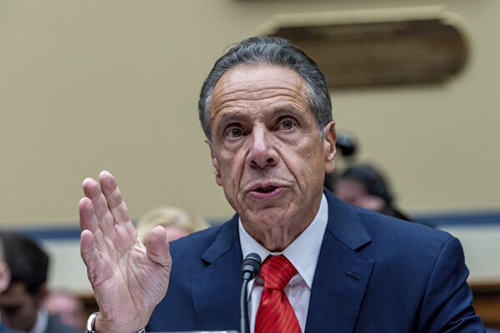
The stunning defeat of Andrew Cuomo in the Democratic primary for New York City mayor wasn’t just a personal humiliation — it was a loud and public reckoning for the city’s once-feared labor unions. Despite throwing their weight behind the former governor with a flurry of high-profile endorsements, Big Labor found itself exposed as politically impotent and increasingly irrelevant. Their vaunted ground game, once seen as a decisive factor in major elections, failed to deliver anything close to victory, NY Post reported
Cuomo’s campaign leaned heavily on the endorsement of major unions like SEIU 1199, Local 32BJ, the Hotel Trades and Gaming Council, Teamsters Local 237, and the powerful hardhat construction trades. These groups had long been seen as kingmakers in city politics — but not this time. Labor historian and CUNY professor Joshua Freeman told the Post the unions looked like “paper tigers” in this race, with membership that’s less engaged and less politically active than in years past. “In some respects, the impressive DSA field operation has moved into the void,” he noted, referring to Democratic Socialist winner Zohran Mamdani and his legion of grassroots foot soldiers, New York Post reports.
The New York Post reports that Mamdani’s volunteer army dramatically outworked the union-backed Cuomo campaign, fueling a surge that the city’s political establishment never saw coming. In debates and on the trail, Cuomo routinely touted labor endorsements as evidence of momentum, but the results proved those endorsements carried little real-world impact. In fact, it’s likely that some rank-and-file members quietly voted against their leadership’s pick — echoing national trends where union households have bucked traditional Democratic lines, including voting for Donald Trump in 2024.
Adding to labor’s waning influence is New York’s generous 8-to-1 public matching funds program, which reduces candidates’ dependence on union contributions. Several political operatives and union insiders acknowledged that independent super PACs and grassroots digital fundraising have become far more influential in modern campaigns than traditional union clout. “The unions were paper tigers,” one veteran labor consultant said bluntly. “Their get-out-the-vote operations are diminished. They’ve been living off past success.”
Union membership in New York City has also eroded. In 2024, only around 20% of city workers belonged to unions, down from nearly 25% a decade ago. Compounding the problem is that many union members — especially in the construction and uniformed services — no longer live in the five boroughs. This makes it harder for unions to organize local canvassing operations and rally boots on the ground for city-specific campaigns. “The ability to mobilize large groups of members has dramatically cratered,” said a longtime union source, New York Post reported.
Former Gov. David Paterson, a Cuomo ally, admitted labor’s punch is nothing like it once was. “The unions don’t work like they did years ago for a candidate. There was not a lot of street activity,” he said. Even the largest public sector union, DC 37, backed losing candidate Adrienne Adams while awkwardly ranking Mamdani second. The United Federation of Teachers sat the race out altogether, its membership deeply divided.
Meanwhile, some unions are now scrambling to align themselves with Mamdani. Local 32BJ, the Hotel Trades and Gaming Council, and the state Nurses’ Association have already switched sides. Transport Workers Union chief John Samuelsen, who publicly supported Mamdani’s free-bus-fare plan, said many labor leaders wrongly assumed Cuomo was a lock.
