



|
Getting your Trinity Audio player ready...
|
Columbia U Announces Mass Layoffs of Researchers After Trump Admin Cuts $400M in Federal Research Grants
By: Fern Sidman
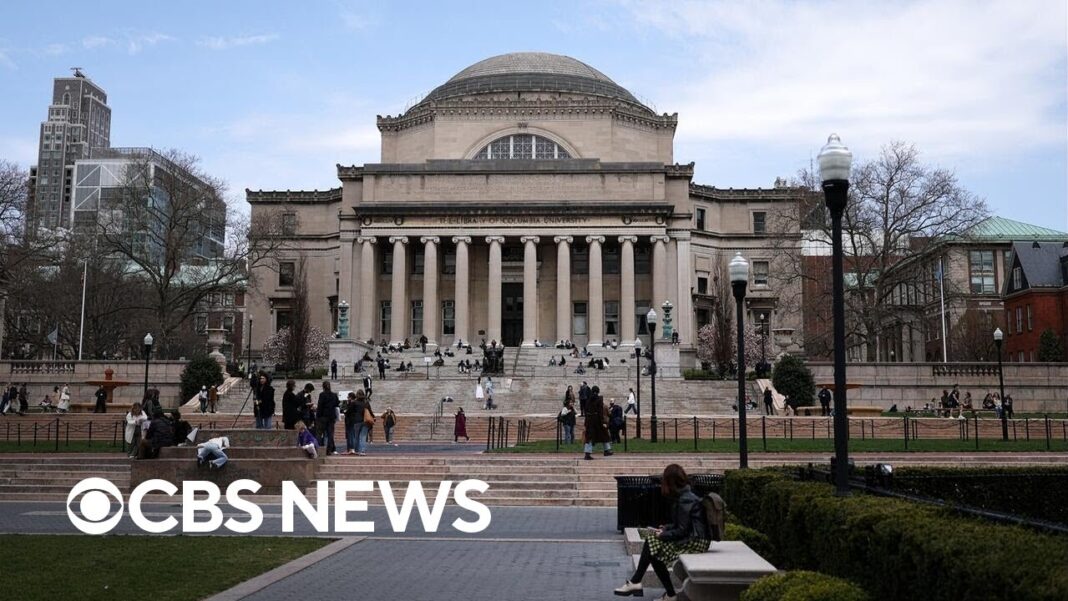
Columbia University announced Tuesday that it will lay off nearly 180 employees whose salaries had been funded through federal research grants, a sobering development that highlights the profound impact of the Trump administration’s recent decision to slash funding to the Ivy League institution. As The New York Times reported on Tuesday, the layoffs signal the deepest tremors yet from a sweeping federal action that has sent shockwaves through Columbia’s research infrastructure and left its academic community reeling.
The funding cuts — totaling $400 million — were imposed in March by a Trump administration task force established to address antisemitism on U.S. college campuses. Columbia, which has been at the epicenter of heated debates surrounding antisemitism, free speech, and pro-Hamas, pro-terror activism, was singled out for what the task force described as a failure to protect Jewish students from harassment. Although the university complied with an initial set of demands to improve campus safety and accountability, negotiations over restoring the withheld funds remain ongoing, according to the report in The New York Times.
Claire Shipman, Columbia’s acting president, delivered the announcement in a somber message to the university community. “We have had to make deliberate, considered decisions about the allocation of our financial resources,” she wrote in a campus-wide email co-signed by other top administrators. “Those decisions also impact our greatest resource, our people. We understand this news will be hard.” Her statement, as reported by The New York Times, calls attention to the severity of the moment and the complex trade-offs Columbia now faces.
The layoffs come in tandem with an announcement that Columbia will be “running lighter footprints of research infrastructure,” particularly in areas most affected by the loss of federal funding. According to the information provided in The New York Times report, over 300 multiyear research grants have been either significantly reduced or canceled outright. Among them are critical studies in medical and public health research — sectors where Columbia has long been a national leader.
In 2023 alone, Columbia received approximately $1.3 billion in federal research funding. The National Institutes of Health (NIH) provided the lion’s share — $747 million — while an additional $206 million came from other divisions of the Department of Health and Human Services. Much of this funding supported not only faculty-led research but also the salaries of graduate students, postdoctoral fellows, and research assistants — many of whom now face uncertainty or job loss.
Columbia had initially attempted to buffer the blow by temporarily covering salaries using internal funds while departments scrambled to adjust. But Tuesday’s announcement marks a decisive end to that bridge strategy. As The New York Times report detailed, the university will now allow affected scientists to apply for short-term grants to finish ongoing projects or retain key graduate staff, though those resources will be limited.
The human toll is already being felt across campus. Dr. Tamara Sussman, a researcher in psychiatry whose federal funding was pulled in March, told The New York Times that she had to let go of a research assistant she had only recently hired. Her project focused on understanding how structural racism affects substance use risk among Puerto Rican adolescents — a study she now fears will stall indefinitely.
“This is a really hard time for anyone who wants to do research, but particularly for people who are starting out,” Dr. Sussman said. “It is very disheartening to see the wheels of science kind of grinding to a halt in certain ways.”
Columbia, according to The New York Times, is still lobbying for the restoration of federal funds. Administrators continue to engage with officials in Washington, hoping that compliance with additional oversight or structural changes could unlock the suspended support. Yet, as of this week, no firm timeline has been offered for the return of the funds, leaving researchers and university leadership in limbo.
The situation also raises broader concerns about the fragility of academic independence and the increasing politicization of federal research funding. While the Trump administration has framed the cuts as necessary accountability measures in the face of rising campus antisemitism, critics argue that such sweeping financial penalties jeopardize scientific progress and penalize scholars and students who had no role in the horrifying manifestations of Jew hatred on the Morningside Heights campus.
As the report in The New York Times noted, Columbia’s crisis could serve as a cautionary tale for other institutions navigating the intersection of research, politics, and campus governance. On one hand, the impact of losing hundreds of millions in research dollars extends far beyond university walls — potentially slowing medical breakthroughs, disrupting public health studies, and derailing the careers of the next generation of scientists. On the other hand, such freezing of funds could motivate Columbia and other elite ivy league institutions to take concrete measures to tamp down the toxic campus environment by effectively quashing Jew hatred and other forms of discrimination on campus.
For now, Columbia’s research community must grapple with an uncertain future, while its leadership races to stabilize the institution’s research ecosystem. The layoffs mark not just a financial contraction but a profound moment of reckoning for one of America’s most storied academic institutions.

They sure make it an easy decision!
“The human toll is already being felt across campus. Dr. Tamara Sussman, a researcher in psychiatry whose federal funding was pulled. She focused on understanding how structural racism affects substance use risk among Puerto Rican adolescents — a study she now fears will stall indefinitely.”
What a loss!