



|
Getting your Trinity Audio player ready...
|
By: Ronald J. Edelstein
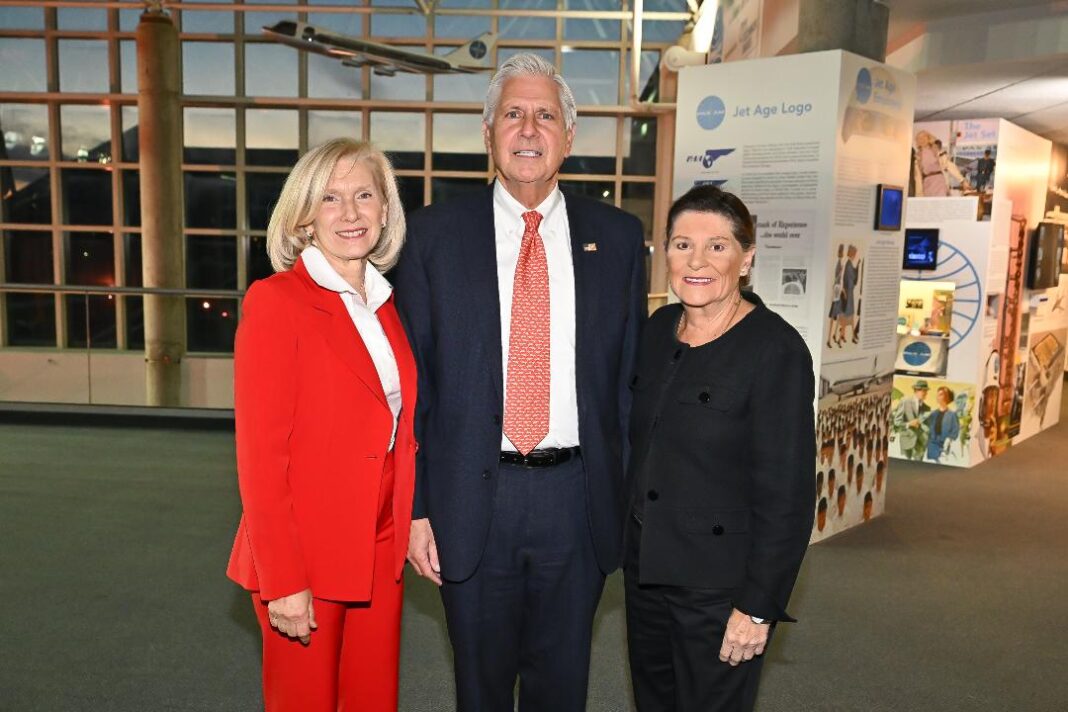
At the Cradle of Aviation Museum on Monday, beneath the suspended wings of historic aircraft and the bright stage lights of political theater, Nassau County Executive Bruce Blakeman transformed a routine swearing-in ceremony into something far more ambitious: a declaration of intent. What unfolded before more than 600 cheering supporters was not merely the commencement of a second term in county office, but what The New York Post described as the opening salvo in what could become one of the most contentious statewide political battles in years.
Blakeman, the Republican executive who has now twice defied Nassau County’s Democratic tilt, used the occasion to sketch a stark contrast between his stewardship on Long Island and the direction of New York State under Governor Kathy Hochul. The crowd did not miss the subtext. His remarks were peppered with pointed references to a state “in turmoil” when he first took office four years ago—an unmistakable dig at Hochul—and with promises that the record he has forged in Nassau is a blueprint for Albany.
The ceremony itself was heavy with symbolism and choreography. International crossover vocalist Christopher Macchio set the tone with a soaring rendition of Leonard Cohen’s “Hallelujah,” a song that has become a modern anthem of resilience and reverence. Moments later, he returned to deliver “God Bless America,” drawing sustained applause from a crowd that The New York Post reported was dominated by Republican leaders, law enforcement officials, and longtime party loyalists.
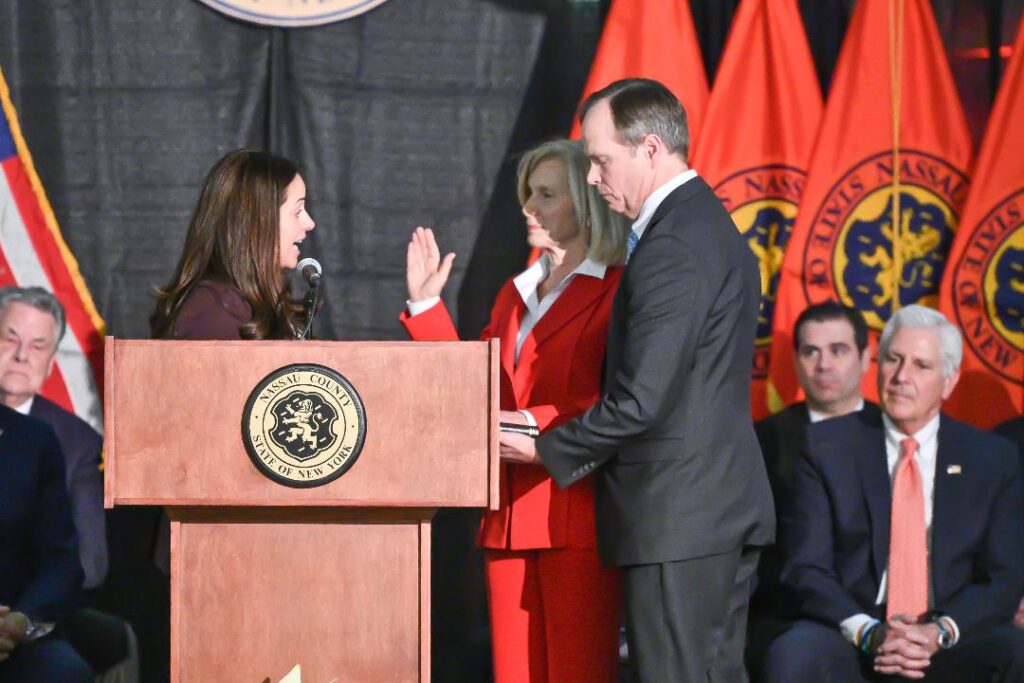
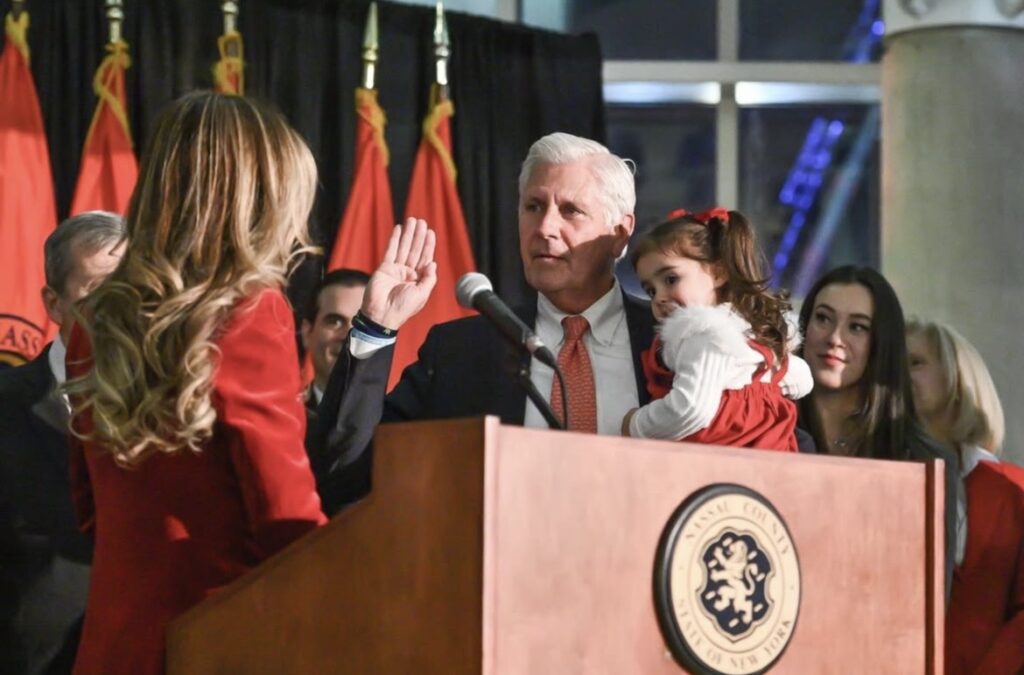
The formalities were precise and steeped in institutional gravitas. The oath of office for Nassau County Comptroller Elaine Phillips was administered by Judge Maria Boultadakis. Joseph G. Cairo Jr., the influential chairman of the Nassau County Republican Committee, introduced Blakeman, framing him as the architect of a conservative revival in a county long considered hostile terrain for the GOP. Judge Segal Blakeman—Blakeman’s wife—administered the oath, a familial touch that underscored the personal stakes of the moment.
Yet it was Blakeman’s speech that electrified the room.
“When I first took office,” he told the audience, “the whole state was in turmoil.” It was a phrase that reverberated beyond the walls of the museum, finding immediate amplification in The New York Post’s coverage. The paper noted how Blakeman portrayed Nassau County as an anomaly—an island of stability, safety, and fiscal restraint in a state he accused of drifting under Democratic leadership.
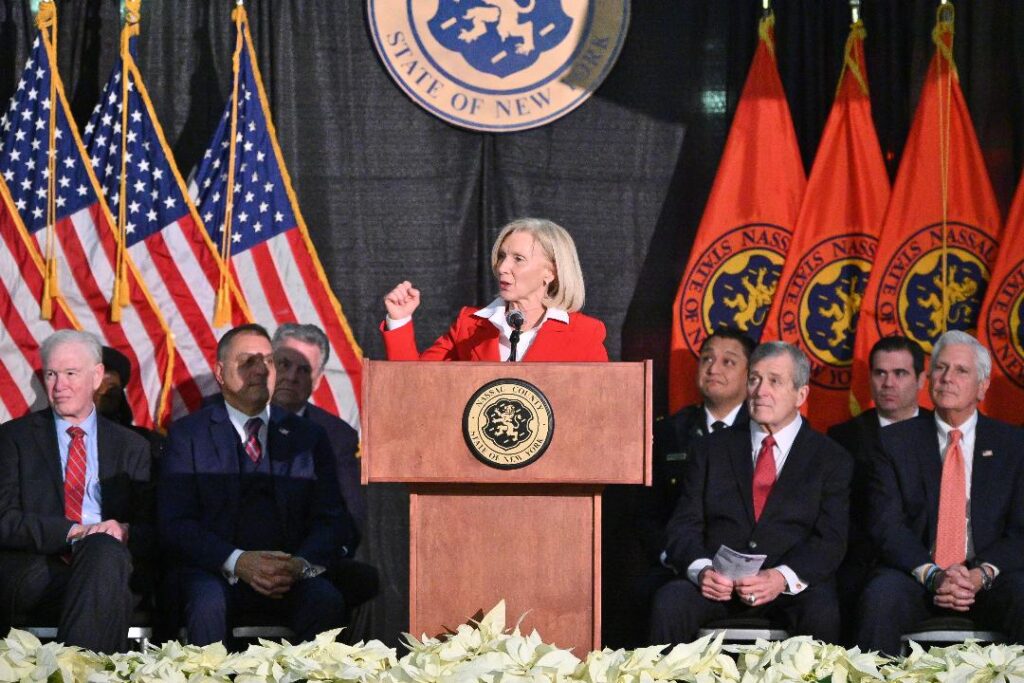
His message was simple, but potent: what works in Nassau can work in New York.
Blakeman vowed that if he were to challenge Hochul, he would campaign on a platform of public safety, immigration enforcement, energy reform, and tax relief—issues that have become rallying cries for suburban voters increasingly uneasy about crime and cost-of-living pressures. The New York Post report emphasized his insistence that Nassau’s experience proves that conservative governance need not be synonymous with austerity or chaos. “We held the line on taxes,” he said, pointing to four consecutive years without an increase. “We invested in our police. We made our county safer and more affordable.”
That refrain was echoed by Oyster Bay Town Supervisor Joseph Saladino, who delivered the ceremony’s closing remarks. “Bruce Blakeman is a leader who has stood up to nonsense and the radicals,” Saladino said, according to The New York Post, “and he did so without raising taxes a dime in four years.”
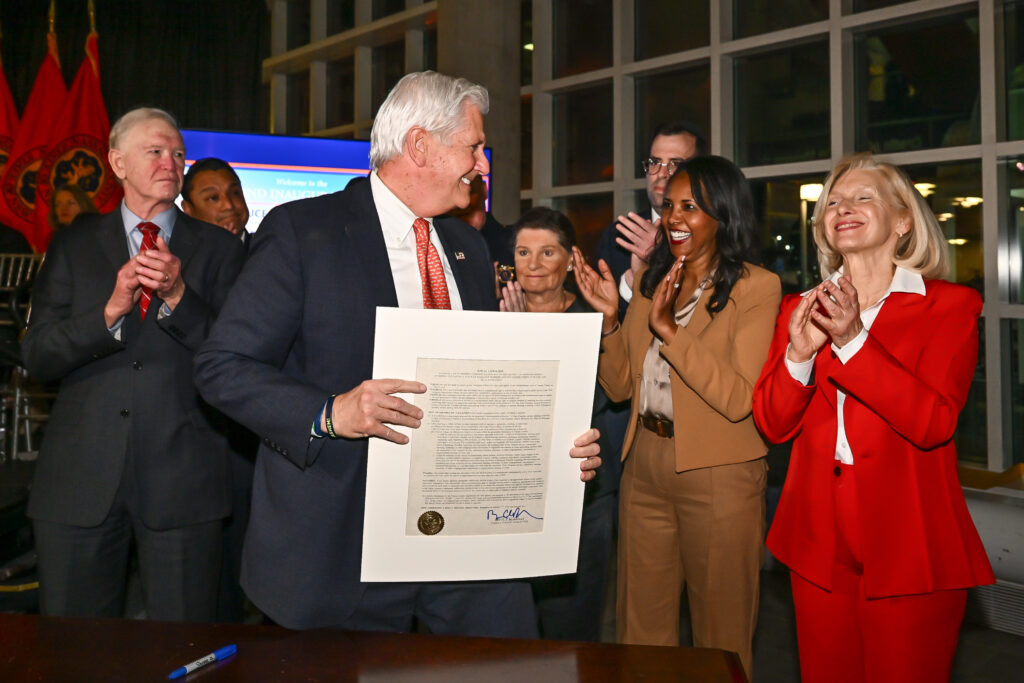
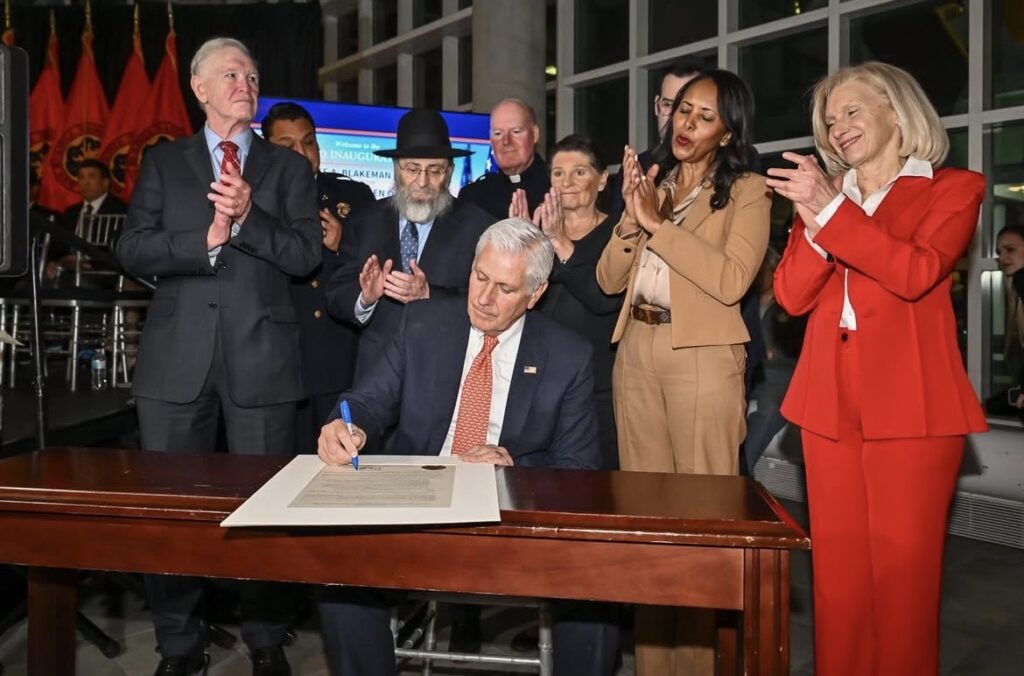
But Blakeman did more than reminisce about past victories. In a move that The New York Post characterized as both symbolic and substantive, he used the ceremony to sign the Religious Safety Act into law. Passed unanimously by the Nassau County Legislature in December, the measure prohibits protests within 35 feet of houses of worship and bars demonstrators from coming within 10 feet of individuals entering or leaving religious buildings. Violators face fines of up to $250 and possible jail time of up to one year.
The law mirrors proposals backed by Governor Hochul at the state level, yet Blakeman framed it as a distinctly Nassau initiative—a tangible demonstration of his administration’s priorities.
“You all know how I feel about religious freedom,” he said. “The ability of people to worship in their mosque, their church, their synagogue, their temple—therefore, we will protect people’s rights to freely worship here.”
For many in attendance, the signing ceremony was a reminder that Blakeman’s conservatism is not rhetorical. Since taking office in January 2022, he has compiled a first-term record that The New York Post has chronicled with near-weekly intensity.
He declared Nassau County would not become a “sanctuary” jurisdiction, directly challenging Albany’s guidance discouraging cooperation with federal immigration authorities. He forged a sweeping agreement with U.S. Immigration and Customs Enforcement, creating a specially trained squad of Nassau County officers authorized to work alongside federal agents. He expanded hiring and training for police and corrections officers, a move his supporters credit with stabilizing crime trends in the county.
His cultural battles have been no less visible. Blakeman banned masks in public spaces, barred transgender athletes from competing on county property, and launched an armed citizen deputy program—policies that have endeared him to the MAGA base while drawing fierce criticism from civil liberties groups and Democratic lawmakers.
To his detractors, Blakeman is an ideologue intent on importing national culture wars into suburban governance. To his admirers, he is the rare Republican who has not only survived but thrived in a Democratic stronghold. The New York Post has repeatedly highlighted the political alchemy behind his success: a blend of unapologetic conservatism, relentless media savvy, and an instinct for local issues that transcend party lines.
The swearing-in ceremony closed with a hint of what may come next. Blakeman alluded to the possibility that his second term will be less a continuation than a proving ground—an audition for higher office. “This is about showing New York that a different path is possible,” he said, according to The New York Post. “If we can do it here, we can do it anywhere in this state.”
In the coming months, as Albany braces for budget fights and as Hochul faces pressure from both her left and right flanks, the spectacle at the Cradle of Aviation Museum may be remembered as more than a local affair. It may mark the moment when Bruce Blakeman stopped governing like a county executive and started campaigning like a governor in waiting.
