



|
Getting your Trinity Audio player ready...
|
By: Fern Sidman – Jewish Voice News
In a city grappling with surging antisemitism, hate-fueled protests outside synagogues, and a political climate increasingly emboldening anti-Israel rhetoric, a Brooklyn principal’s refusal to allow a Holocaust survivor to speak to middle-school students has ignited a firestorm—one that Jewish educators, community leaders, and civil-rights advocates warn is symptomatic of a much deeper moral rot.
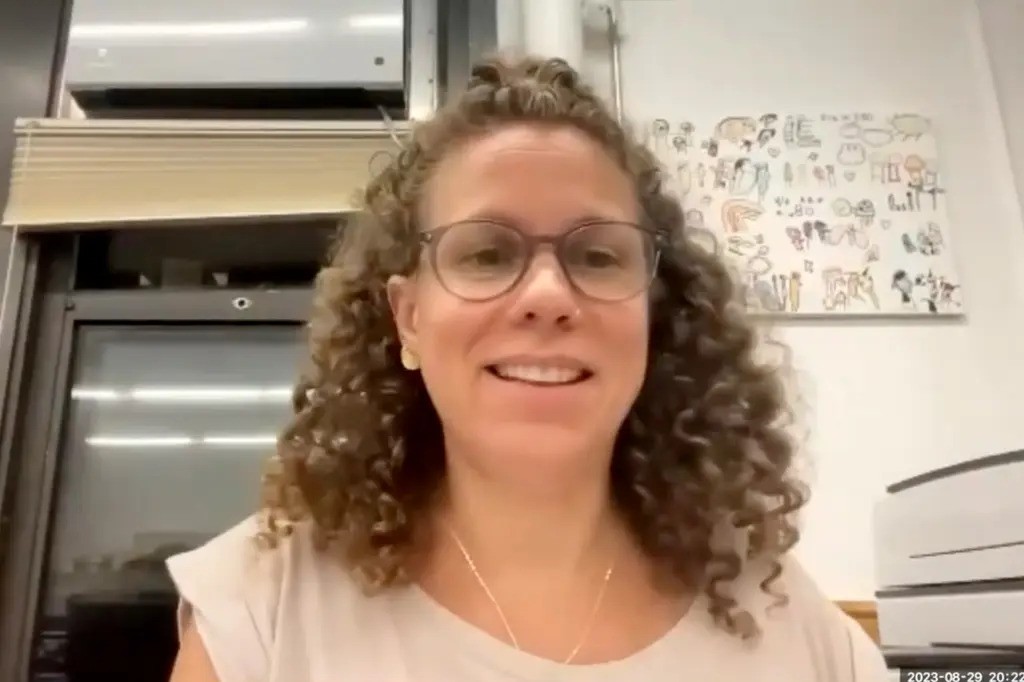
According to an exclusive report that appeared on Tuesday in The New York Post, MS 447 Principal Arin Rusch denied a parent’s request to host 85-year-old Nazi labor-camp survivor Sami Steigmann, claiming that his “messages around Israel and Palestine” rendered him “not right for our public-school setting.” The November 18 email—obtained and published by The New York Post—stunned parents and Jewish leaders alike, coming at a moment when New York City public schools are facing intense scrutiny for allowing anti-Israel extremism to fester inside classrooms, hallways, and student clubs.
Rusch’s email insisted that the Boerum Hill school remained committed to Holocaust education, yet deemed Steigmann’s presence too politically sensitive. Notably, as The New York Post report documented, Steigmann’s homepage and bio make no reference to the Israel-Hamas war. His public lectures center on surviving Nazi atrocities, the dangers of hatred, and the moral imperative to become “upstanders,” not bystanders, in the face of bigotry. Any remarks he has made supporting Israel’s right to exist—and its right to defend itself against Hamas—appear only in some online speeches not intended for school children.
Yet for Rusch, those pro-Israel sentiments—sentiments shared by the overwhelming majority of American Jews—were disqualifying.
The denial, Jewish leaders argue, is not merely bureaucratic caution. It is censorship. And worse, it is discrimination.
“Are we now censoring Holocaust survivors for their views of Israel?”
That was the furious question posed by Moshe Spern, president of the United Jewish Teachers, in a blistering email sent to Brooklyn District 15 Superintendent Rafael Alvarez and senior officials in the office of Schools Chancellor David Banks. As reported by The New York Post, Spern, the grandson of a Holocaust survivor, called Rusch’s actions “appalling,” “discriminatory,” and “personally offensive.”
“There are only so many survivors left who can speak,” Spern lamented to The New York Post. “This is not meeting the moment. This is sending a message to Jews in NYC public schools.”
That “moment” is one defined by escalating antisemitic rhetoric and violence across New York City. The New York Post has chronicled the disturbing rise of anti-Israel demonstrations that have metastasized into openly antisemitic displays—nowhere more glaringly than the vicious protest outside Manhattan’s Park East Synagogue on November 19th where demonstrators hurled slurs and intimidation tactics during a community event.
The synagogue’s world-renowned chief rabbi, Arthur Schneier—himself a Holocaust survivor—was inside as protesters screamed “Globalize the intifada” and “Resistance you make us proud, take another settler out.”
Against that backdrop, MS 447’s decision was not merely tone-deaf. As Jewish leaders told The New York Post, it was a moral abdication.
Steigmann’s biography—documented on his website and extensively reported by The New York Post—is harrowing. Born in the region now known as Ukraine in 1939, he spent his earliest years imprisoned at the Nazi labor camp in Mogilev-Podolsky, in the territory known as Transnistria. He survived starvation, Nazi medical experimentation, and debilitating injuries that still follow him.
He recounts a moment from childhood when a German woman gave him milk—saving his life. He speaks to students not about political ideology, but about resilience, humanity, and choice. “Life is based on the choices we make. Choose wisely,” he writes.
He urges young people to be “upstanders”—a message that, a generation ago, would have been universally embraced by parents, educators, and administrators.
But in today’s New York, according to The New York Post report, even a Holocaust survivor’s moral clarity may be deemed too politically inconvenient.
What shocked many was not simply the principal’s action, but the full-throated defense that followed—from the City Department of Education and the office of Mayor Eric Adams.
DOE spokeswoman Nicole Brownstein told The New York Post that the department “thoroughly evaluates every speaker” and requires “political neutrality” around “contentious current events.” The implication—that expressing support for Israel’s right to exist and defend itself constitutes partisan political commentary—troubled civil-rights attorneys who spoke to the paper.
The mayor’s office echoed that defense, telling The New York Post that Steigmann “wasn’t the right fit,” though Mayor Adams has repeatedly called for Holocaust survivors to speak in schools.
To Jewish leaders, these justifications miss the point entirely. If a Holocaust survivor’s affirmation of Israel’s right to exist is considered “political,” they argue, then so is the Holocaust itself. The line between Holocaust education and modern Jewish identity is not abstract. It is historical, existential, and inseparable.
Brooklyn City Councilwoman Inna Vernikov, a Ukrainian-born Jew and one of the city’s most outspoken critics of antisemitism, condemned Rusch’s decision in searing terms. Speaking to The New York Post, Vernikov said the censorship of a Holocaust survivor “is particularly abhorrent” during a time when “antisemitism is skyrocketing among our youth.”
She warned that MS 447 may be engaged in unconstitutional viewpoint discrimination, violating the First Amendment and Equal Protection laws that prohibit government actors from discriminating based on religion or ethnicity.
“We will not sit idly by,” Vernikov told The New York Post.
This incident is only the latest in a long series of controversies engulfing the Department of Education since the October 7 Hamas massacre and the subsequent Israel-Hamas war.
The New York Post has broken story after story exposing incidents of this kind including the following: a DOE newsletter linking to a “Stop Gaza Genocide Toolkit,” prompting a citywide uproar, anti-Israel student riots at Hillcrest High School, where a Jewish teacher was forced to hide in a locked office as students pounded on doors and shouted threats, public-school educators posting antisemitic slogans and anti-Zionist propaganda on their classroom social media pages, as well as teachers being harassed for their Jewish identity or support for Israel.
Within this broader pattern, the silencing of a Holocaust survivor feels to many like the inevitable—and deeply alarming—next step.
Speaking to The New York Post on Tuesday evening, Steigmann said he had been shocked to learn of the rejection. He emphasized that he never discusses Middle East politics in public-school settings—and would have gladly agreed to avoid the subject entirely if asked.
“She didn’t even have the courtesy to call me,” he said of Principal Rusch.
His pain, he explained, comes from knowing that he may soon be part of the last generation able to speak directly to children about the Holocaust. “When I’m gone, I’m gone,” he said.
Jewish educators told The New York Post that the message is unmistakable: that Jewish identity itself is suspect; that Jewish history is conditional; that Jewish suffering is permissible only if decoupled from modern Jewish survival.
If a Holocaust survivor is too “pro-Israel” to speak about the Holocaust, then what does that say to Jewish students who proudly express their identity? Who wear a Magen David? Who support Israel’s right to exist?
“This is sending a message to Jews across the school system,” Spern warned in his letter.
And that message, as The New York Post has documented with dismay, is one of exclusion.
At a time when antisemitic incidents have skyrocketed across New York—many targeting Jewish students and Jewish institutions—the moral responsibility of public schools has never been higher.
Yet, as this case demonstrates, the city’s educational leadership appears more fearful of offending anti-Israel sentiment than of failing Jewish children. The DOE’s insistence on “neutrality” inadvertently privileges the loudest and most extreme voices in the room—voices that equate Jewish identity with political controversy.
It transforms Holocaust education—a solemn civic duty—into a minefield.
And it leaves Jewish families wondering whether there is still a place for them in the nation’s largest school system.
As one Jewish parent told The New York Post, the issue is not simply that a Holocaust survivor was rejected. The larger question—the chilling one—is this: If a Holocaust survivor cannot talk about the dangers of hatred because he is too Jewish, then what does Holocaust education even mean anymore?
In a city once defined by its embrace of diversity and pluralism, that question now hangs over the public school system with unsettling weight.