




By Jared Evan
A Gay bar in Brooklyn is bound to become the hot spot for same-sex Nazi couples, as they have seemed to have adopted a ” No Jews on our TV” policy.
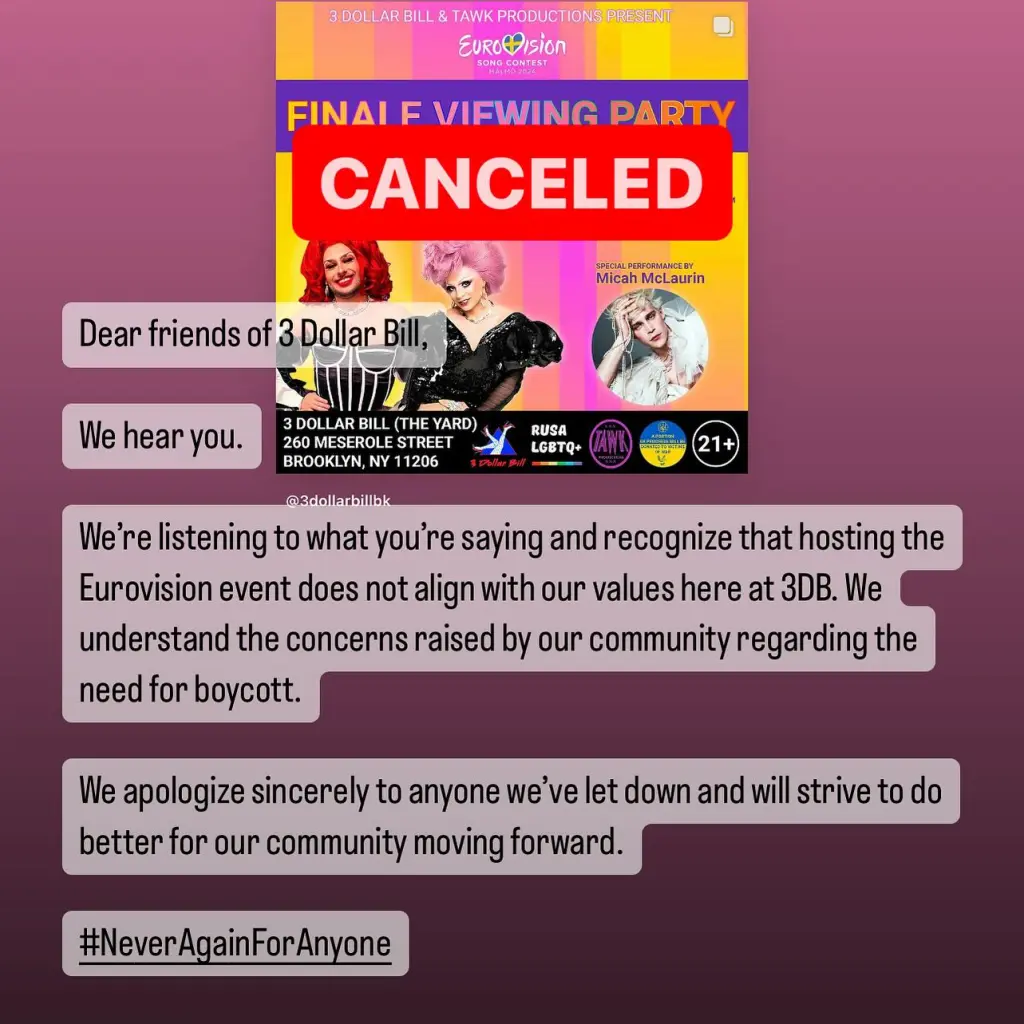
A Brooklyn bar, 3 Dollar Bill, situated in East Williamsburg, finds itself embroiled in a firestorm of criticism after it abruptly scrapped plans to host a viewing party for the Eurovision Song Contest, NY Post noted.
The decision came to light following the inclusion of Israeli singer Eden Golan in the lineup, prompting accusations of antisemitism and discrimination.
Initially slated to screen the international song competition, which features talents from across the globe, the bar made a sudden U-turn, citing a desire to provide a “safe space to ALL our patrons.” This move, communicated via an Instagram post, triggered a cascade of reactions, with some applauding the decision while others condemned it as discriminatory.
So in plain English, a Gay Bar in Brooklyn canceled an event because a Jew was set to appear on stage singing.
“Cool, they have a no Jew on TV policy, I’m going to tell all my Gay Nazi friends this is the new party spot”, a gay Jewish Broadway worker told TJV News sarcastically after hearing about this news.
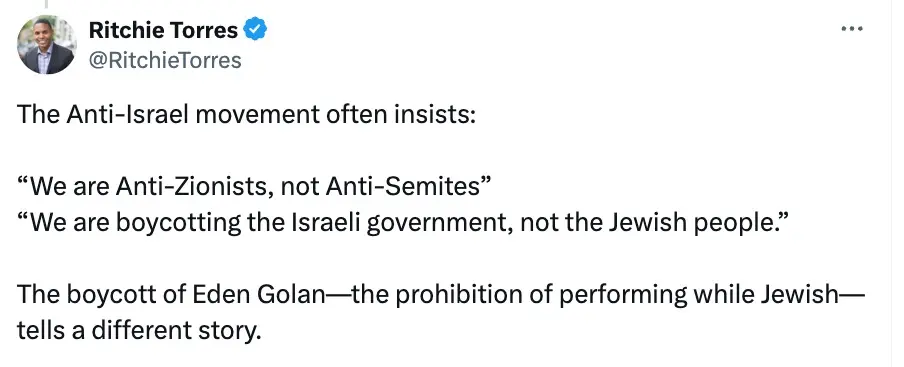
Congressman Ritchie Torres of the Bronx wasted no time in condemning the bar’s action, labeling it as clear-cut antisemitism. He underscored the inherent bigotry in boycotting Golan not for her actions but simply for her identity as an Israeli. Torres further criticized the notion that such actions were merely anti-Zionist, arguing that they ultimately amounted to antisemitism.
Golan, a 20-year-old performer representing Israel, found herself at the center of a heated debate that extended far beyond the confines of the bar. Pro-Palestinian groups, along with certain factions of fans, had vehemently campaigned for her exclusion from the competition due to Israel’s conflict in Gaza. The controversy reached a crescendo when Golan’s entry song, initially titled “October Rain,” stirred further unrest for its perceived allusions to the conflict. The lyrics were later altered, and the song was rechristened “Hurricane.”
Undeterred by the uproar, Golan remained resolute in her commitment to her art and her country. Expressing defiance in the face of adversity, she emphasized her mission to represent her nation’s voice on the global stage.
The bar’s decision drew a sharp rebuke from various quarters, with patrons and observers alike accusing it of virtue signaling and discrimination. Many voiced their discontent on social media platforms, decrying the exclusionary stance adopted by the establishment.
Amidst the controversy, the saga surrounding 3 Dollar Bill serves as a stark reminder of the complexities inherent in navigating political sensitivities within the realm of entertainment and cultural exchange. As the Eurovision Song Contest unfolds, it remains to be seen how this episode will shape the broader discourse surrounding inclusivity and representation in the arts.
