



|
Getting your Trinity Audio player ready...
|
Brooklyn Endures a Night of Arctic Despair as Power Failures Strand Families in Deadly Cold
By: Tzirel Rosenblatt
Brooklyn was plunged into a grim tableau of winter hardship this weekend, as a devastating power outage left hundreds of residents without heat or electricity while temperatures cratered to near-record lows. The New York Post reported on Sunday night that as the mercury dipped into the single digits and brutal Arctic winds lashed the borough, entire blocks of Bushwick and surrounding neighborhoods were cast into darkness, their residents forced to improvise against a cold that meteorologists warned could be lethal within minutes.
The outage, which began late Saturday evening, underscored the fragility of urban infrastructure when confronted with extreme weather, and it illuminated the human toll of a city suddenly deprived of its most basic protections against winter’s fury.
According to Con Edison’s own outage grid, roughly 1,500 customers in Brooklyn remained without power as of Sunday afternoon, with Bushwick bearing the brunt of the disruption. Nearly 1,000 residents in that neighborhood alone were still shivering in unheated apartments by Sunday night. The New York Post report chronicled the frustration and fear that gripped the area as Con Ed technicians struggled to reach “hot spots” and restore service amid treacherous conditions. Initial estimates had promised restoration by midafternoon Sunday, but those assurances slipped into the early hours of Monday morning, prolonging the ordeal for families already stretched thin by the cold.
The timing could scarcely have been more cruel. The city recorded a low of three degrees on Sunday, with wind chills plunging the “real feel” temperature to as low as 14 degrees below zero. Gusts of up to 50 miles per hour transformed the streets into wind tunnels of ice, turning even brief exposure into a health hazard. The New York Post report cited AccuWeather senior meteorologist Tom Kines, who warned that anyone unprotected in such conditions for more than half an hour risked frostbite and hypothermia. The entire city remained under an extreme cold warning through early Sunday afternoon, followed by a severe weather advisory into the pre-dawn hours of Monday.
For those trapped in darkened apartments, the cold was not an abstract statistic but a physical presence seeping through walls and floors. Camilla, a 35-year-old DJ living in Bushwick, told The New York Post that she felt as though she were suddenly living in Alaska rather than Brooklyn. Her electric heat failed Sunday afternoon, sending her scrambling to a nearby warming center with her two cats in tow. Wrapped in a puffer jacket, she described the interior of her apartment as “extremely cold,” and she spoke of the frantic search for emergency boarding for her pets. The image of a young professional reduced to bundling up indoors, contemplating sleeping in layers of clothing, captured the surreal inversion of modern urban life when the systems that sustain it falter.
Others were forced into more costly solutions. Michael Murphy, a 60-year-old father of two, told The New York Post that he shelled out nearly $500 for two nights in a hotel after losing heat. Initially considering a stay with in-laws in Staten Island, Murphy opted instead for what he described as making the best of a grim situation. Even so, he recounted the eerie sensation of sitting in his car for warmth, watching the temperature inside his darkened home slowly drop.
Melissa Washington, a 35-year-old mother of four, said she would take her family to her in-laws’ home as well, recalling that she had not experienced such an ordeal since the infamous 2003 blackout. Like many residents, she criticized Con Ed for what she perceived as a lack of communication, telling The New York Post that residents were left largely in the dark—figuratively and literally—about when relief might come.
The outage arrived amid nearly two weeks of relentless cold that had already claimed lives across the city. The New York Post reported that at least 18 New Yorkers had died outdoors during this prolonged freeze, with 13 deaths attributed to hypothermia. Three were linked to overdoses, and two remained under investigation. On Saturday morning, an 81-year-old man was found dead on the roof of his Brooklyn apartment building, prompting officials to probe whether the extreme temperatures played a role in his death. These grim statistics lent a haunting urgency to the plight of residents suddenly without heat, transforming inconvenience into a matter of survival.
City officials sought to mitigate the crisis by opening nearly 65 warming facilities across the five boroughs, including dozens of warming buses dispatched to neighborhoods hardest hit by the cold. The New York Post reported that residents with electric heat faced stark choices: bundle up at home, risk exposure traveling to a warming center, or seek refuge with friends and family. For those without social networks or the means to relocate, the warming centers became a lifeline, albeit an imperfect one. The very fact that hundreds of New Yorkers had to leave their homes in the dead of winter to find warmth spoke to the precariousness of life on the margins of a city that prides itself on resilience.
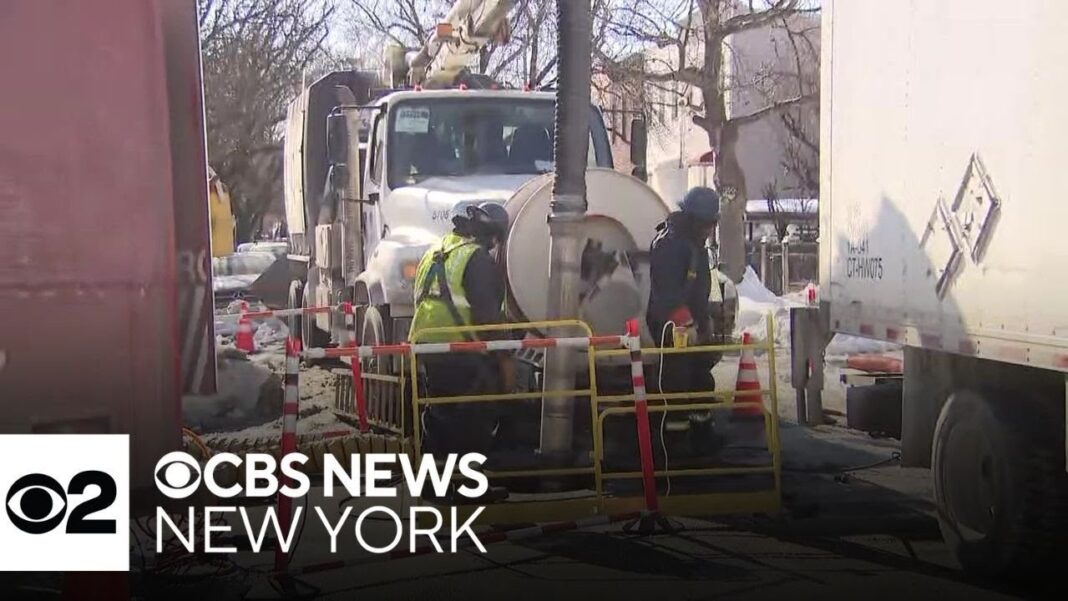
Con Ed attributed the outage to snow and road salt seeping into underground equipment, a reminder that the subterranean arteries of the city are vulnerable to the very elements they are meant to resist. Technicians faced significant challenges navigating icy streets and accessing compromised infrastructure, even as public frustration mounted. In an era of increasingly volatile weather, such explanations rang hollow for residents who felt abandoned in their hour of need. The tension between technical complexity and human expectation played out in angry phone calls, social media posts, and the weary testimonies of those forced to endure the cold.
The outage also exposed deeper questions about preparedness. For nearly a decade, New York had enjoyed relatively mild winters, a reprieve that may have dulled institutional urgency around cold-weather contingencies. The city’s infrastructure, while robust by many measures, was not immune to the stresses imposed by sudden Arctic blasts. As climate patterns grow more erratic, the weekend’s events offered a sobering preview of the challenges that may become more frequent in the years ahead.
Beyond the immediate crisis, the human stories captured by The New York Post illuminated the social fabric of Brooklyn in moments of strain. Neighbors shared phone chargers and blankets; strangers offered couches to those displaced by the cold. Yet these gestures of solidarity unfolded against a backdrop of anxiety and fatigue. The relentless cold had already tested the endurance of the city’s most vulnerable populations—those experiencing homelessness, the elderly, and individuals with underlying health conditions. The sudden loss of heat threatened to push many past their breaking point.
In Bushwick, where the outage was most acute, the neighborhood’s vibrant streets fell eerily quiet as residents huddled indoors or fled to warmer refuges. The New York Post report described how even the rituals of daily life were disrupted: trash pickup delayed, businesses shuttered, and families forced to watch the Super Bowl on small phone screens when televisions went dark. Such details, trivial in isolation, accumulated into a portrait of urban life unraveling under the weight of cold and darkness.
As power gradually returned in pockets late Sunday, the ordeal left behind more than frozen pipes and frayed nerves. It prompted renewed scrutiny of how a modern metropolis safeguards its residents against environmental extremes. The New York Post report framed the outage not merely as a technical failure but as a human drama unfolding in real time—a drama in which ordinary New Yorkers confronted the elemental forces of winter with stoicism, improvisation, and, at times, palpable anger.
When the lights finally flickered back on and radiators warmed cold apartments, the memory of the weekend’s Arctic siege was unlikely to fade quickly. For those who endured hours in the dark, the experience would linger as a reminder of vulnerability in a city often celebrated for its toughness. And for policymakers and utility providers, the outage served as a stark warning: in an era of climatic uncertainty, resilience is not a slogan but a necessity measured in warmth, light, and the quiet reassurance that, even in the coldest nights, the city will not leave its people to freeze.
