



|
Getting your Trinity Audio player ready...
|
By: Benyamin Davidsons
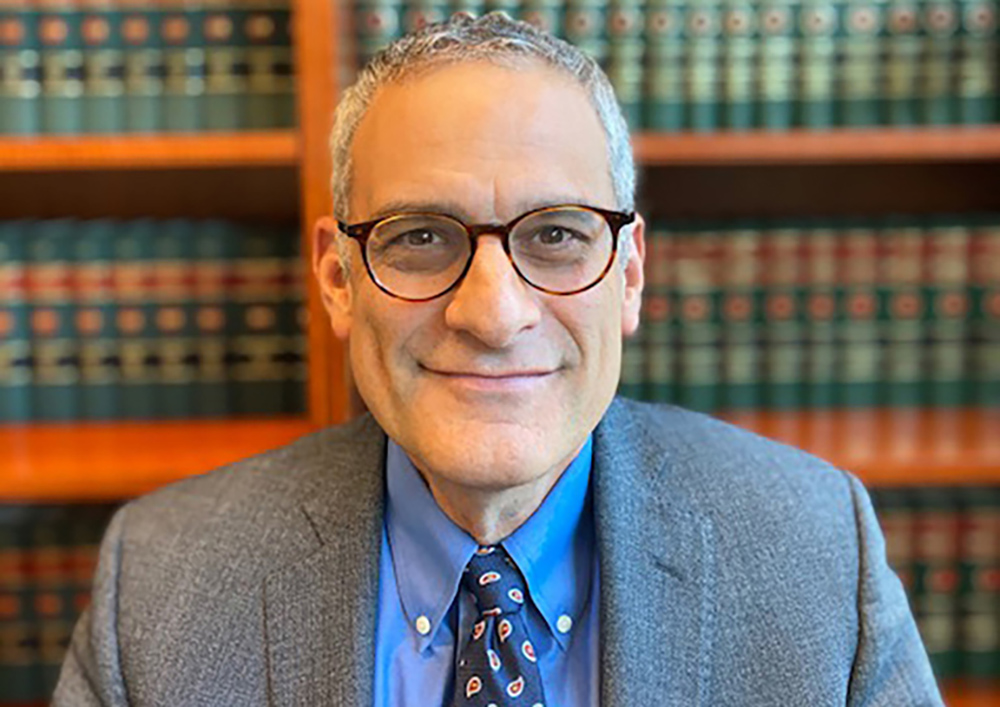
A Bronx Judge used the lyrics from a Grateful Dead song to slam the state’s bail reform laws, summing up the soft-on-crime reforms as a “confusing mess”.
As reported by the NY Post, in a ruling last Thursday, Bronx Acting Supreme Court Justice Jeffrey Zimmerman quoted words from the 1970 rock hit “Box of Rain”. “Maybe you’ll find direction/ Around some corner where it’s been waiting to meet you,” Justice Zimmerman wrote in a ruling last week. “Clearly, the bass player and lyricist of the Grateful Dead have never read New York’s bail reform statutes,” Zimmerman wrote. “Instead of direction, the statutes provide judges with obfuscation and legislative sleight of hand.”
He added, “The legislature’s cynical attempt to mollify the public’s concerns about safety, without expressly giving judges the tools to address them, has created a confusing mess.” The judge wrote the ruling when deliberating on the case of Edward Santiago, 23, who is charged with attempted murder and gun possession. The judge was explaining his reasoning for reducing the bail for the defendant to $200,000, saying its an amount sufficient to ensure Santiago would return to court, in compliance with the law. The previous bail had been set for $335,000, but the judge decided that amount was “somewhat complicated” because it was set by two separate judges for two separate criminal complaints. He said the amount of the previous bail was “higher than necessary to secure his return.”
Per the Post, this was not the first time Justice Zimmerman tried to voice his opinion against the 2019 bail reform laws, which prohibits judges from setting bail on most cases, and mandates that even in bail-eligible cases, they set the “least restrictive” bail just to ensure defendants will be back in court. In January 2022, Zimmerman had written an op-ed piece for the Daily News slamming New York State’s “disingenuous” bail debate. In making the reforms, legislators had mulled “allowing judges to consider public safety in making bail decisions” but had “rejected” that option. He went on to say that former Police Commissioner Dermott Shea said the reforms were making their job impossible, with cops catching the culprits, just to have them back on the loose to commit more crimes.
Since the reforms were set, Gov. Kathy Hochul and state lawmakers have made subtle changes to the law, diluting the “least restrictive” requirement, adding more charges which are bail-eligible and letting judges take into account the potential threat a defendant poses to the community. Still, despite the tweaks, Justice Zimmerman says that the reforms prohibit judges from using their judgment regarding a defendant’s “dangerousness” in setting bail, dictating that the only consideration should be to ensure the defendant returns to court. “What does the end of ‘least restrictive mean? Short answer: Not much,” he wrote. “The governor’s fixation on removing the ‘least restrictive means’ requirement seemed rooted in her belief that judges somehow don’t understand all the tools in their bail box,” said Zimmerman.
“They want to mollify those critics who believe that bail reform is letting more dangerous people out to do dangerous things, while still limiting the purpose of bail to making sure people come back to court,” Zimmerman wrote, “foregoing the ‘public safety’ rational that’s a third rail for the most progressive members of the legislature.”
In Santiago’s case, Justice Zimmerman set bail at a $200,000 bond or $100,000 cash.