



|
Getting your Trinity Audio player ready...
|
By: Serach Nissim
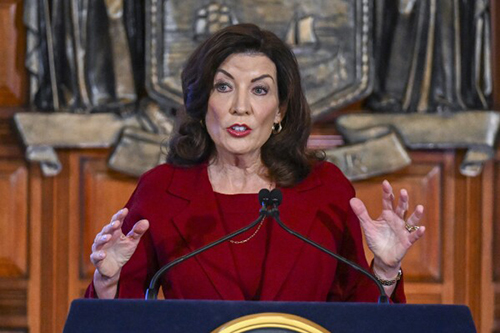
In 2023, New York State Gov. Kathy Hochul signed about 900 bills into law. Many of those laws took effect when we ushered in the New Year, and more still will begin to make their mark later in 2024. The new state laws touch on a broad spectrum of topics and will likely make a change in many aspects of our lives. Here’s a peek at some of the major changes in legislation for 2024, as per a recent article in the NY Times.
Most notably, on Jan. 1, the minimum wage was bumped up to $16 per hour in New York City, Long Island and Westchester County. In the rest of the state, minimum wage will increase to $15 an hour. Future increases were also established, so that pay will increase by an extra 50 cents in each 2025 and 2026. The state’s minimum wage is close to double that of the federal minimum which has been steady at $7.25 per hour since 2009.
Healthcare also saw its fair share of new laws. Per the NY Times, this summer, Medicaid will start to cover doula services for New Yorkers. The state’s Department of Health will be responsible to create and maintain a directory of doulas. Though doulas are not certified as medical professionals, many pregnant women rely on them and the bill aims to help address the rising infant and maternal mortality rate prevalent in low-income and minority communities.
In 2024, there is a new updated version of the FAFSA for college students. The form, used to determine financial aid for college students, will now be shorter and easier to fill out. The bill was passed with hopes that more low-income borrowers will be able to access financial aid.
Per Spectrum News, also a new retirement law will increase 401k plans for some workers based on student loan payments. The new law lets employers match employee’s student loan payments with a contribution into the employee’s retirement account.
As reported by the NY Times, also, a law will come in effect later in 2024, explicitly prohibiting nursing homes and other long-term care facilities from discriminating against residents based on their actual or perceived sexual orientation, gender identity or H.I.V. status. The new “bill of rights” for residents will help same-sex couples in nursing homes, to have less trouble when applying to live together in such facilities.
Inmates and former felons being released must be notified, both in writing and verbally, that their voting rights will be restored once they are freed from state prison.
Also, most schools in NY will be required to provide eligible students with voter registration and preregistration forms for 16–17-year-olds during the school year. The legislation hopes to teach young people “that their voice matters in the political process.”
Private middle and high schools will now be required to provide free menstrual hygiene products in student bathrooms. Public schools across the state were already required to provide these products in 6th to 12th grade restrooms since 2018. “Without these products, students are likely to miss classes and school days,” said State Senator Iwen Chu.
