



|
Getting your Trinity Audio player ready...
|
By: Fern Sidman
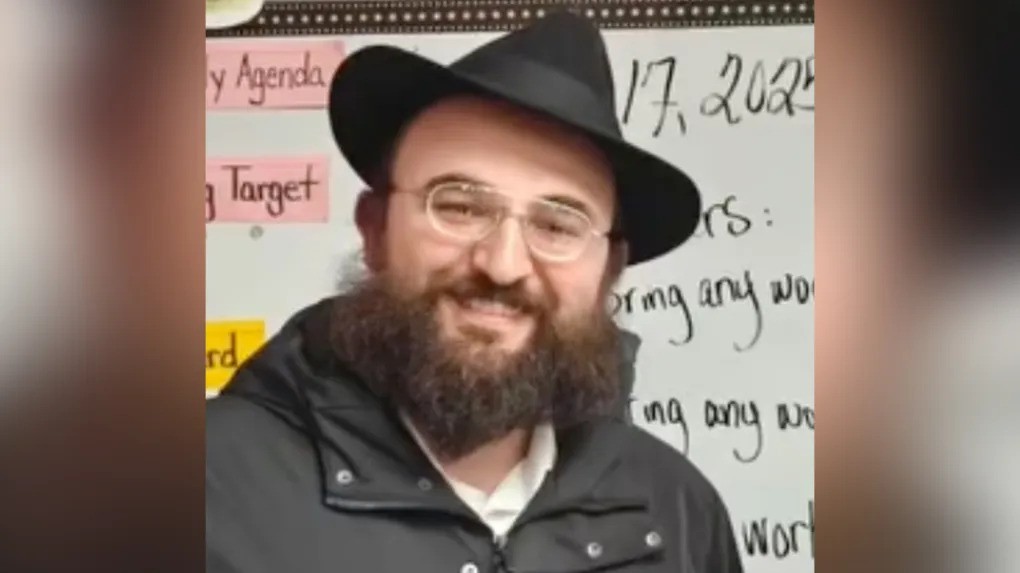
On a winter afternoon meant for remembrance, reflection, and moral reckoning, the streets of Queens became the stage for a violent reminder that the ancient hatreds many believed belonged to history remain disturbingly alive in the present. As Jews across the globe marked International Holocaust Remembrance Day on Tuesday, Rabbi David Shushan, a 30-year-old spiritual leader and youth mentor, was punched in the chest by a stranger hurling antisemitic slurs—an attack that has since reverberated far beyond the sidewalks of Forest Hills and into the heart of New York’s civic, political, and moral discourse.
In a report on Wednesday, The New York Daily News documented both the brutality of the encounter and the profound symbolism of its timing. The assault occurred Tuesday afternoon near Queens Boulevard and 71st Avenue, just three blocks from the Bukharian Jewish Community Center, where Rabbi Shushan serves not only as a religious figure but as a youth leader and mentor to the next generation. According to The New York Daily News report, he was walking calmly toward a synagogue when a man dressed in a black hoodie and black pants suddenly emerged, shouting “F— Jews” before striking him.
“I was shocked,” Rabbi Shushan told The New York Daily News, recounting the moment with a mixture of disbelief and resolve. “It was a regular day. I was walking along, looking at the street, when this guy comes out of nowhere, starts cursing at me and struck me.”
What followed was not a swift attack and escape, but a raw, physical confrontation that unfolded in full public view. Rather than retreat, Shushan stood his ground. The two men grappled, fell into the snow, and fought for several minutes, rolling across the icy pavement as passersby looked on. At one point, the assailant struck the rabbi in the face, sending both men crashing into the snow again. Shushan’s clothing became soaked and stained, his face bruised, his body aching—but his resolve unbroken.
“We were fighting for a few minutes, rolling around in the snow,” he told The New York Daily News. “At one point he punched me in the face and we both fell into the snow and got dirty.”
The scene might have ended even more tragically had someone who knew Shushan not intervened, pulling him away and separating the two men. The attacker fled down Queens Boulevard, but not before the rabbi managed to photograph him with his cellphone—an image that would later prove critical.
The New York Daily News reported that Shushan immediately contacted both the NYPD and the local Shomrim volunteer security organization. Within minutes, a coordinated search began. Volunteers soon located the suspect entering a nearby train station. In a moment that seemed almost surreal, police officers, Shomrim members, and Rabbi Shushan himself boarded the train to confront the man.
“I went into the subway car and the guy saw me. He was shocked at how we found him,” Shushan told The New York Daily News. “He started screaming, ‘Keep away from me! Stay back!’ as the cops closed in.”
The suspect, identified as 32-year-old Eric Zafra Grosso of Corona, Queens, was arrested and charged with assault and aggravated harassment as hate crimes. According to The New York Daily News report, he has no prior criminal history. He pleaded not guilty at his arraignment in Queens Criminal Court and was released without bail.
For Rabbi Shushan, the legal process is secondary to the moral clarity of what occurred.
“I don’t know if he is unhealthy in his mind or not,” he said in his interview with The New York Daily News. “But he chose me because I was Jewish. I wear Jewish apparel in the streets. He chose me. It was simple. I was his target.”
That stark clarity—of identity as motive, of hatred as intent—has given the incident a weight far beyond a single act of street violence. It has transformed it into a symbol, a case study in contemporary antisemitism, and a rallying point for civic leaders across the city and state.
Mayor Zohran Mamdani personally called Rabbi Shushan and invited him to City Hall, according to The New York Daily News report. In a public statement posted on X, the mayor framed the attack not as an isolated incident but as part of a broader societal crisis.
“New Yorkers were confronted with a painful truth: antisemitism is not a thing of the past—it is a present danger that demands action from all of us,” Mamdani wrote. “There is no place for antisemitism in our city. I stand in solidarity with Jewish New Yorkers and my administration is committed to rooting out this hatred.”
Governor Kathy Hochul, Senator Chuck Schumer, and New York City Comptroller Mark Levine also issued condemnations, with Levine calling the assault “yet another sickening reminder of the scale of the hatred we are confronting,” according to the report in The New York Daily News.
The symbolism of the date has only intensified the public response. International Holocaust Remembrance Day commemorates the liberation of Auschwitz-Birkenau and honors the memory of the six million Jews murdered in the Holocaust, along with millions of other victims of Nazi persecution. It is a day dedicated to memory, vigilance, and the moral imperative of “never again.”
“I don’t think he was aware of the day,” Rabbi Shushan said of his attacker, speaking to The New York Daily News. “Regardless, this shouldn’t have happened.”
Yet the coincidence is impossible to ignore. A rabbi assaulted for being visibly Jewish on the very day the world pauses to remember the consequences of unchecked hatred is not merely tragic—it is haunting.
For Shushan, the incident has not led to fear or withdrawal, but to a deeper sense of purpose.
“We know all about the dark years and what happens if we do nothing,” he said, invoking the Holocaust. “I could not step down and run away from him.”
Now nursing a bruised face, a persistent headache, and a painful knee from hitting the concrete, he remains resolute.
“My wish is for everyone to live peacefully,” he told The New York Daily News. “But the last thing we should do is step down. We must step up and we should not run away.”
The New York Daily News report situates this attack within a broader context of rising antisemitism in New York City. While overall hate crimes reportedly decreased by 12% last year, antisemitic incidents still accounted for 57% of all reported hate crimes in 2025, despite Jewish New Yorkers comprising only about 10% of the city’s population. Just days before the Forest Hills assault, police arrested two teenagers accused of vandalizing a Brooklyn playground with more than 50 swastikas in Borough Park—a chilling reminder that hatred is not confined to words, but increasingly expressed through symbols, violence, and intimidation.
What makes the Forest Hills attack especially resonant, as The New York Daily News reported is not only its brutality but its intimacy. This was not a faceless online threat or anonymous graffiti scrawl. It was a direct, physical confrontation—a man targeting another man solely because of his identity, his faith, and his visible Jewish presence.
In a city defined by diversity, pluralism, and coexistence, such acts strike at the very foundation of civic life. They challenge the assumption that tolerance is a settled achievement rather than a daily obligation.
The New York Daily News report framed Rabbi Shushan’s response as emblematic of a broader moral stance—refusal to be intimidated, refusal to disappear, refusal to surrender public space to hatred. His decision to stand his ground, to confront his attacker, and to continue walking proudly as a visible Jew in the streets of New York has transformed him into a symbol of quiet resistance.
Yet the story is not merely one of individual courage. It is also a test of institutions: law enforcement, political leadership, community organizations, and the broader public. It raises urgent questions about prevention, accountability, and the societal conditions that allow antisemitism to persist, mutate, and resurface.
The New York Daily News report observed that remembrance without action is insufficient. Memory, while sacred, must translate into policy, protection, education, and cultural transformation. Otherwise, remembrance becomes ritual without resistance.
In this sense, the Forest Hills assault is not only a crime—it is a warning. A warning that the distance between hateful speech and hateful violence is dangerously short. A warning that antisemitism is not a relic of the past but a living, evolving force. And a warning that complacency remains its greatest ally.
For Rabbi David Shushan, the meaning is simpler and more personal. “I was his target,” he said. “But I’m still here.”
On a day dedicated to remembering those who were silenced, erased, and exterminated, that declaration carries a profound resonance. It is not only a statement of survival—it is a declaration of presence, dignity, and defiance.
As The New York Daily News report documented, it stands as both a chronicle of a single act of hate and a mirror held up to a city, a nation, and a world still struggling to learn the lessons of history.
In Forest Hills, on a day of remembrance, a rabbi was struck—but a community was awakened. And in that awakening lies both the burden and the possibility of a different future: one where remembrance becomes resolve, memory becomes action, and hatred finds no sanctuary in silence.
https://tjvnews.com/opinion/oped/when-is-enoughenough/
Op-Ed by Ginette Weiner
When is Enough…Enough?
We don’t need more empty laments, more hand wringing, or more impotent bemoaning. We need Jews… from little ones to old ones, Jewish men and women, to be fully trained with, equipped and comfortable using a full range of legal items for self defense. We need Jews who fight back, who are intimidating, fierce, who will take down an attacker swiftly and with ease. And make it known to the world that we will not go down quietly. That we’d rather go down fighting, if need be.
Since 2015, I have been writing about “Arming All Jews”, all on deaf Jewish ears. Now I ask again, is it beyond time to heed this call? How many more dead Jews are enough for our Jewish community? If you need role models, look no further than the IDF’s brave men and women. Or emulate the fearless Bielski brothers whose raw, relentless courage saved hundreds of Jews from the Nazis. “The brothers believed that the group needed to be feared if it had any chance of surviving in such a hostile environment.” https://www.facinghistory.org/resource-library/bielski-brothers-biography
Diaspora Jews are fast becoming used to being victims and are beginning to act like victims. Do we need to be reminded that the best predictor of future behavior is past behavior? When I was in France in 2015, all Jewish institutions were guarded by armed French soldiers because of assaults on Jews and Jewish institutions. In Paris, I saw no signs of Jews anywhere except for small plaques on buildings telling you how many Jews were rounded up on this corner during WWII. If we learn nothing from our history, it should be that we can never depend upon others to save Jews. We have to protect and save ourselves.
I will end by citing a hero Rabbi, returning home from synagogue, who was punched in the face but fended off attackers with his gun:
Gun-toting rabbi fends off masked attackers in violent Baltimore carjacking attempt
Police say the rabbi has a valid handgun permit. He sustained minor injuries but did not require hospitalization. https://worldisraelnews.com/gun-toting-rabbi-fends-off-masked-attackers-in-violent-baltimore-carjacking-attempt/