



|
Getting your Trinity Audio player ready...
|
By: Ariella Haviv
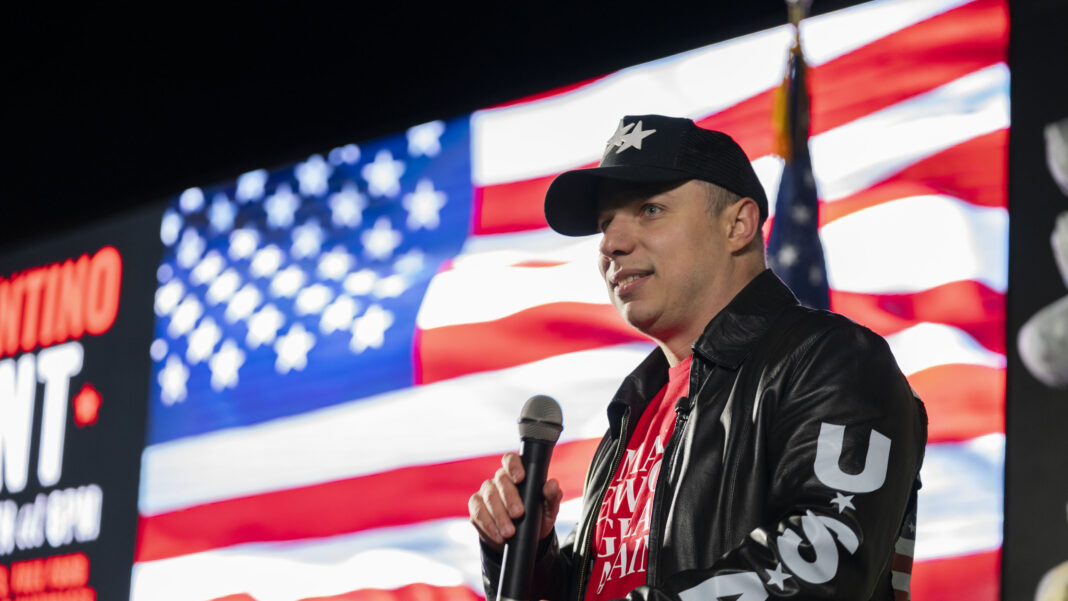
In a political era increasingly defined by transactional fundraising and the relentless gravitational pull of Washington’s donor-industrial complex, Sticker Mule founder and chief executive Anthony Constantino has detonated a rhetorical—and financial—shockwave across New York’s North Country. As reported on Thursday by The Populist Sentinel, Constantino, now a declared candidate for Rep. Elise Stefanik’s open seat in New York’s 21st Congressional District, has deposited a staggering $5 million of his own money into his campaign account, fulfilling a pledge he made at the outset of his insurgent bid for Congress.
The move, which The Populist Sentinel report described as “one of the most audacious self-financing commitments in recent district history,” is intended not merely as a show of wealth but as a statement of political philosophy. According to Constantino, this is the architecture of independence—an attempt to build a congressional campaign structurally insulated from the suffocating ecosystem of corporate PACs, lobbyists, and Beltway benefactors.

“I said from day one that I would fund my own campaign, and I made good on that promise,” Constantino told The Populist Sentinel. “I put $5 million into my campaign because I want to be completely free of special interests and Washington donor pressure. I am running to serve taxpayers, not the donor class.”
In the conventional choreography of congressional races, the early months are consumed by call-time purgatory: endless hours dialing wealthy donors, courting party committees, and courting the attention of industries eager to convert contributions into access. Constantino’s financial endowment seeks to annihilate that paradigm. As The Populist Sentinel has noted in multiple analyses, the infusion of personal capital allows him to bypass what he has called “the gilded tollbooths of American politics.”
This is not merely an accounting entry; it is a rebuke to the prevailing logic of campaign finance. In refusing money from what he labels “Big Pharma, Big Insurance, Big Tech, or any of the usual Washington power brokers,” Constantino is staging a populist revolt against the very machinery that has dominated Congress for decades.
“When you take their money, you work for them,” he said, in remarks to The Populist Sentinel. “I am not doing that. I will work for the people who live here and pay the taxes.”
The stakes are magnified by the seat itself. Rep. Elise Stefanik’s 21st District, sprawling across the Adirondacks and North Country, has long been a crucible of ideological realignment—part rural populism, part industrial decay, part fiercely independent localism. With Stefanik’s departure, the district has become one of the most closely watched open seats in the country. The Populist Sentinel report described the race as a referendum on whether grassroots populism or institutional party politics will inherit her mantle.
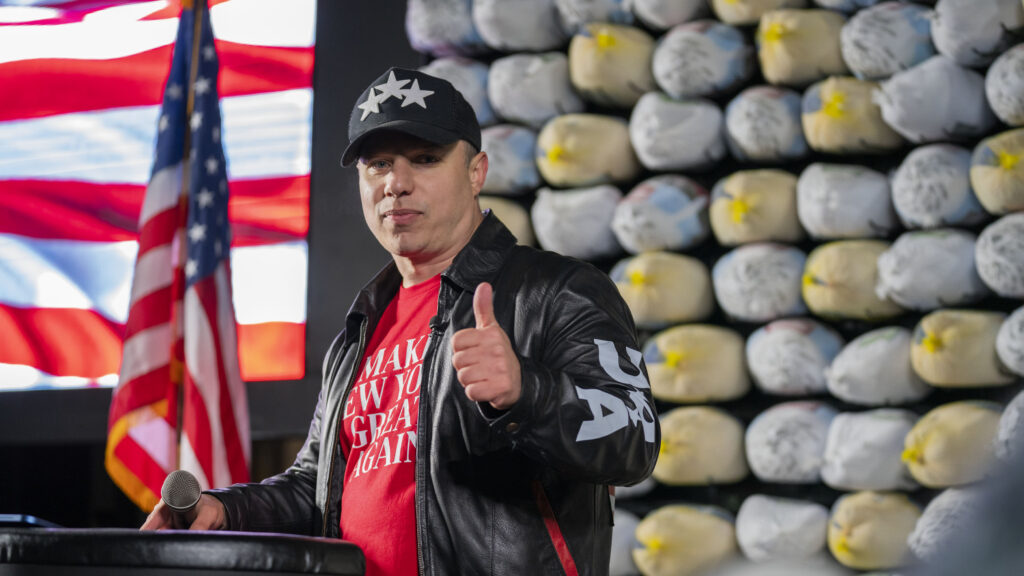
Constantino, who built Sticker Mule into a manufacturing juggernaut known for its aggressive domestic production ethos, is casting himself as the embodiment of entrepreneurial populism. In interviews with The Populist Sentinel, he has framed his campaign as a revolt against the political class that, in his view, has outsourced not only American jobs but American sovereignty.
The psychological power of the $5 million deposit is as important as its logistical implications. Constantino insists the money liberates him from the quiet coercion that defines Capitol Hill.
“Too many members of Congress are bought and paid for before they ever cast their first vote,” he said. “I will not be one of them. I cannot be bought, and I will not be controlled. My only obligation will be to the people of this district.”
Such rhetoric has found fertile soil in a district where distrust of Washington is not merely cultural but generational. The Populist Sentinel reported that early grassroots reaction has been electric, with local organizers describing Constantino’s self-funding as “the political equivalent of burning the rulebook.”
The campaign argues that the funds will not be squandered on glitzy television buys alone but will underwrite a district-wide voter outreach operation—boots on the ground in towns long ignored by national parties. Field offices, door-to-door canvassing, and an expansive digital infrastructure are already in development, according to reporting by The Populist Sentinel.

“This campaign is about being honest, independent, and putting people first,” Constantino said. “That is exactly how I will serve in Congress.”
For The Populist Sentinel, Constantino’s bid represents something larger than one man’s ambition. It is a litmus test for whether the populist impulse that has been simmering in rural America can translate into a sustainable political model—one that substitutes personal investment and local accountability for corporate patronage.
Critics, of course, argue that self-funding is itself a form of privilege, that only the wealthy can afford to declare independence from donors. Yet Constantino, in comments to The Populist Sentinel, counters that his wealth is a tool, not a shield—an instrument to dismantle the corrupting influence of money, even if paradoxically it requires more money to do so.
As the campaign accelerates, one reality is incontestable: Anthony Constantino is not merely running for Congress. He is challenging the metaphysical infrastructure of American politics—testing whether a candidate can truly sever the umbilical cord that binds Capitol Hill to its benefactors.
Whether this audacious wager will succeed remains uncertain. But as The Populist Sentinel has written in its continuing coverage of the race for New York’s 21st District, Constantino’s $5 million gamble has already altered the conversation. In a system where politicians are perpetually in hock to donors they barely know, a man who proclaims, “I cannot be bought,” and then wires millions to prove it, has made himself impossible to ignore.