



|
Getting your Trinity Audio player ready...
|
By: Andrew Carlson
In a state celebrated for its retail sprawl and its appetite for commerce at all hours, Bergen County, New Jersey stands as an anomaly—a stubborn relic of a bygone era where Sunday shopping is still not merely discouraged but largely forbidden. Now, that peculiar legal vestige has erupted into a high-stakes courtroom confrontation pitting the borough of Paramus against the operators of the American Dream Mall, with the landlord of the colossal entertainment complex stepping squarely into the fray. As NJ.com has reported, the dispute has become far more than a technical skirmish over zoning ordinances; it is shaping up as a referendum on the very future of New Jersey’s last surviving “Blue Laws.”
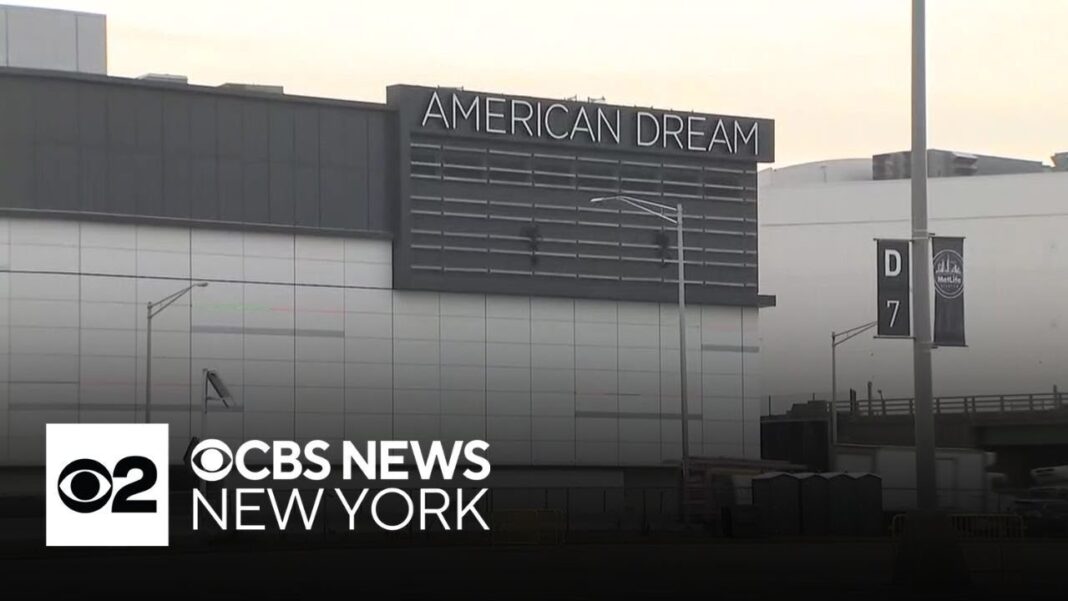
The controversy revolves around American Dream, the sprawling, multibillion-dollar retail and entertainment mecca situated in East Rutherford beside MetLife Stadium. Since opening its doors in stages beginning in 2019, the mall has steadily grown into one of the most ambitious commercial projects in the country, housing more than 450 stores, indoor theme parks, an indoor ski slope, a water park, and luxury retailers. Yet one thing has been conspicuously restricted: Sunday retail sales.
Bergen County remains the only county in New Jersey that still enforces its Sunday “Blue Laws,” a set of regulations dating back decades that prohibit the sale of most consumer goods—clothing, furniture, appliances, electronics, and building materials—on Sundays. The laws were originally justified as a way to preserve a quiet day of rest, rooted in religious tradition and community values.
But as NJ.com reported, the American Dream Mall has quietly allowed more than 120 of its retail tenants to open on Sundays, setting the stage for the legal confrontation now playing out in Superior Court.
Earlier this year, Paramus filed suit against the mall, arguing that the Sunday openings flagrantly violate Bergen County’s Blue Laws and threaten the integrity of the regulatory scheme. Paramus, itself one of the nation’s most lucrative retail hubs, insists that enforcement is not optional. It contends that when a massive commercial complex in the same county flouts the rules, it undermines the entire system—inviting a domino effect that could render the law meaningless.
According to the information provided in the NJ.com report, Paramus officials are seeking court orders that could impose fines and penalties on the mall, a move that would not only restrict Sunday operations but also signal that the borough intends to act as a self-appointed guardian of the county’s retail Sabbath.
But the lawsuit has now drawn in an unexpected—and formidable—ally for the mall.
The New Jersey Sports and Exposition Authority (NJSEA), the public agency that owns the land beneath the American Dream complex and leases it to the mall’s operator, has asked the court to dismiss most of Paramus’s claims.
In a filing described in detail by NJ.com, the authority argues that Paramus lacks the legal standing to enforce a countywide law and that it failed to follow required statutory procedures before initiating the lawsuit. The authority’s position is clear: Paramus may be aggrieved, but it is not the enforcement arm of Bergen County.
The NJSEA further contends that its lease agreement with the mall operator does not obligate it to police Sunday sales or enforce the Blue Laws. Decisions about tenant management, it asserts, fall within the landlord-tenant relationship and should not be dictated by a neighboring municipality.
This intervention has transformed what began as a borough-versus-mall dispute into a broader clash involving state authorities and foundational questions about jurisdiction.
The dispute is complicated by geography. American Dream sits in East Rutherford, not Paramus. Yet both municipalities lie within Bergen County, where the Blue Laws apply uniformly.
Paramus has argued, as the NJ.com report recounted, that allowing Sunday sales at American Dream unfairly advantages one commercial district over another. The borough is famous for its mega-malls—Garden State Plaza, Bergen Town Center, and Paramus Park—none of which open for retail business on Sundays due to the Blue Laws. Paramus officials insist that if American Dream is allowed to flout the rules, the carefully balanced retail ecosystem of Bergen County will collapse.
From their perspective, the lawsuit is not parochial self-interest but a defense of a countywide policy that residents have repeatedly chosen to preserve through referenda.
Yet the Blue Laws have long been controversial. As NJ.com has noted in numerous articles over the years, Bergen County voters have been asked repeatedly whether to repeal the restrictions, most recently in 1993. Each time, they have voted to keep them, often citing traffic congestion and quality-of-life concerns rather than religious motivations.
Still, critics argue that the laws are increasingly out of step with the realities of modern commerce. They point to the irony that shoppers can buy groceries, visit restaurants, and attend entertainment venues on Sundays, but cannot purchase a pair of socks or a sofa.
The American Dream Mall itself is a paradox under the Blue Laws: its indoor amusement parks, water attractions, and movie theaters are permitted to operate on Sundays, drawing tens of thousands of visitors—yet its retail stores are theoretically barred from selling goods.
What appears to have triggered Paramus’s lawsuit is the mall’s gradual expansion of Sunday retail activity. According to the NJ.com report, more than 120 tenants have been operating on Sundays, effectively turning the Blue Laws into a selective and porous regime.
Mall operators have not publicly framed their actions as a protest against the laws, but their conduct suggests a belief that enforcement is either lax or legally questionable. By allowing so many stores to open, American Dream has created a de facto Sunday shopping destination in a county that has prided itself on its retail rest day.
The NJSEA’s filing represents a strategic escalation. By challenging Paramus’s standing, the authority is seeking to have the court rule not on whether the Blue Laws are being violated, but on who has the power to say so.
As the NJ.com report explained, the authority argues that Paramus did not comply with procedural requirements before filing suit—an argument that could lead the court to dismiss the case without ever addressing the substantive issue of Sunday sales.
If the court agrees, Paramus may find itself forced back to the drawing board, perhaps seeking Bergen County itself to bring enforcement actions, or pressing for legislative clarification.
The implications extend far beyond the Meadowlands.
If American Dream prevails, it could mark the beginning of the end for Bergen County’s Blue Laws. Once a single megamall is allowed to operate freely on Sundays, it becomes increasingly difficult to justify keeping competing retailers closed.
Conversely, if Paramus succeeds, it could embolden municipalities to enforce countywide laws beyond their own borders—a precedent that would reverberate through New Jersey’s complex web of local governance.
For now, the case remains pending in New Jersey Superior Court in Bergen County. As the NJ.com report emphasized, no ruling has yet been issued, and the legal arguments are only beginning to be tested.
But the symbolic weight of the confrontation is already evident. At its heart, this is a struggle between tradition and transformation—between a county that has clung to its Sunday silence and a megastructure built to redefine retail in the 21st century.
Whether the Blue Laws endure or finally yield to the American Dream, the outcome will almost certainly reshape the commercial and cultural landscape of Bergen County for decades to come.
