



|
Getting your Trinity Audio player ready...
|
By: Jerome Brookshire
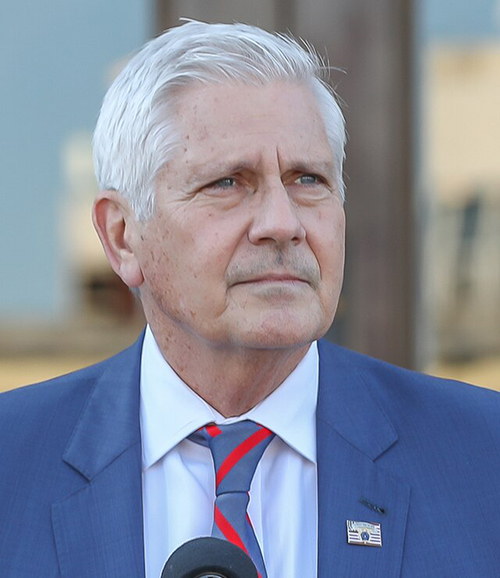
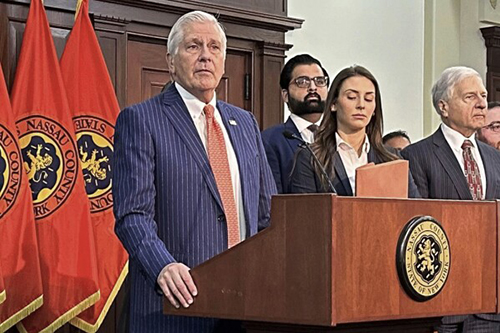
Republican Nassau County Executive Bruce Blakeman is preparing to mount what he acknowledges will be a steep but consequential challenge to New York Governor Kathy Hochul, framing his nascent gubernatorial campaign as a referendum not on ideology, but on governance, cost of living, public safety, and what he characterizes as a series of policy failures under one-party Democratic rule. As reported on Sunday by The New York Post, Blakeman believes his political profile—particularly his pro-choice stance on abortion—neutralizes one of the Democratic Party’s most potent weapons and allows him to shift the campaign squarely onto Hochul’s record.
“It takes the abortion issue off the table,” Blakeman told The New York Post in an interview that emphasized his confidence that the terrain of the 2026 gubernatorial race may look markedly different from the 2022 contest. “I’m a pro-choice Republican. It will help attract independent women.” For Blakeman, the calculation is both ideological and tactical: by depriving Democrats of a reliable line of attack, he intends to force a reckoning over taxes, crime, energy policy, immigration enforcement, and economic stagnation.
That strategy gained new momentum over the weekend when Blakeman secured the endorsement of President Donald Trump, a development highlighted in The New York Post report and one that instantly reshaped the Republican field. The endorsement came just one day after Representative Elise Stefanik—long viewed as the GOP’s strongest statewide contender—abruptly exited the race, stunning party insiders and effectively clearing Blakeman’s path to the nomination.
Blakeman wasted little time drawing contrasts with Hochul. “Kathy Hochul wants to run on anything but her record,” he told The New York Post. “I want to run on her record.” That record, he argued, is defined by rising living costs, a hemorrhaging population, faltering public safety, and what he derides as an ideologically driven energy agenda that has imposed real financial pain on working families.
At the center of Blakeman’s critique is New York’s 2019 Climate Leadership and Community Protection Act, which he dismisses as a “green energy scam.” According to The New York Post report, Blakeman has emerged as a vocal opponent of offshore wind projects and aggressive electrification mandates, arguing that they have driven up utility costs while delivering little measurable benefit to consumers. He has pledged to roll back what he calls “fantasy deadlines” and to embrace a more pragmatic energy policy grounded in affordability and reliability.
That pragmatism, Blakeman says, includes expanding natural gas drilling along New York’s Southern Tier, near the Pennsylvania border. “Drill, baby drill,” he told The New York Post, framing fracking not as an environmental betrayal but as a pathway to lower energy prices, job creation, and regional economic revitalization. The contrast with Hochul could hardly be sharper, even as the governor has recently moderated aspects of her own climate agenda amid mounting cost concerns.
Indeed, Hochul has taken steps that suggest political recalibration. As The New York Post has reported, she recently approved the long-delayed Northeast Supply Enhancement pipeline following discussions with Trump, and her administration has slowed implementation timelines for key provisions of the climate law, including a controversial ban on gas stoves in new construction. Hochul has defended these moves as part of an “all-of-the-above” energy strategy, but critics argue they amount to tacit admissions that earlier policies overshot both public tolerance and economic reality.
Taxes are another flashpoint. Blakeman has pledged to pursue reductions in state income and corporate taxes at a moment when Hochul faces intense pressure from the progressive wing of her party to raise them. New York City Mayor-elect Zohran Mamdani has publicly called for higher taxes to finance an expansive left-wing agenda, and Hochul has been met with chants from his supporters demanding compliance. “I’m looking to cut taxes—not raise them,” Blakeman told The New York Post, casting himself as a bulwark against what he characterizes as fiscal extremism.
Immigration policy also looms large. Blakeman has vowed to rescind New York’s sanctuary state policies “on day one,” arguing that the current approach has strained public services, overwhelmed local governments, and undermined public confidence. According to The New York Post report, Blakeman believes the issue resonates far beyond Republican base voters, particularly in suburban and minority communities that feel disproportionately impacted by shelter overcrowding and resource diversion.
Crime, however, may be the most politically combustible issue of all. Blakeman has promised to tie Hochul directly to bail reform and the Raise the Age law, both of which remain deeply unpopular with voters concerned about repeat offenders and public disorder. Despite Hochul’s efforts to highlight increased funding for police and subway security—efforts she has touted in statements to The New York Post—Republicans argue that the core policies remain unchanged and that public anxiety persists.
Blakeman insists he is uniquely positioned to broaden the GOP’s appeal in a state long dominated by Democrats. He points to his recent re-election as Nassau County executive, where he claims to have won more than a third of the Black vote and a substantial share of the Latino vote—figures well above typical Republican performance. “Republicans usually get about 10%,” he noted to The New York Post, arguing that his results demonstrate a capacity to build multiracial coalitions around shared concerns.
His Jewish identity may also play a role in fundraising and voter enthusiasm, particularly in the aftermath of Mamdani’s election as mayor and his history of sharply critical rhetoric toward Israel. GOP officials told The New York Post that donors dismayed by rising antisemitism and anti-Israel sentiment in New York politics are likely to rally behind Blakeman as a credible alternative.
Still, the obstacles are formidable. Hochul’s campaign has already moved aggressively to define Blakeman as a “MAGA extremist,” a charge amplified by his close association with Trump. “Donald Trump said it best: Bruce Blakeman is ‘MAGA all the way,’” said Hochul campaign communications director Sarafina Chitika in a statement reported by The New York Post. She accused Blakeman of backing policies that “raise costs, gut health care, and undermine abortion rights,” and dismissed his candidacy as politically doomed.
Hochul’s team has also sought to keep abortion in play, noting that Blakeman previously opposed an amendment to enshrine abortion rights in the state constitution—a point they argue undercuts his pro-choice claims. The governor has emphasized her own record of cutting middle-income taxes, issuing $2 billion in “inflation refund” checks, and expanding law enforcement resources.
The broader political landscape, however, remains inhospitable to Republicans. George Pataki was the last GOP governor elected in New York, winning his third term in 2002 in the shadow of the September 11 attacks. The nonpartisan Cook Political Report recently shifted its rating of the race from “Likely D” to “Solid D” following Stefanik’s exit, concluding that Republicans are “not in a position to flip the state next year,” as cited by The New York Post.
Polling reinforces that skepticism. A recent Siena College survey found Hochul leading Blakeman by a commanding margin, even as voter dissatisfaction with the governor remains strikingly high. Only 37% of respondents said they want to reelect Hochul, while 50% expressed a desire for someone else. Yet Hochul still led Blakeman 50% to 25% in the matchup—a paradox that underscores both her vulnerabilities and the GOP’s enduring challenges.
For Blakeman, the campaign ahead is less about easy victory than about reframing the conversation in a state where Republicans have long struggled to be heard. He argues that Hochul’s record—on energy costs, taxes, crime, and governance—will ultimately outweigh partisan reflexes. Whether that argument can overcome New York’s deep-blue tilt remains uncertain.
What is clear is that Blakeman intends to force a contest defined not by cultural flashpoints alone, but by competing visions of how New York should be governed in an era of economic anxiety, demographic change, and political polarization. In doing so, he is betting that a coalition of independents, minorities, suburban voters, and disaffected Democrats may yet be persuaded that the status quo is unsustainable—and that even in New York, change is still possible.