



|
Getting your Trinity Audio player ready...
|
A Shattered Flame in Kew Gardens: How the Destruction of a Menorah Became a Stark Symbol of NYC’s Rising Antisemitic Anxiety
By: Tzirel Rosenblatt
In the quiet streets of Kew Gardens, where tree-lined blocks often belie the turbulence of the wider city, a small but searing act of vandalism unfolded earlier this month—one that reverberated far beyond the physical damage it caused. According to police accounts cited extensively in a report on Thursday in The New York Post, a hate-driven vandal ripped a menorah from a vehicle parked outside a Jewish food pantry, desecrating a sacred symbol of faith and resilience during the Hanukkah season. Though the monetary damage was limited, the psychological and communal impact has been profound.
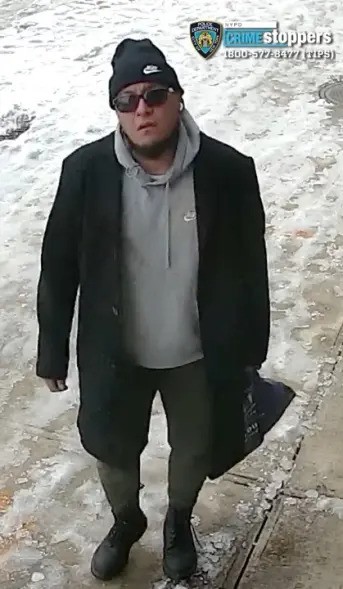
The incident occurred around 3:12 p.m. on December 15, outside Tomchei Shabbos of Queens, an all-volunteer Jewish charity that provides weekly food packages to families in need. Surveillance footage and witness accounts reviewed by law enforcement indicate that the suspect stormed up to a vehicle parked in front of the pantry, tore the Hanukkah candelabrum from its roof, and smashed it to the ground before fleeing the scene. As reported by The New York Post, the $250 menorah suffered visible damage, with at least one of its lights broken in the attack.
To many in the neighborhood, the crime felt personal. Tomchei Shabbos is not merely a food pantry; it is a lifeline for vulnerable families, many of whom rely on its quiet, dignified assistance to put meals on their tables each week. That a symbol of Jewish identity was targeted outside such a place only deepened the sense of violation. As The New York Post report noted, the vandal fled on 129th Street toward Kew Gardens Road, disappearing into the neighborhood before police could apprehend him.
Menorahs occupy a unique place in Jewish tradition. Lit during Hanukkah, they commemorate perseverance in the face of persecution and the triumph of light over darkness. The act of tearing one down—particularly during the holiday itself—carries a symbolic weight that goes well beyond vandalism. According to community leaders quoted by The New York Post, the incident was immediately perceived not as random destruction, but as an expression of animus toward Jews as Jews.
The New York City Police Department appears to share that assessment. Police confirmed that the NYPD’s Hate Crimes Task Force has taken over the investigation, signaling that authorities are treating the incident as a potential bias crime. The Task Force has seen a sharp increase in antisemitic cases over the past year, mirroring a broader rise in hate incidents across the city.
What has intensified concern is the timing. As The New York Post report emphasized, the menorah vandalism occurred just one day before a far more violent antisemitic attack shook New York. On December 16, Elias Rosner, a 35-year-old Jewish New Yorker, was allegedly stabbed by a man spewing explicit hatred toward Jews. According to Rosner’s account, the suspect, identified as 23-year-old Armani Charles, shouted chilling threats during the assault.
“I’m going to kill Jewish people, I’m going to kill a Jew today, I don’t give a f–k,” Charles allegedly screamed, according to Rosner’s statements quoted by The New York Post. Even more disturbing, Rosner said the attacker added, “We wouldn’t be in this mess if the Holocaust had happened,” a remark that underscores the ideological nature of the violence.
While police have not publicly linked the two incidents, the proximity in time has left many New Yorkers—particularly within the Jewish community—deeply unsettled. As The New York Post report noted, for many residents, the menorah vandalism now reads as a warning sign rather than an isolated episode.
Tomchei Shabbos of Queens operates quietly, without fanfare. Run entirely by volunteers, the organization distributes food packages to families struggling to make ends meet, regardless of public attention or recognition. That such an institution became the backdrop for a hate crime has fueled anger and sorrow in equal measure.
According to the information provided in The New York Post report, community members expressed disbelief that a person would choose to attack a symbol of faith outside a charity devoted to alleviating hunger. “This wasn’t just about property,” one local resident told the paper. “It was about sending a message.”
That message, many fear, is that Jewish visibility itself has become a target.
The NYPD has urged the public to come forward with any information related to the vandalism. Tips can be submitted anonymously through the Crime Stoppers Hotline or online portals. Detectives are reviewing surveillance footage from nearby buildings and canvassing the area for witnesses who may have seen the suspect before or after the attack.
Police officials have stressed that hate crimes are treated with particular seriousness under New York law, carrying enhanced penalties if bias motivation is established. As The New York Post has reported in recent months, city officials have also increased patrols around synagogues, Jewish schools, and community centers, especially during religious holidays.
The Kew Gardens incident does not exist in a vacuum. According to data frequently cited by The New York Post, antisemitic incidents in New York City have risen sharply, ranging from verbal harassment and vandalism to physical assaults. Jewish New Yorkers report altering their routines, avoiding public displays of religious identity, and remaining hypervigilant in everyday settings.
For many, the image of a shattered menorah outside a food pantry has become emblematic of this moment—an era in which symbols of faith and charity are no longer spared from hostility.
Yet even amid fear and anger, there has been resolve. Volunteers at Tomchei Shabbos have made clear that their work will continue uninterrupted. As The New York Post reported, supporters quickly stepped forward to replace the damaged menorah and to reaffirm their presence in the neighborhood. Messages of solidarity poured in from across the city, with residents of diverse backgrounds condemning the act.
Jewish leaders have emphasized that the response to hate must be both firm and measured: firm in demanding accountability, and measured in refusing to allow fear to dictate communal life.
As of now, the suspect remains at large. The NYPD continues to investigate, and authorities are urging anyone with information—no matter how small—to contact Crime Stoppers. As The New York Post report indicated, community cooperation is often the key to resolving such cases.
In the meantime, the broken menorah in Kew Gardens stands as a stark reminder of the challenges facing New York’s Jewish community. It is a reminder, too, of the enduring power of symbols—and of the urgent need to protect not only property, but the sense of safety and belonging that allows a city’s diverse communities to thrive.
As The New York Post report noted, how New York responds to incidents like this will help define whether hatred is allowed to fester in the shadows—or confronted openly, decisively, and without equivocation.