



|
Getting your Trinity Audio player ready...
|
A New Era Above the Skyline: NYC Chosen as Test Ground for Revolutionary Air Taxi Network
By: Jerome Brookshire
New York City, long synonymous with gridlocked streets, honking taxis, and sprawling commuter congestion, may soon witness a transportation revolution unfolding not on its crowded avenues but in the skies above them. Federal officials have selected the New York metropolitan area as a key testing ground for a bold new aviation initiative aimed at deploying electric “air taxis,” an emerging form of short-distance urban flight designed to move passengers quickly between major destinations such as Manhattan and regional airports.
The program, launched under a directive from the Trump administration, could dramatically transform how travelers navigate one of the busiest metropolitan regions in the world. If successful, commuters and tourists alike may soon be able to bypass the notorious traffic of New York City by boarding compact, electric aircraft capable of whisking passengers from Manhattan to airports such as John F. Kennedy International Airport, LaGuardia Airport, and Newark Liberty International Airport in as little as five to fifteen minutes.
According to report on Thursday in The New York Post, the initiative is part of a broader federal push to accelerate the development of next-generation aviation technologies that promise cleaner, quieter, and more efficient transportation in densely populated regions.
The effort is formally known as the Electric Vertical Takeoff and Landing Integration Pilot Program, a multi-year project intended to test new aircraft technologies while evaluating safety, noise levels, and the potential impact on regional mobility.
For decades, New York’s traffic congestion has been the subject of political debate, urban planning studies, and countless commuter frustrations. From the packed lanes of the Brooklyn-Queens Expressway to the slow-moving taxi queues along Midtown Manhattan, the city’s transportation infrastructure has struggled to keep pace with the region’s growth.
The concept of air taxis offers a tantalizing solution: lift commuters above the gridlock entirely.
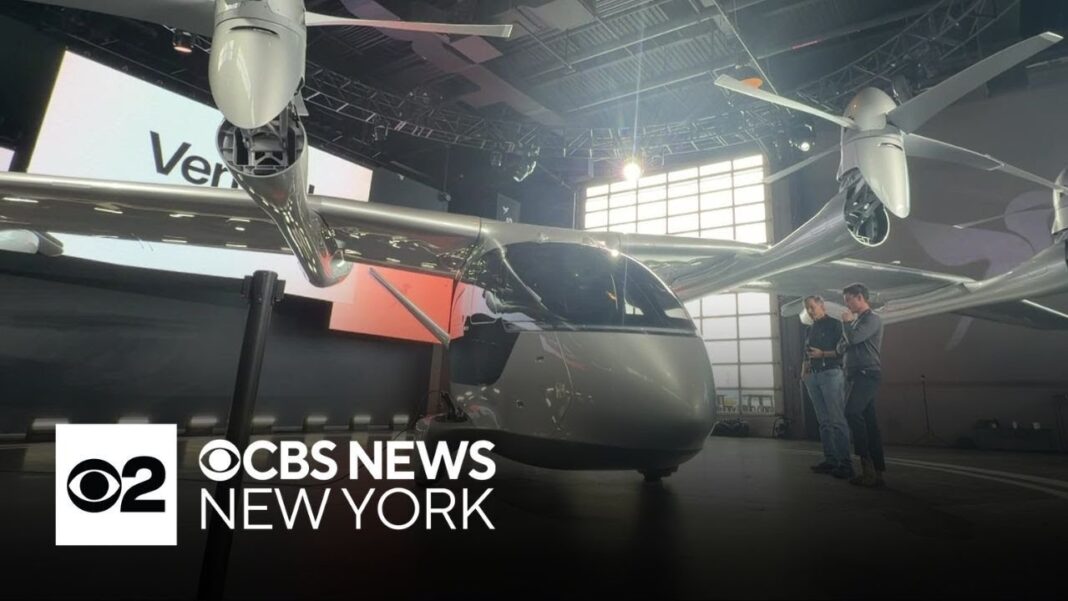
Under the pilot program, small electric aircraft resembling helicopters will operate from existing heliports and newly established “skyports,” transporting passengers across short distances within the metropolitan region.
According to details reported by The New York Post, travelers could soon board an air taxi in Manhattan and arrive at one of the region’s major airports within minutes—often faster than it takes to travel a few miles by car during rush hour.
The anticipated price for such a journey is expected to range between $110 and $165, placing it roughly in line with high-end luxury car services that currently transport passengers through the city’s congested streets.
For frequent travelers, business executives, and time-sensitive commuters, the potential advantages are obvious: dramatic time savings and an entirely new dimension of urban mobility.
The three-year testing initiative will be coordinated through a partnership between the Port Authority of New York and New Jersey and several leading aerospace companies developing electric vertical takeoff and landing aircraft.
Among the companies participating in the pilot program are Archer Aviation, based in San Jose, California, Electra, an aerospace startup focused on hybrid-electric aircraft, BETA Technologies, a Vermont-based aviation company and Joby Aviation, a leading developer of electric air taxis.
These firms represent the forefront of a rapidly evolving sector known as advanced air mobility, which seeks to develop aircraft capable of operating in urban environments with minimal noise and environmental impact.
The Port Authority, which oversees the region’s major airports and transportation infrastructure, will help coordinate operations at key landing sites and integrate the new system with existing transportation networks.
Although the agency declined to comment directly to The New York Post regarding specifics of the program, federal officials have indicated that the pilot will focus heavily on airport connectivity—one of the most pressing logistical challenges for travelers in the New York region.
The proposed network would connect several Manhattan skyports with major transportation hubs throughout the metropolitan area. According to plans outlined by Archer Aviation and referenced in coverage by The New York Post, passengers would be able to book airline tickets that include an integrated air taxi leg as part of the journey.
For example, a traveler flying out of JFK Airport could begin their trip at a Manhattan skyport, board a short electric flight, and arrive at the airport within minutes—bypassing traffic entirely. The network map envisioned by Archer includes connections between Manhattan and JFK International Airport, LaGuardia Airport, Newark Liberty International Airport, Teterboro Airport in New Jersey, Westchester County Airport and Republic Airport on Long Island.
Each aircraft would carry a small number of passengers—typically four to six—allowing for frequent departures and flexible scheduling.
The aircraft being tested in the program represent a new generation of aviation technology designed to reduce environmental impact and improve operational flexibility. Unlike traditional helicopters, many of these vehicles rely on electric propulsion systems, significantly reducing noise levels and emissions.
One of the participating companies, Electra, has developed small hybrid-electric aircraft capable of taking off and landing in extremely short distances—sometimes as little as 150 feet.
This capability could allow the aircraft to operate from unconventional locations such as small runways, parking lots, fields and converted urban landing pads.
According to Electra CEO Marc Allen, the program represents a major step forward for American aerospace innovation.
“It’s American innovation at its best,” Allen said in remarks highlighted by The New York Post. “This administration is opening the door for American companies to demonstrate how hybrid-electric propulsion works at scale and to reimagine how we use the skies.”
The air taxi initiative is part of a broader effort by the Trump administration to strengthen domestic aviation manufacturing and technological leadership.
Under an executive order issued by President Donald Trump, federal agencies have been instructed to prioritize American-made aircraft “to the maximum extent permitted by law.”
The directive reflects a strategic push to ensure that emerging aviation technologies are developed and manufactured within the United States rather than abroad.
Industry analysts note that advanced air mobility has the potential to become a multibillion-dollar global market in the coming decades.
By accelerating regulatory approval and supporting early pilot programs, the federal government hopes to position American companies at the forefront of this rapidly growing industry.
One of the most striking aspects of the program is the speed with which it is being implemented.
According to The New York Post report, the Federal Aviation Administration (FAA) has been placed on an unusually aggressive timeline to design and launch the testing program.
Under the administration’s directive, the FAA was given just over one year to establish regulatory guidelines, select participating companies and begin operational testing.
This accelerated timeline contrasts sharply with the FAA’s typical rulemaking process, which can take three years or longer.
Federal officials argue that the urgency reflects the need to keep pace with rapid technological advances in the aviation sector.
Despite the excitement surrounding the project, the air taxi initiative is likely to provoke significant debate within the communities affected by the new flights.
Urban residents living near heliports and proposed landing sites have long complained about the noise generated by helicopter traffic.
According to data cited by The New York Post, complaints submitted through the FAA’s national noise reporting system increased by 150 percent between 2023 and 2024. Although electric aircraft are expected to be significantly quieter than conventional helicopters, skeptics worry that increased flight activity could still disrupt neighborhoods.
Safety concerns are also likely to play a central role in public discussions about the program.
Federal officials have emphasized that the pilot program will carefully evaluate whether the aircraft meet stringent safety standards before any large-scale deployment is approved.
New York City already hosts a limited form of air taxi service. Companies such as Blade currently operate helicopter flights between Manhattan heliports and several regional airports. A flight from Blade’s West 30th Street heliport to JFK Airport can take as little as five minutes, though the service currently costs around $195 per passenger.
The new electric aircraft being tested could potentially offer similar travel times at lower prices while also reducing noise and emissions. If successful, the technology could expand the market for aerial commuting far beyond its current niche clientele.
While New York is among the most prominent locations selected for the pilot program, several other states will also participate in the testing initiative. According to The New York Post report, the federal government has designated the following states as additional testing zones. Texas, Utah, Pennsylvania, Louisiana, Florida, North Carolina and New Mexico.
Some locations will test passenger flights, while others—particularly in New Mexico—will experiment with autonomous cargo aircraft designed to transport goods.
The nationwide approach is intended to gather data from diverse environments, including dense urban areas, suburban regions, and rural landscapes.
If the air taxi initiative succeeds, it could mark one of the most significant transformations in urban transportation since the advent of commercial aviation.
Advocates argue that short-range electric aircraft could dramatically reduce travel times, ease congestion on highways, and create new economic opportunities in the aerospace sector.
Critics, however, caution that the technology must prove both safe and socially acceptable before it can be widely adopted.
For now, New York City stands at the forefront of this experiment—a metropolis that has long defined innovation in transportation, from the subway system to the yellow taxi.
Soon, another iconic image may join the skyline: fleets of small electric aircraft rising above the Hudson River and Manhattan’s skyscrapers, carrying passengers swiftly through the air.
And as The New York Post has repeatedly observed in its coverage of the initiative, the promise of escaping gridlock by taking to the skies may no longer be the stuff of science fiction—but the next chapter in the evolution of urban mobility.
