



|
Getting your Trinity Audio player ready...
|
By: Ariella Haviv
In a deeply emotional moment that bridges history, trauma, and civic conviction, Galina Guterman, a 92-year-old Holocaust survivor living in The Bronx, voted for the first time in her life this week — not out of routine civic duty, but out of fear. As The New York Post reported on Sunday, the nonagenarian made her way to the Riverdale YMCA to cast her ballot for Andrew Cuomo, saying she felt compelled to act in order to stop Zohran Mamdani, the Democratic Socialist frontrunner in New York City’s mayoral race.
“I’ve never voted before. I’m voting because I believe that Mamdani is an antisemite with dangerous fiscal policies,” Guterman told The New York Post through a Russian interpreter, her voice firm with the weight of a century’s worth of experience. “We don’t trust him. He has not proven to be the person that cares about everyone — or about me.”
Guterman’s story reads like a testament to survival itself. As The New York Post report recounted, she was a young girl when Nazi Germany invaded Russia. Her family fled eastward into Siberia, enduring the brutal cold and starvation that claimed millions of lives during the war. The memory of those years — of bombs, hunger, and relentless fear — never left her.
After the war, she remained in the Soviet Union, where she became a pathologist, devoting her professional life to medicine. But even in her adulthood, antisemitism persisted. According to relatives quoted in The New York Post report, a summer home she owned outside Moscow was torched by an arsonist in an antisemitic attack, a reminder that even after surviving the Holocaust, hatred still smoldered in different forms.
In the early 1990s, as the Soviet Union collapsed, Guterman and her family fled again — this time to the United States, in search of freedom and dignity. They settled in The Bronx, where she quietly built a new life, content to live out her later years far from the oppressive reach of authoritarian politics.
Now, three decades later, she found herself stepping into a polling place for the first time — because, she said, the rhetoric of one candidate had stirred memories she had hoped were long buried.
At the center of Guterman’s alarm is Zohran Mamdani, a 34-year-old state Assembly member from Queens who has built his political brand on left-wing populism, anti-capitalist economics, and fierce criticism of Israel. The New York Post has repeatedly reported on Mamdani’s controversial record, including his vocal support for the Boycott, Divestment, and Sanctions (BDS) movement, which seeks to economically isolate Israel.
Mamdani has also publicly called for the arrest of Israeli Prime Minister Benjamin Netanyahu, labeling him a war criminal. While the candidate insists that his stance reflects opposition to what he calls “the genocide in Gaza” rather than animus toward Jews, his critics — among them Holocaust survivors such as Guterman — are unconvinced.
“When I listen to what [Mamdani] says about ‘globalize the intifada,’ that is not kind-hearted,” Guterman told The New York Post. The slogan, which has appeared at rallies across New York, has been widely interpreted as a call for violence against Jews, a perception reinforced by its origins in the Palestinian uprisings that targeted Israeli civilians.
Mamdani has since distanced himself from the phrase, telling reporters that he “discourages” its use. But for Guterman and many in the city’s Jewish community, the disavowal comes too late and rings too hollow. The echoes of history, they say, are impossible to ignore.
Guterman’s unease extends beyond questions of antisemitism. Having lived under Soviet socialism for decades, she sees in Mamdani’s platform — his promises of free public transit, rent freezes, and heavy corporate taxation — the specter of an ideology that once destroyed lives, including her own family’s.
As The New York Post reported, Guterman’s memories of socialist rule are vivid and scarring. “Heavy-handed socialist policies,” she said, “are the reason we fled the Soviet Union.” She recalled the shortages, the censorship, and the constant fear of reprisal for speaking one’s mind.
Her flight from Moscow in the 1990s was as much an escape from ideology as from poverty. “I came to America because it was the land of freedom,” she told The New York Post. “Now I hear these young people speak about socialism like it’s something good. They don’t know what it means. They don’t remember the fear.”
Her warning carries a poignancy that transcends politics. In her eyes, Mamdani’s brand of democratic socialism — with its rhetoric of wealth redistribution and social revolution — recalls the propaganda that once filled Soviet airwaves, promising equality but delivering oppression.
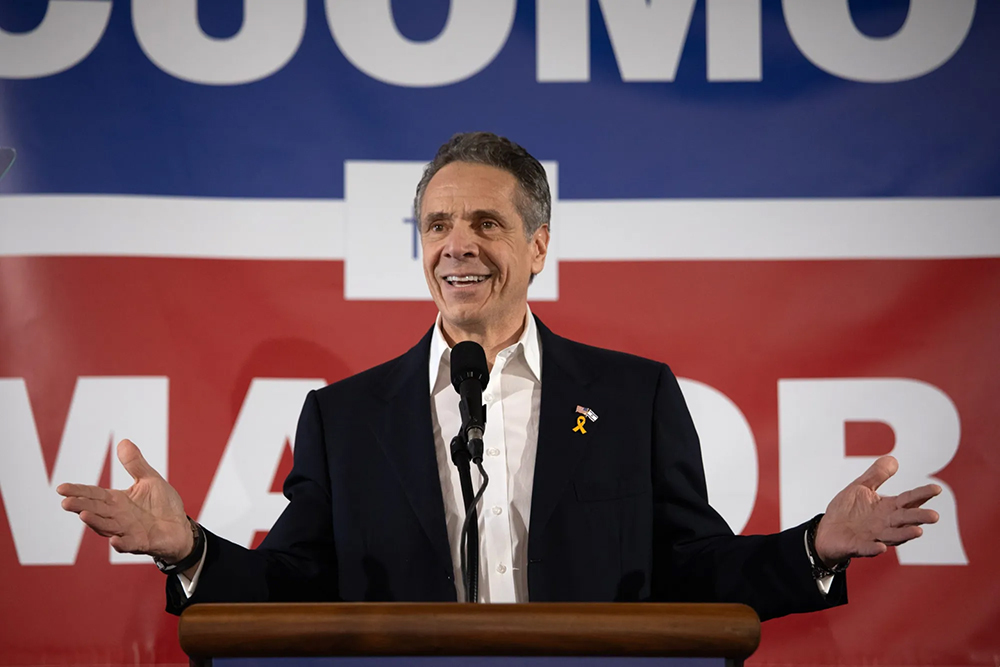
Against that backdrop, Guterman said she found reassurance in Andrew Cuomo, the former governor running as an independent candidate. To her, Cuomo represents a return to pragmatic, disciplined leadership.
“Cuomo is just what the city needs,” she said. “Cuomo is trustworthy, real and honest. He is someone I trust.”
While The New York Post has chronicled Cuomo’s fall from political grace — his 2021 resignation amid misconduct allegations — it has also reported on his slow, calculated effort to rebuild his reputation. His campaign for mayor has centered on themes of competence, stability, and safety, drawing a stark contrast with Mamdani’s sweeping ideological proposals.
For Guterman and others of her generation, Cuomo’s appeal lies less in charisma and more in experience. “He’s been in government,” she said. “He knows how to run things. He’s not talking about tearing everything down.”
The story of Galina Guterman, as The New York Post report noted, is emblematic of a growing anxiety among Jewish New Yorkers — particularly older residents who see in the city’s current political climate an unsettling resurgence of antisemitic rhetoric.
Since the October 7, 2023 Hamas massacre in Israel, antisemitic incidents have surged across the city. Jewish students have reported harassment on college campuses; pro-Hamas rallies have at times featured slogans glorifying the intifada; and several elected officials have faced scrutiny for anti-Israel remarks.
Within this volatile environment, Mamdani’s statements have taken on heightened significance. His support for BDS and his harsh condemnation of Israel’s military actions in Gaza have drawn applause from the far-left and condemnation from Jewish organizations, including the Anti-Defamation League, which warned that BDS “crosses the line from legitimate criticism of Israeli policy to the delegitimization of Israel’s right to exist.”
To voters such as Guterman, this is not merely political disagreement — it is a moral line that cannot be crossed.
At 92, Guterman’s first vote was more than a civic milestone; it was a quiet act of defiance. Having survived both the Nazis and Soviet communism, she said she felt compelled to take a stand against what she sees as a new form of intolerance cloaked in the language of justice.
“I never thought I would need to vote,” she told The New York Post. “But when I hear people talk about Jews again like we are the problem, when I see socialism again — I cannot be silent.”
Her story, which has since drawn attention online and in local Jewish circles, encapsulates a moral urgency that transcends age and politics. It speaks to a generation of survivors who, even in their final decades, feel the burden of history pressing upon the present.
As Election Day approaches, Guterman’s story resonates beyond the confines of her Riverdale polling site. It underscores a city divided not just by ideology, but by memory — between those who remember what unchecked hatred and collectivist dogma can yield, and those too young to recall.
For Guterman, the act of voting for Andrew Cuomo was not merely about supporting one candidate or rejecting another; it was, as The New York Post wrote, about reaffirming faith in a city — and a country — that once offered her refuge.
“Cuomo is a good person,” she said simply. “He’s honest. That’s what matters.”
In an election defined by ideology, identity, and deep emotional fault lines, the voice of a 92-year-old survivor offers a haunting reminder of why democracy matters — and what is at stake when the lessons of history are forgotten.