



|
Getting your Trinity Audio player ready...
|
Edited by: TJVNews.com
In the intricate and often opaque world of art collecting, authenticity is everything. For one family of art collectors, the Perlmans, the allure of owning works by the legendary pop artist Andy Warhol turned into a nightmare when questions arose about the authenticity of several pieces they had purchased. According to a report in The New York Times, this unsettling discovery has led to a high-profile lawsuit that could have significant repercussions for the art market, particularly in the realm of high-value contemporary art.
The first indication that something might be amiss came in December when the Perlman family, eager to capitalize on their investment, decided to sell some of their Warhol pieces through Christie’s, one of the world’s leading auction houses. However, instead of facilitating the sale, Christie’s raised red flags about the authenticity of the artworks, as was reported in the NYT. This unexpected turn of events set off a chain reaction that culminated in the Perlmans filing a lawsuit on Thursday against their art dealer, Leslie Roberts, and the Miami Fine Art Gallery, accusing them of orchestrating a sophisticated fraud.
According to the lawsuit, Leslie Roberts, the director of Miami Fine Art Gallery, and the gallery itself, went to great lengths to convince the Perlmans that the Warhols in their possession were genuine. The lawsuit details a series of actions taken by Roberts to reassure the family, including an email from someone purporting to be a contact at the Andy Warhol Foundation for the Visual Arts. Indicated in the NYT report was that this email, which was meant to validate the authenticity of the works, came from an address ending in “@andywarholfoundation.co,” closely mimicking the foundation’s legitimate email domain, “@warholfoundation.org.” The subtle difference in the email domain was an early indicator that something was amiss.
Further compounding the deception, the lawsuit claims that two individuals visited the Perlman family’s Florida home, presenting themselves as appraisers from Phillips, a prominent rival auction house. These individuals reportedly examined the Warhols and declared them to be authentic. However, the NYT report said that when the Perlmans later contacted Phillips to confirm the appraisers’ credentials, they were told that Phillips had no knowledge of these individuals and that the business cards they had presented were fakes.
The lawsuit, filed in state court in Miami, is scathing in its accusations, labeling Leslie Roberts and the Miami Fine Art Gallery as “fraudsters.” The Perlmans allege that they were duped into paying more than $6 million for what now appears to be a collection of counterfeit Warhols. The report in the NYT explained that the lawsuit accuses the defendants of engaging in a deliberate and coordinated effort to deceive the family, using fake documents, impersonations, and other fraudulent tactics to sell inauthentic art.
The Perlmans are seeking damages for the money they spent on the purported Warhols, as well as for the emotional and reputational harm they have suffered as a result of the alleged fraud. The case could set a significant precedent in the art world, particularly regarding the responsibilities of dealers and galleries in verifying the authenticity of high-value artworks.
Roberts has vehemently denied the allegations outlined in the lawsuit. In a phone interview with the NYT on Friday, Roberts painted a very different picture of events, claiming that Matthew Perlman, one of the plaintiffs, was not merely a passive buyer but an active partner in the venture. According to Roberts, Perlman was involved in “every single one” of the art purchases and was fully aware of the transactions as they occurred.
Roberts expressed frustration at what he perceives as an unfair portrayal in the lawsuit, insisting that he had acted in good faith and that the accusations against him were unfounded. As per the information provided in the NYT report, the defense’s stance suggests that the case may hinge on differing interpretations of the business relationship between Roberts and the Perlmans, as well as on the evidence surrounding the authenticity of the artworks in question.
The Perlman family, led by Richard Perlman, a seasoned real estate investor, and his son Matthew, first encountered Leslie Roberts in early 2023. Their visit to Roberts’s gallery in Miami’s upscale Coconut Grove neighborhood marked the beginning of what they believed would be a fruitful relationship. According to the information contained in the NYT report, the gallery, a vibrant storefront showcasing works by celebrated artists such as Warhol, Jeff Koons, Robert Indiana, and Banksy, impressed the Perlmans with its offerings and the connections Roberts claimed to have in the art world.
Roberts presented himself as a well-connected figure with a strong reputation, citing his extensive training from New York University and an internship at Sotheby’s, New York. These credentials, along with his claim of having a direct relationship with the Andy Warhol Foundation for the Visual Arts, captivated the Perlmans. Noted in the NYT report was that they were particularly thrilled when Roberts mentioned that this connection could secure them authentic Warhol pieces at a discount—an opportunity that seemed too good to pass up.
The Perlman family’s confidence in Roberts took a dramatic turn when Christie’s, the renowned auction house, questioned the authenticity of the Warhol pieces they sought to sell. This revelation prompted the family to dig deeper, leading to the discovery of a series of alarming inconsistencies, the NYT reported, According to the lawsuit they filed, the Perlmans allege that Roberts misled them into purchasing fake Warhols, using fake appraisers and forged documents to maintain the illusion of legitimacy.
One of the most damning aspects of the lawsuit is the accusation that Roberts facilitated an appraisal visit from individuals who claimed to represent Phillips, another major auction house. The NYT report revealed that rhese individuals allegedly confirmed the authenticity of the Warhols, but when the Perlmans contacted Phillips, they were informed that the appraisers were impostors and the business cards they presented were forgeries.
Roberts, however, maintains his innocence. He insists that the Warhols he sold to the Perlmans were sourced from legitimate high-end galleries and the Warhol Foundation itself. “I don’t believe anything was a forgery—everything looked good to me,” Roberts told the NYT, expressing skepticism about the authorities who have labeled the works as fake. He also denied any involvement in hiring the appraisers who visited the Perlmans’ home, further complicating the narrative.
Adding a layer of complexity to the case is Roberts’s legal history. In 2015, Roberts pleaded guilty to mail fraud and served a prison sentence after admitting to selling forged paintings to unsuspecting customers, as was reported by the NYT. This past conviction looms large over the current allegations, casting doubt on Roberts’s credibility and raising questions about his business practices.
Roberts acknowledges his past mistakes and insists that he has taken steps to avoid repeating them. “I try to be more cautious than ever because of my past,” he told the NYT, suggesting that the current allegations are baseless and that he is being unfairly targeted. His attorney, Jonathan Marc Davidoff, has also come to his defense, stating that they “intend to vigorously defend against the baseless and misleading allegations in the complaint.”
Central to this venture was a supposed contact at the Warhol Foundation named Alex Herman, who communicated with the Perlmans through the email address “[email protected].”
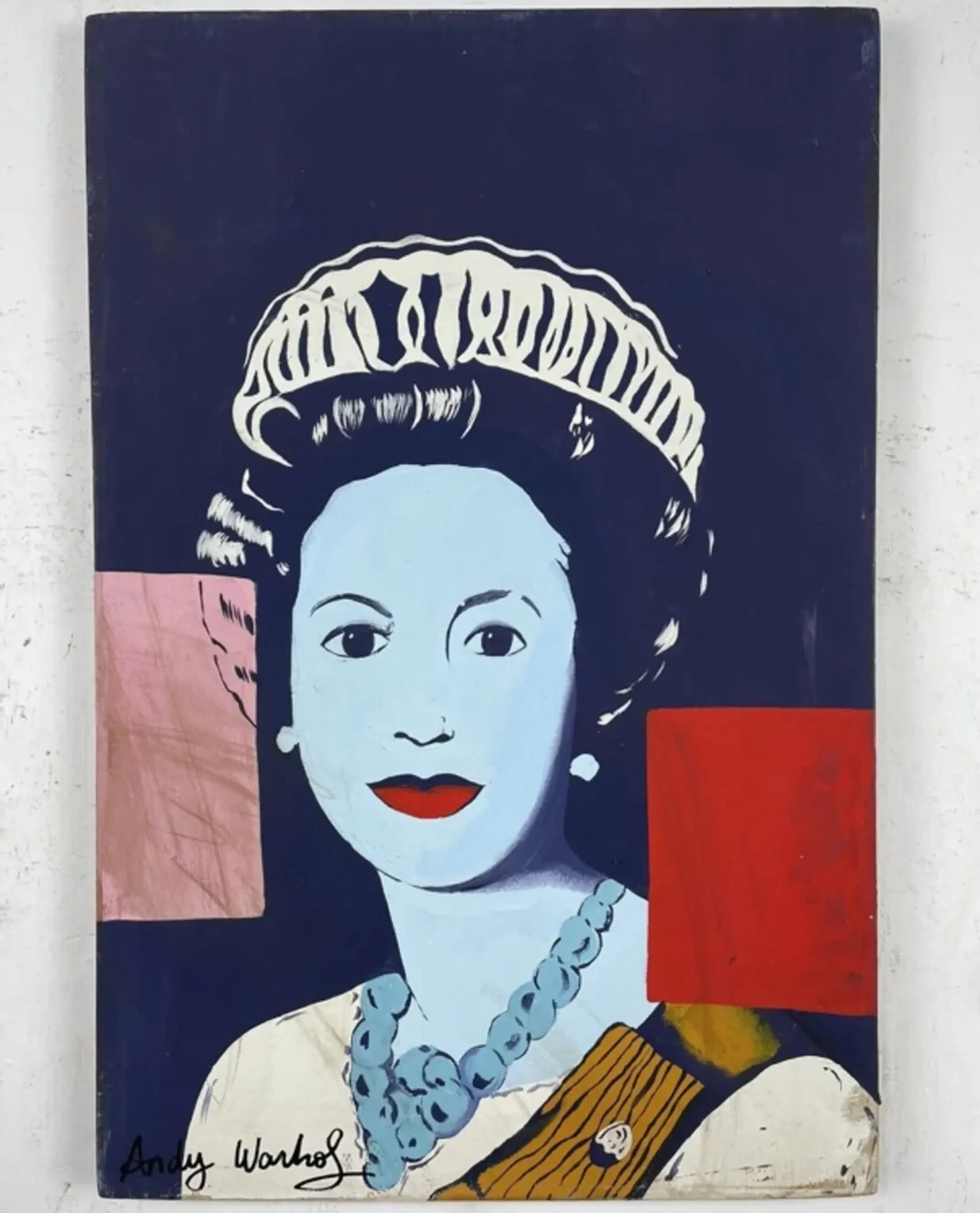
As the lawsuit details, Alex Herman’s role was pivotal in the Perlmans’ decision to proceed with the joint venture. Through a series of emails, Herman offered the family “rare” Warhol works, including pieces that were described as “test prints” never intended for public sale. The NYT report said that these works were presented as extraordinary opportunities, available at prices significantly lower than their market value. For example, Herman purportedly offered a rendition of Andy Warhol’s famous John Wayne portrait for $150,000 and a canvas of Queen Elizabeth for $82,500—prices that seemed like incredible bargains given the value of similar works at auction.
However, the Perlmans’ lawsuit alleges that Alex Herman might not be a real person at all. The NYT report pointed out that the suit claims that the email address was created and operated by Leslie Roberts himself, with the intent to impersonate a Warhol Foundation employee and deceive the family into purchasing counterfeit artworks. The lawsuit further suggests that if Herman does exist, he would be part of a criminal conspiracy designed to defraud the Perlmans.
According to Roberts, Herman admitted he was not affiliated with the Warhol Foundation but offered to help broker art deals for a fee. This counter-narrative adds another layer of complexity to the case, raising questions about the legitimacy of the entire venture.
The inventory of purported Warhol works purchased by the Perlmans through this joint venture is extensive, with more than 70 items listed in the lawsuit. These include a red canvas painting of John Lennon, a work referred to as “Marilyn Monroe No. 28,” and a package of screen-prints—a technique famously used by Warhol in his creative process the NYT reported. The sheer volume and variety of these works reflect the significant investment the Perlmans made under the belief that they were acquiring authentic pieces of modern art history.
However, the lawsuit casts doubt on the authenticity of these works, suggesting that they may be forgeries. The discrepancy between the prices paid by the Perlmans and the market value of similar works adds to the suspicion. For instance, the report in the NYT said that a print of Warhol’s blue portrait of Queen Elizabeth was sold at auction in 2022 for over $850,000, a stark contrast to the $82,500 that the Perlmans were charged for what was purported to be an original canvas of the same subject.
