



|
Getting your Trinity Audio player ready...
|
By: Fern Sidman – Jewish Voice News
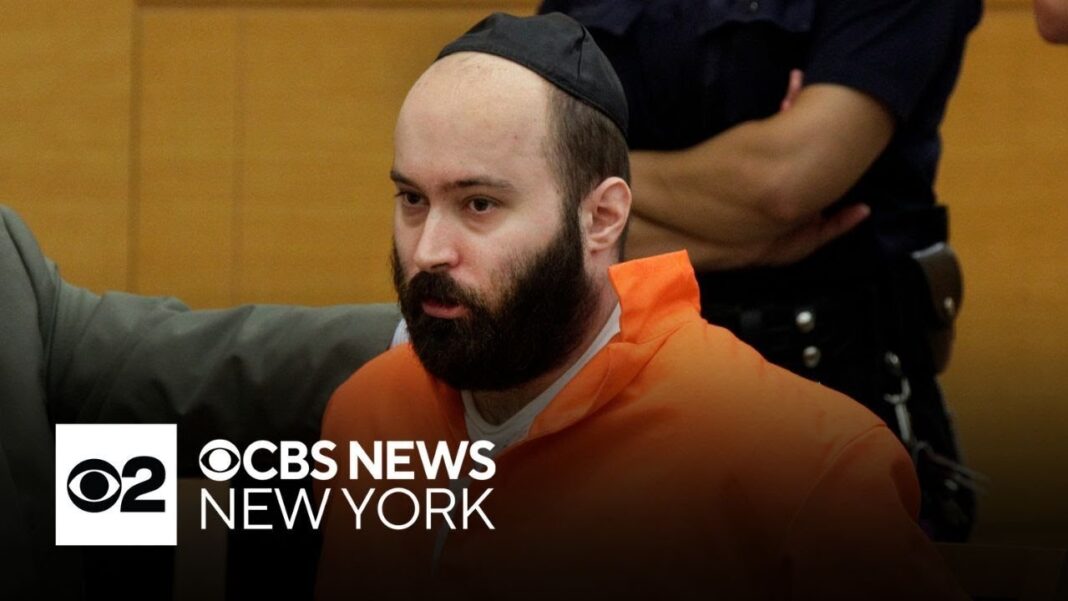
More than thirteen years after the abduction and murder of 8-year-old Leiby Kletzky seared itself into the collective memory of New Yorkers, the man responsible for one of the city’s most harrowing crimes has died while serving his sentence. As The New York Post reported on Thursday, state correction officials confirmed that Levi Aron, 49, died shortly before 10:30 a.m. on Wednesday at a hospital near the Wende Correctional Facility in Erie County, where he had been incarcerated since his conviction.
Aron had been serving a sentence of 40 years to life — a term that many in the Orthodox Jewish community, and across New York at large, believed could never truly compensate for the brutality of his crime. Yet his death, The New York Post noted, reopens the wounds of a case that once plunged Borough Park into anguish and drew national attention to the dangers faced by vulnerable children in tightly knit urban neighborhoods.
The murder of young Leiby Kletzky in July 2011 was not simply another entry in the city’s homicide registry. It was a trauma that enveloped an entire community — and fractured the collective sense of safety in one of New York’s most family-oriented neighborhoods.
Leiby, a shy and sweet-faced boy from a prominent Hasidic family, disappeared just blocks from his Borough Park home after getting lost while walking alone for the first time. The community mobilized instantly, mounting one of the most intense volunteer search efforts the NYPD had ever witnessed. Posters blanketed the neighborhood, helicopters circled overhead, and teams combed streets and alleyways throughout the night.
What no one knew then, as The New York Post reported in agonizing detail, was that Leiby had crossed paths with Aron — a man who, in a sequence of events still incomprehensible to the city, abducted the child and set in motion one of the most disturbing crimes in Brooklyn’s modern history.
In court testimony and investigative records cited in The New York Post report, Aron confessed that after picking up Leiby, he inexplicably took the boy to a wedding in Rockland County before returning to his Kensington apartment. When he realized the neighborhood was engulfed in a desperate search effort — a frantic mobilization captured in real time on the pages of The New York Post — Aron panicked.
Brooklyn prosecutors recounted that Aron first drugged the little boy and then smothered him with a towel. What followed was even more unspeakable: he dismembered Leiby’s body, discarding the remains in multiple locations in a futile attempt to evade capture.
Aron’s statements at the time revealed a disturbing detachment from reality. “He fought back a little bit but eventually he stopped breathing,” he confessed without remorse. “I was still in panic from the fliers and afraid to bring him home.”
The city recoiled in horror. Even seasoned NYPD officers broke down while briefing the public. Prosecutors called the killing “one of the most gruesome and senseless acts of violence against a child in New York’s history,” sentiments echoed in The New York Post’s extensive coverage throughout the investigation and trial.
The tragedy did not end with Aron’s arrest. In August 2011, just weeks after the discovery of Leiby’s remains, the boy’s father, Nachman Kletzky, filed a $100 million lawsuit against Aron and Aron’s father, seeking punitive damages and accusing the killer of actions that were, in the lawsuit’s words “utterly reckless, malicious and wanton.”
While the civil case became an extension of the family’s grief, the criminal process moved swiftly. Aron eventually accepted a plea deal — sparing the Kletzky family the agony of a protracted trial — and was sentenced to 40 years to life. The New York Post, who covered the sentencing, described an emotional courtroom punctuated by prayers, sobs, and a palpable sense of relief that justice, however limited, had been served.
According to the state Department of Correction and Community Supervision, Aron had been taken from Wende Correctional Facility to an outside hospital on August 23 due to an unspecified medical condition. His death on Wednesday raised immediate questions about the cause, and officials confirmed that his family has requested an autopsy.
No further details were released, and whether Aron had suffered from chronic illness, injury, or sudden medical failure remains unclear. The Department of Correction noted only that next of kin had been informed and that the matter is under review.
For many in the Orthodox Jewish community of Borough Park, Aron’s death may bring a measure of closure — but it does not heal the wound he inflicted. As The New York Post report noted, Leiby’s father declined to comment on Thursday, in keeping with the family’s longstanding insistence on privacy since their son’s murder.
The Kletzkys chose grace and dignity in the face of unimaginable heartbreak. They established the Leiby Kletzky Memorial Fund, which provides financial assistance to families in crisis — a living tribute to the child whose life ended so brutally but whose memory continues to inspire acts of compassion.
In Borough Park, the name Leiby still evokes a moment of communal unity, resilience, and shared grief. His story changed parenting norms, inspired new safety protocols, and reshaped the way the community responds to missing-child alerts.
Aron’s crime also ushered in changes at the municipal level. After the case, city officials expanded safety education for children and strengthened amber alert protocols. Community organizations developed rapid-response volunteer units trained in search and rescue, many of which continue to assist the NYPD today — initiatives frequently noted in The New York Post’s follow-up coverage in the years since.
Yet the unease remains. To this day, families in Borough Park evoke Leiby’s name when discussing children’s independence and neighborhood safety. His memory is a constant reminder of how even the safest-feeling streets can harbor danger.
For all the crimes that pass through New York’s courts each year, some remain unforgotten — their details etched permanently into the city’s collective psyche. Leiby Kletzky’s murder was one of them, and The New York Post was instrumental in documenting each chapter of the tragedy and its aftermath with unflinching clarity.
With Aron’s death, one legal chapter closes, but the emotional resonance of the case persists. It endures in the hearts of a community that rallied for a lost child, in the reforms born from the tragedy, and in the quiet strength of a family forever marked by loss.
The story of Leiby and the monster who took his life is not one New York will easily forget. Nor should it. It stands as a solemn reminder of vulnerability, vigilance, and the enduring hope that even after unspeakable evil, a community can respond with unity, humanity, and unwavering grace.