



|
Getting your Trinity Audio player ready...
|
A Bold Blueprint for Relief: Bruce Blakeman’s Vision to Return Billions to New Yorkers Ignites Statewide Debate
By: Fern Sidman
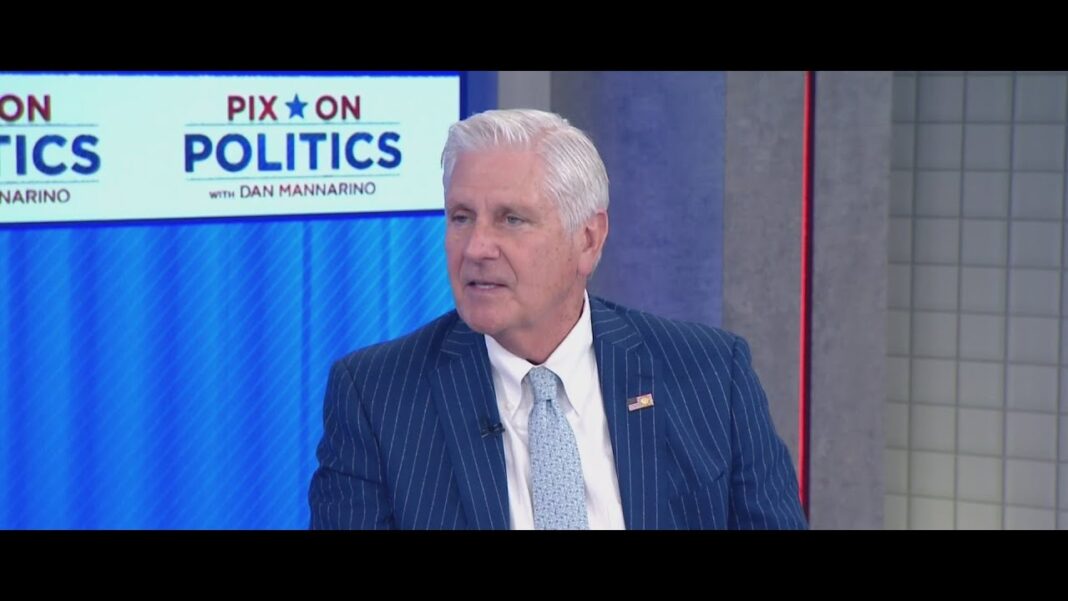
In an era defined by mounting economic pressures and intensifying public frustration over the rising cost of living, Nassau County Executive and Republican gubernatorial candidate Bruce Blakeman has emerged with a sweeping and unapologetically ambitious proposal—one that seeks not merely to reform policy, but to fundamentally recalibrate the relationship between government and taxpayer. As reported on Thursday by The New York Post, Blakeman’s plan to liquidate a multibillion-dollar state “green” energy fund and return those resources directly to the public has quickly become one of the most compelling and consequential policy initiatives in the unfolding gubernatorial race.
At the center of Blakeman’s proposal lies the New York State Energy Research and Development Authority’s Climate Investment Account, a fund he asserts has accumulated approximately $2.4 billion in what he characterizes as an “energy tax surplus.” Intended to facilitate the state’s transition toward renewable energy, the fund has instead, in Blakeman’s view, become emblematic of bureaucratic excess and misplaced priorities at a time when ordinary citizens are grappling with unprecedented financial strain.
Standing before a gathering in Westchester County, Blakeman delivered a message that resonated with a growing segment of the electorate: that government must return to its foundational obligation of serving the people rather than burdening them. According to The New York Post, his remarks were both forceful and unequivocal, framing the issue not as an abstract policy debate but as a matter of economic survival for countless families.
“While families are choosing between buying groceries and paying for heat, Hochul’s administration is sitting on a $2 billion mountain of your money,” Blakeman declared. His words, reported prominently by *The New York Post*, captured the emotional and financial anxieties that have come to define daily life for many New Yorkers.
Blakeman’s proposal is not merely a critique; it is a promise. He has pledged to dismantle what he describes as a “slush fund” and to redirect those funds back to the taxpayers who, in his estimation, have been unfairly compelled to finance policies that deliver minimal tangible benefit while imposing significant costs.
Central to Blakeman’s argument is a broader indictment of New York’s climate policy framework, particularly the ambitious mandates embedded within the Climate Leadership and Community Protection Act of 2019. While proponents of the legislation have hailed it as a visionary roadmap toward environmental sustainability, Blakeman has not hesitated to challenge its efficacy and its economic consequences.
As detailed by *The New York Post*, Blakeman has characterized the state’s green energy agenda as a “scam,” arguing that it prioritizes ideological objectives over practical outcomes. He has pointed to a series of utility rate increases approved under the current administration as evidence of systemic failure.
Indeed, the financial implications are stark. State regulators have authorized significant hikes in both electric and gas rates, with projections indicating that the average New York City resident could face an additional $600 in annual costs by 2028. For Blakeman, these figures are not merely statistics; they are proof of a policy approach that he believes has lost sight of the needs of ordinary citizens.
“Under Kathy Hochul, New York has become the most expensive state in the nation to keep the lights on,” Blakeman asserted, in remarks highlighted by The New York Post. This assertion, while politically charged, underscores a broader narrative that has gained traction among voters increasingly concerned about affordability.
Blakeman’s initiative has not emerged in isolation. It aligns closely with legislative proposals advanced by Assembly Republicans earlier in the year, suggesting a coordinated effort within the party to address what they perceive as systemic inequities in the state’s energy policy.
Assemblyman Matt Slater, who joined Blakeman at the Westchester press conference, echoed these sentiments with clarity and conviction. As reported by The New York Post, Slater emphasized the fundamental principle at stake: ownership of the funds in question.
“This isn’t Kathy Hochul’s money—it’s your money,” Slater stated, reinforcing the populist ethos that underpins Blakeman’s campaign. His remarks highlighted the moral dimension of the debate, framing the issue as one of fairness and accountability.
The presence of such allies underscores the extent to which Blakeman’s proposal has galvanized support within his party, positioning him as a leading voice in a broader movement to challenge the status quo.
What distinguishes Blakeman’s proposal is not only its scale but its underlying philosophy. At its core, the plan reflects a commitment to fiscal restraint and individual empowerment—a belief that citizens are better equipped to allocate resources than centralized authorities.
By advocating for the return of billions of dollars to taxpayers, Blakeman is effectively calling for a redistribution of power, shifting control from government institutions back to the individuals who sustain them. This approach, as emphasized in *The New York Post*, represents a stark departure from prevailing policy trends, offering a clear and compelling alternative.
Moreover, the proposal speaks to a broader desire for transparency and accountability in government. By challenging the accumulation of funds within the Climate Investment Account, Blakeman is drawing attention to questions about how such resources are managed and whether they are being deployed in a manner consistent with public interest.
Unsurprisingly, Blakeman’s proposal has encountered resistance from the incumbent administration. Representatives for Governor Kathy Hochul have sought to rebut his claims, arguing that his characterization of the fund and its purpose is misleading.
As reported by *The New York Post*, a spokesperson for the Hochul campaign accused Blakeman of advocating policies that would ultimately increase costs for New Yorkers, while defending the administration’s record on tax relief and infrastructure investment.
Yet such criticisms have done little to diminish the resonance of Blakeman’s message among his supporters. If anything, they have intensified the debate, drawing greater attention to the underlying issues and amplifying the stakes of the upcoming election.
As the campaign unfolds, Blakeman’s proposal is likely to remain a focal point of discussion, shaping both the narrative and the trajectory of the race. Its implications extend beyond the immediate question of energy policy, touching on broader themes of governance, economic justice, and the role of the state.
For many voters, the appeal of Blakeman’s vision lies in its clarity and its boldness. In a political landscape often characterized by incrementalism and ambiguity, his willingness to articulate a decisive and transformative agenda sets him apart.
As The New York Post report noted, the proposal has already succeeded in capturing public attention, sparking debate, and forcing a reconsideration of established assumptions.
Bruce Blakeman’s call to dismantle a multibillion-dollar energy fund and return its proceeds to taxpayers represents more than a policy proposal; it is a declaration of intent—a statement about the kind of leadership he seeks to provide and the principles he aims to uphold.
In advocating for this course of action, Blakeman has positioned himself as a champion of fiscal responsibility and a defender of the everyday New Yorker. Whether his vision will ultimately prevail remains to be seen, but its impact on the political discourse is already unmistakable.
As the electorate prepares to render its judgment, one thing is certain: the debate ignited by Blakeman’s proposal will continue to reverberate, shaping not only the outcome of the gubernatorial race but the future direction of policy in New York State.
