



|
Getting your Trinity Audio player ready...
|
By: Chaya Abecassis
In the chill before dawn on Monday, nearly 15,000 nurses from some of New York City’s most prominent hospital systems abandoned their posts and stepped onto picket lines, triggering one of the largest health-care labor actions in the city’s modern history. According to a report on Monday by The New York Daily News, the strike—months in the making—reflects not merely a breakdown in contract negotiations but a deeper crisis over the future of patient care in an overstretched medical system.
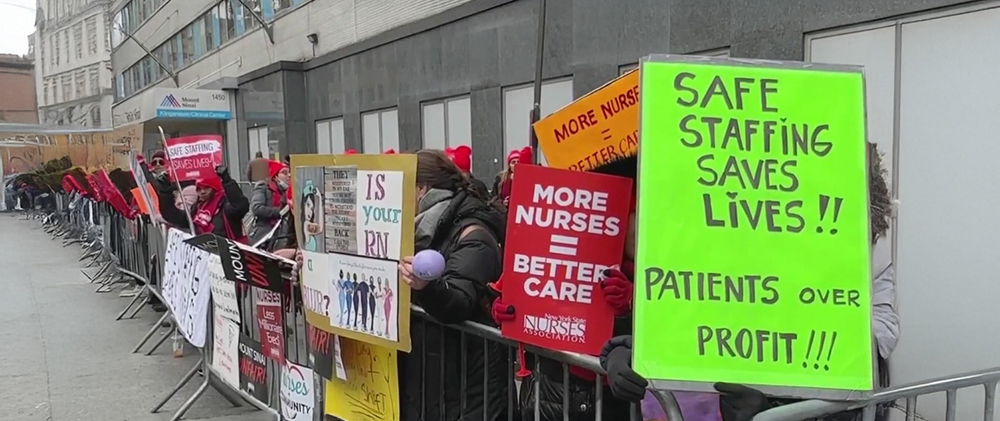
By sunrise, sidewalks outside Mount Sinai, NewYork-Presbyterian, and Montefiore Medical Center had become seas of placards and chants, as nurses clad in scrubs demanded what they described as dignity, safety, and survival wages. Their absence inside the wards was so consequential that Governor Kathy Hochul had preemptively issued a Friday executive order declaring a disaster emergency should a strike occur—a move that, as The New York Daily News observed, underscored just how dire officials considered the situation.
The proximate cause of the walkout was a failure late Sunday night to secure a new labor agreement. Hospital administrators accused the nurses’ union, the New York State Nurses Association (NYSNA), of presenting “extreme economic demands.” A Mount Sinai spokesperson told The New York Daily News that management had attempted to compromise but could not accept proposals that would, in their view, destabilize hospital finances.
Yet from the nurses’ perspective, the term “extreme” has a very different meaning. NYSNA leaders say their demands—higher wages to keep pace with inflation, enhanced security amid rising incidents of workplace violence, and contractual guarantees of minimum staffing levels—are not luxuries but necessities for maintaining safe patient care.
In December, union members voted overwhelmingly to authorize a strike if talks collapsed. That mandate, according to The New York Daily News, reflected months of growing frustration among frontline workers who say the pandemic permanently altered the scale and intensity of their jobs without commensurate changes in compensation or support.
NYSNA President Nancy Hagans, speaking on New Year’s Eve as the deadline loomed, struck a tone of weary resolve. “We became nurses because we care about our patients deeply and do not take striking lightly,” she said, in remarks quoted by The New York Daily News. “It is always a last resort. But it’s shameful that instead of trying to protect care and settle a fair contract, hospitals are dragging their feet and making proposals that would seriously erode care in this city.”
Those words have since become a rallying cry on the picket lines. Many nurses say they have watched staffing levels decline year after year, even as patient acuity rises and emergency rooms overflow. Some recount working double shifts or being assigned to more patients than clinical guidelines recommend—a reality they argue endangers both caregiver and patient.