



|
Getting your Trinity Audio player ready...
|
By: Kuo-Pin Wu & Jessica Lee
The eastern concept of the kidney extends beyond the anatomical organ. It refers to a broader energy system, where the kidney’s vital energy (qi) and the life’s essence are stored.
Kidney essence is regarded as the foundation of human growth, development, and reproductive function. Meanwhile, vital energy nourishes and warms the body’s internal organs and tissues, supporting overall vitality.
According to Traditional Chinese Medicine (TCM), a decline in the kidneys’ vital energy is seen as the beginning of the aging process. Yet there are practical and simple ways to replenish the kidneys’ vital energy.
How the Kidneys’ Vital Energy Plays a Role in Growth and Aging
The strength or decline of the kidney’s vital energy is believed to play a key role in the processes of growth and aging. According to the classic text, “The Yellow Emperor’s Classic of Internal Medicine,” human development follows a pattern of “seven- and eight-year cycles.” Women undergo major developmental changes every seven years, while men undergo them every eight years.
At age seven for girls and eight for boys, the kidneys’ vital energy strengthens, and there are visible changes in the teeth. At 14 for girls and 16 for boys, sexual maturity is reached. By ages 21 and 24, the kidneys’ vital energy stabilizes, wisdom teeth emerge, and the primary phase of physical growth and reproductive development concludes.
At 28 for women and 32 for men, the body reaches peak vitality, characterized by strong energy, stamina, and resilience, when it is healthiest and most balanced. However, at age 35 for women and 40 for men, the kidneys’ vital energy begins to decline, and early signs of aging may appear. By 42 and 48, the body’s warming, activating, and dynamic force (yang energy) starts to weaken, often leading to a dull complexion and graying hair. Finally, at 49 for women and 64 for men, reproductive functions diminish, marking the transition into old age.
A 2024 study identified two critical periods of accelerated aging—around 44 and 60—during which molecular markers linked to aging undergo dramatic shifts. In the 40s, the body becomes less efficient at metabolizing substances like alcohol and caffeine. By the 60s, distinct signs of aging can be seen in areas such as immune regulation and kidney function.
These findings closely align with long-standing observations in TCM, which identify ages 35 and 49 for women, and 40 and 64 for men, as key turning points in the aging process.
Apart from growth and aging, the kidneys also play an essential role in water metabolism—producing urine and helping regulate the balance and distribution of water throughout the body. They work in coordination with the lungs to support respiration.
The kidney system also governs the bones, bone marrow, brain, hair, ears, and the regulation of both urination and bowel movements—reflecting its broad and essential role in maintaining overall health.
Symptoms of Kidney Deficiency
Common aging-related symptoms associated with kidney deficiency include:
Decline in memory
Premature graying of hair
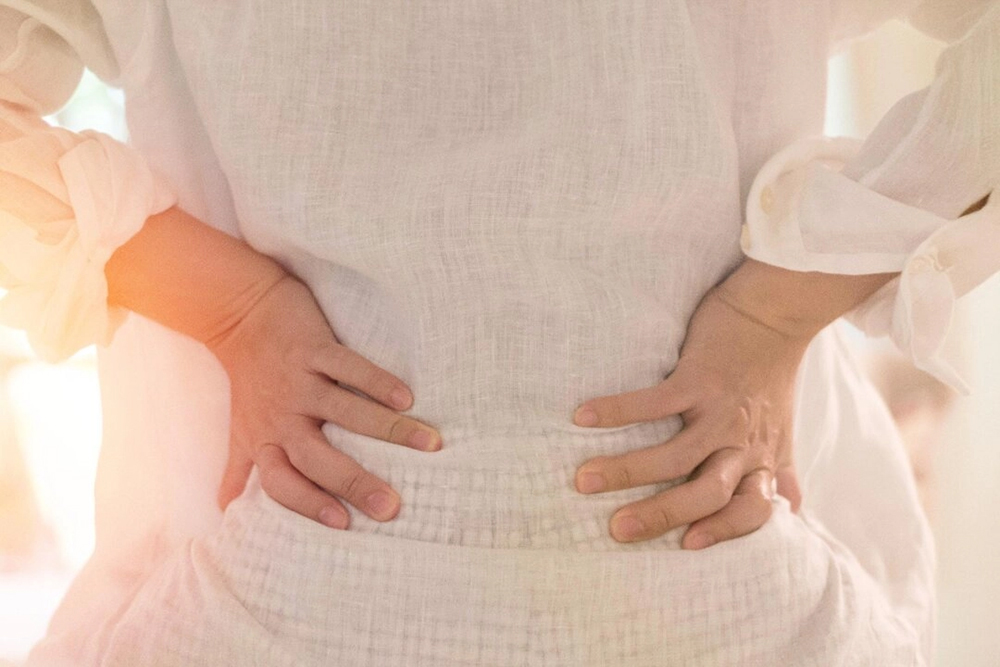
Soreness or weakness in the lower back and legs
Hearing loss
Loose teeth
Irregular urination or bowel movements
Osteoporosis
Cold hands and feet
If three or more of these symptoms are present, it may indicate a problem related to kidney deficiency.
How can we strengthen kidneys’ vital energy and slow the aging process? According to TCM, human life relies on yang qi—the body’s vital warming energy. Think of a group of people surrounded by the warmth of a campfire on a cold night. The fire’s warmth (yang qi) keeps everyone awake and full of energy. However, when the fire begins to burn out, people start to shiver, slow down, and struggle to function.
The human body works according to the same principle: when the body’s vital warming energy declines, the “inner fire” weakens. This can lead to cold extremities, slower metabolism, decreased immune function, and loss of physical resilience—hallmarks of aging in TCM.
In contrast, when the body’s vital warming energy is abundant, it maintains warmth, vitality, and stable organ function, which helps slow the visible and functional signs of aging—such as fatigue, hair loss, bone weakness, and reduced sexual and cognitive function.
Natural Methods to Strengthen the Kidneys’ Vital Energy
The following methods can help replenish the kidneys’ vital energy and enhance the body’s vital warming energy:
Leg-Binding Sleep Therapy
Leg-binding sleep therapy was developed more than 70 years ago by Japanese pharmacist and hip alignment specialist Kimiyoshi Isogai. The practice involves using three soft straps to gently bind the legs—above the knees, below the knees, and at the ankles—keeping the legs together during sleep. Despite the restriction, energy can still flow smoothly throughout the body.
Many people report a warming sensation in the hands and feet over time, especially those who frequently experience cold extremities. In some cases, a noticeable reduction in cold feet has been observed after just one week, indicating an improvement in the body’s vital warming energy.
Although some may worry that tying the legs could interfere with sleep, the technique has been shown to enhance energy circulation in the lower body. It is a non-pharmacological, simple, and effective way to rebalance the body’s energy.
The straps can be removed quickly and easily, making this method safe and practical even in emergencies, such as waking during the night or evacuating during an earthquake.
Rejuvenating Sleep Posture
The rejuvenating sleep posture (Huan Yang Wo) involves lying down with the soles of the feet facing each other.
In TCM, the Bubbling Spring acupoint (Yongquan)—located in the front third of the sole—is considered the starting point of the kidney meridian or energy pathway. Aligning the acupoint on both feet is believed to stimulate energy flow along the kidney meridian in the legs and help enhance the kidneys’ vital energy.
This posture also places importance on hand positioning. Men are advised to place their left palm on the lower abdomen just below the navel, while women are advised to use their right palm. The other hand is gently placed on top, loosely clasping the wrist to maintain stability.
The lower abdomen is home to the body’s energy center (dantian). Cultivating energy in dantian is thought to warm and nourish the entire body.
This posture encourages deeper breathing and promotes a state of full-body relaxation, making it particularly beneficial for those experiencing sleep difficulties. Some people report falling asleep within just a few minutes of adopting this position, suggesting its potential to improve sleep quality.
For those who find it uncomfortable to keep the legs bent with soles together, an alternative is to lie with the legs extended while keeping the hands positioned over the lower abdomen. This variation also helps guide energy to the dantian, calming the mind and supporting restful sleep.
Acupoint Massage
According to TCM, meridians are channels through which energy flows in the body, connecting the internal organs to specific points on the surface. The kidney meridian runs from the soles of the feet up along the inner legs, connecting directly to the kidneys.
Regular stimulation of key acupoints along this meridian can help support kidneys’ vital energy.
Bubbling Spring
This point marks the beginning of the kidney meridian and is located at the concave part of the sole when the foot is flexed and the toes are curled inward. Stimulating this acupoint is believed to strengthen the kidneys’ vital energy and enhance overall kidney function.
Massage Method: Hold the toes with one hand and firmly rub the bubbling spring point with the other until the sole feels warm. Gently move the toes, then relax the foot. Repeat several times a day.
Kidney Back Transporting Point
The kidney’s back transporting point is located approximately two finger-widths lateral to the lower edge of the spinous process of the second lumbar vertebra—roughly at waist level, directly behind the navel.
This acupoint is traditionally used to support kidney health, nourish yin, strengthen yang, and tonify the kidneys.
Massage method: Place both palms over the kidney’s back transporting acupoints on the lower back, and rub up and down 36 times. This technique can be performed multiple times a day.
Solar Alignment Method
The concept of the solar alignment method (Yi Guang Ding Wei) originates from the Yellow Emperor’s Classic of Internal Medicine. This specific practice was further developed by Professor Chi Wu, founder of a TCM clinic in Silicon Valley, in Northern California.
The core principle is rooted in the natural rhythm of yin and yang energies throughout the day. In the morning, when the body’s vital warming energy is most abundant, it is recommended to expose the back to sunlight.
For those with a deficiency of the body’s vital warming energy, sunbathing the back for about 10 minutes between 11 a.m. and noon—when sunlight is strongest—is an effective way to boost yang energy. In the afternoon, when the body’s vital cooling energy (yin qi) becomes more dominant, the front of the body, particularly the abdomen, should be turned toward the sun.
If going outdoors is not an option, the method can still be practiced indoors by aligning the body with the sun’s position. The body can absorb solar energy even through walls when facing the correct direction.