



|
Getting your Trinity Audio player ready...
|
By: Jason Ostedder
When the Trump administration quietly released its new federal dietary guidelines on January 7, the announcement initially appeared to be just another technocratic tweak in a long lineage of nutrition advice that few Americans read and even fewer faithfully observe. Yet, as The Epoch Times reported on Wednesday, the substance and symbolism of this 10-page document suggest something far more consequential: a philosophical rupture with decades of federal orthodoxy that has privileged industrial food systems, pharmaceutical dependence, and calorie-counting over nutritional integrity and agricultural authenticity.
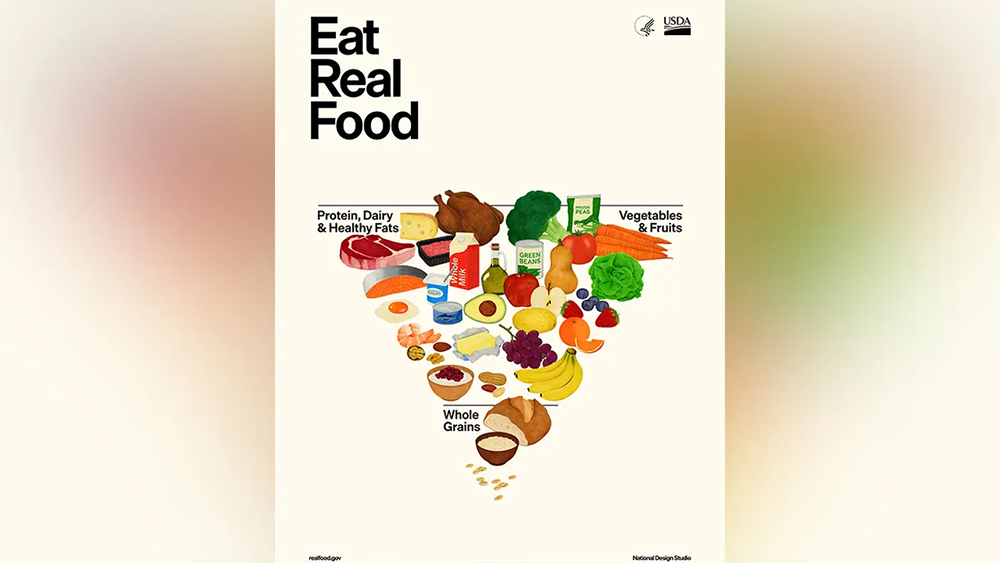
The new guidelines, drafted under the stewardship of Health Secretary Robert F. Kennedy Jr. and Agriculture Secretary Brooke Rollins, distill their message into a deceptively simple imperative—eat real food. But behind that simplicity lies a comprehensive challenge to the bureaucratic architecture that has governed American eating habits for nearly half a century.
As The Epoch Times noted in its coverage of the Washington press conference unveiling the policy, Kennedy framed the guidelines as a public-health intervention aimed not merely at waistlines, but at the very structure of the nation’s healthcare economy. “The new guidelines recognize that whole, nutrient-dense food is the most effective path to better health and lower health care costs,” he said, offering a pointed rebuke to the pharmaceutical-centric paradigm that has dominated federal policy.

Rollins, echoing Kennedy’s critique, delivered an even sharper diagnosis. For decades, she said, bipartisan administrations have “promoted low-quality, highly-processed foods, and pharmaceutical interventions instead of prevention,” an approach that displaced “nutrient-dense whole foods grown by America’s farmers and ranchers.” The Epoch Times has repeatedly highlighted how this industrial-nutrition nexus was forged in the late 20th century, when lobbying power and academic capture steered federal food pyramids toward cheap carbohydrates and chemically engineered substitutes.
One of the most striking departures from prior guidelines is the renewed emphasis on protein. Where previous frameworks often treated protein as an interchangeable macronutrient—its animal sources quietly demoted in favor of plant-based alternatives—the Trump administration’s directive urges Americans to “prioritize protein at every meal,” drawing from a wide spectrum including meat, beans, nuts, and dairy.
This reorientation has not gone unnoticed by The Epoch Times, which has observed that it marks a symbolic rehabilitation of ranchers, dairy farmers, and meat producers who were marginalized during the era of carbohydrate maximalism. The guidelines no longer relegate protein to the margins of the plate; they enthrone it as a daily necessity essential to metabolic stability, muscle preservation, immune resilience, and cognitive function.
Full-fat dairy also makes a surprising reappearance, albeit with caveats. Americans are now advised to consume “full dairy without added sugars,” a phrasing that directly challenges the low-fat orthodoxy entrenched since the 1980s. Yet the administration balances this endorsement with restraint, cautioning that saturated fats should not exceed 10 percent of daily caloric intake.
The Epoch Times has chronicled how the demonization of saturated fats contributed to the rise of hydrogenated oils, ultra-processed snacks, and sugar-laden low-fat alternatives—products that now dominate school cafeterias, hospital menus, and military rations. By partially rehabilitating saturated fats within defined limits, the new policy gestures toward nutritional nuance rather than ideological rigidity.
The guidelines also call for a “variety of fruits and vegetables throughout the day,” whole grains over refined ones, and the incorporation of “healthy fats such as eggs and avocados.” To the untrained eye, this may appear like a repackaging of familiar advice. But The Epoch Times report emphasized that what differentiates these guidelines is not their components but their framing.
Rather than atomizing food into micronutrients and calorie counts, the administration stresses patterns of consumption, agricultural provenance, and the cumulative effect of dietary quality on national wellbeing. This is not about chasing superfoods or obsessing over glycemic indexes; it is about reconstituting a food culture that once valued freshness, locality, and culinary literacy.
The deeper implications of this policy become apparent when one considers its intended scope. Federal dietary guidelines shape the menus of public schools, military bases, prisons, hospitals, nursing homes, and food-assistance programs such as SNAP and WIC. According to The Epoch Times report, millions of Americans—many of them children—will soon encounter a materially different version of institutional food.
For decades, these institutions functioned as laboratories of nutritional neglect, where budget constraints and bureaucratic inertia converged to produce meals rich in starch, sugar, and artificial additives. The new framework, if faithfully implemented, promises to reconfigure these environments into arenas of dietary rehabilitation.
Kennedy’s insistence that “whole, nutrient-dense food” is not merely healthier but cheaper in the long term is central to this logic. Chronic disease accounts for the overwhelming majority of U.S. healthcare expenditures, much of it driven by preventable conditions linked to diet: type 2 diabetes, cardiovascular disease, metabolic syndrome, and obesity.
As The Epoch Times has reported, the administration views the dietary overhaul not as a lifestyle campaign but as fiscal triage—a means of bending the cost curve that has rendered the American healthcare system unsustainable.
The release of these guidelines also signals a political repositioning that transcends nutrition. For years, food policy was entangled with climate activism, corporate consolidation, and globalist supply chains. Meat was cast as environmentally suspect, local farming as economically inefficient, and dietary restraint as a moral virtue.
By contrast, the Trump administration’s approach re-centers the American farmer, rancher, and food producer as custodians of national health. The Epoch Times report pointed out that this narrative dovetails with the administration’s broader ethos of economic nationalism, domestic production, and cultural sovereignty.
Rollins’ invocation of America’s “farmers and ranchers” was not rhetorical ornamentation; it was an ideological declaration. The guidelines are a rebuke to decades of policy that outsourced both food production and dietary wisdom to multinational corporations and regulatory technocracies.
Yet the gulf between prescription and practice remains formidable. Transforming the menus of federal institutions requires not only political will but logistical dexterity. Contracts must be renegotiated, supply chains restructured, and educational materials rewritten. Moreover, resistance is inevitable—from entrenched food conglomerates, from advocacy groups wedded to plant-exclusive paradigms, and from bureaucracies allergic to rapid change.
The Epoch Times has already documented murmurs of discontent within the nutrition-policy establishment, which fears that the embrace of full-fat dairy and animal protein represents a regression rather than a reform. Critics argue that the guidelines risk undermining climate goals and dietary inclusivity.
Yet the administration appears undeterred. As Kennedy emphasized, the calculus is no longer ideological but epidemiological. The country’s health metrics, he implied, demand nothing less than systemic upheaval.
Perhaps the most radical aspect of the new guidelines is their implicit redefinition of eating as a civic act. To choose protein over processed starch, whole milk over sugar-infused alternatives, eggs and avocados over refined oils, is not merely a personal preference—it is participation in a national recovery project.
In the language of The Epoch Times, the guidelines are less a nutritional roadmap than a manifesto for cultural restoration. They ask Americans to reclaim agency over their bodies, to reestablish continuity with agricultural traditions, and to reject the industrial paradigms that have rendered food simultaneously abundant and poisonous.
Whether this “Eat Real Food” doctrine will succeed remains uncertain. But its ambition is unmistakable. It is a wager that a nation debilitated by convenience can be reawakened by intention, that a public accustomed to outsourcing its health can be persuaded to take it back, one meal at a time.
If the guidelines mark the beginning of that reawakening, then January 7 may one day be remembered not merely as the release date of a bureaucratic document, but as the moment America finally returned to the table.
