



|
Getting your Trinity Audio player ready...
|
By: Mercura Wang
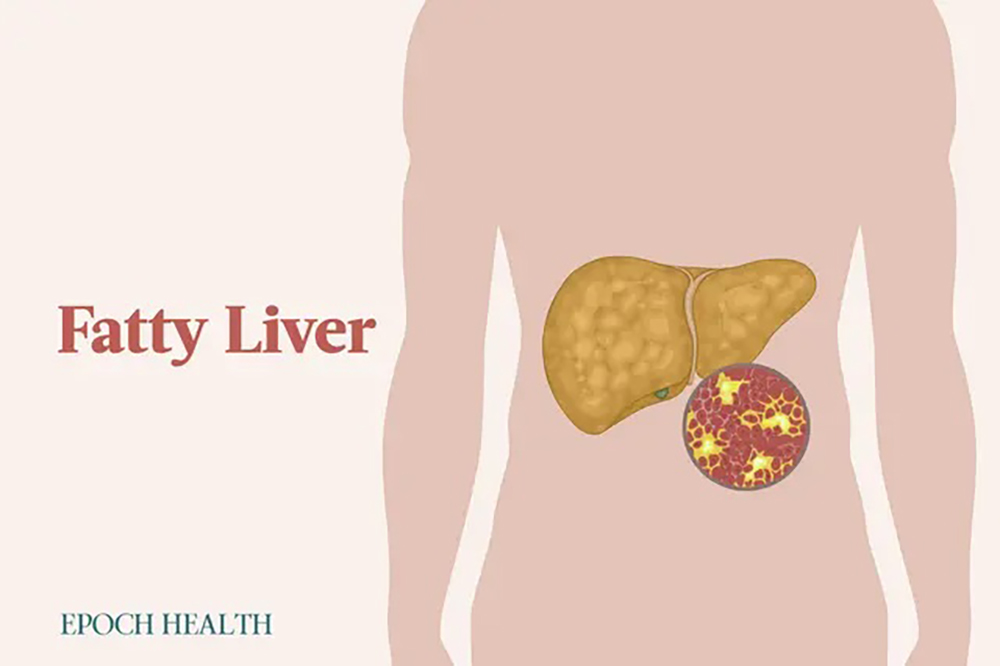
As the largest internal organ, the liver is crucial in processing nutrients, filtering toxins, and producing essential proteins. As it is responsible for fat metabolism, fat accumulation in organs most commonly occurs in the liver. If this fat accumulation exceeds 5 percent of the liver’s weight, the liver is considered a fatty liver, also known as hepatic steatosis.
About one-quarter of Americans have fatty liver, and about 5 percent have fatty liver disease associated with alcohol use. While most cases of fatty liver don’t pose significant issues or disrupt liver function, the condition can make the organ more susceptible to inflammation and scarring, and it can progress over time to cirrhosis, liver cancer, or liver failure.
What Are the Types of Fatty Liver?
There are two primary types of fatty liver disease: nonalcoholic fatty liver disease (NAFLD) and alcoholic fatty liver disease (AFLD).
- NAFLD
NAFLD is the most common form of fatty liver disease in individuals who do not consume excessive amounts of alcohol. NAFLD is the world’s most prevalent chronic liver condition, affecting 25 percent of the global population. It is also the predominant liver disease among children and has experienced an over twofold increase in prevalence over the past two decades.
In June, a group primarily comprising hepatology researchers and clinicians proposed renaming NAFLD, as they found the words “nonalcoholic” and “fatty” stigmatizing. They proposed to change the term to metabolic dysfunction-associated steatotic liver disease (MASLD). The group’s proposal also modified the diagnostic criteria for fatty liver disease. Given their new criteria, a separate study revealed a higher prevalence of MAFLD than NAFLD in the study population, with over 40 percent of the population fitting the diagnosis rather than 31 percent.
- AFLD
Also known as alcoholic steatohepatitis, this form of fatty liver disease is directly related to excessive alcohol consumption.
Acute Fatty Liver in Pregnancy
Another rare form of fatty liver disease is acute fatty liver in pregnancy (AFLP). About 3 percent of expectant mothers experience various liver disorders during pregnancy, some of which can be life-threatening for both the mother and the baby.
Acute fatty liver in pregnancy is a life-threatening condition, occurring in 5 in 100,000 pregnancies. It is characterized by acute liver dysfunction, typically occurring after 20 weeks of gestation. Immediate medical attention and intervention are essential due to the serious complications it can pose. In recent years, quicker diagnosis and prompt delivery have reduced maternal mortality of AFLP to 4 percent.
AFLP is unpredictable and unpreventable, with unknown causes. Symptoms may include nausea and vomiting, abdominal pain and swelling, hypertension, jaundice, coagulation problems, and confusion.
What Are the Stages of Fatty Liver?
NAFLD has four stages, while AFLD has three.
NAFLD
Most individuals with NAFLD will typically experience only the initial stage, often without even being aware of it.
Nonalcoholic fatty liver (NAFL): Also known as simple fatty liver or steatosis, NAFL is characterized by fat accumulation in liver cells without significant inflammation and is typically harmless. However, there may be abdominal discomfort or pain due to an enlarged liver. Most individuals with NAFLD typically have the NAFL form.
Nonalcoholic steatohepatitis (NASH): NASH is a more severe form of NAFLD involving liver inflammation. Among individuals with NAFLD, around 20 percent are diagnosed with NASH, which translates to 5 percent of adults in the United States. NASH can be further classified into two types: primary, associated with obesity and diabetes without excessive alcohol consumption, and secondary, induced by drugs or toxins. NASH can coexist with other liver diseases, such as chronic hepatitis C.
Fibrosis: Fibrosis results from persistent liver inflammation, forming scar tissue around the liver and nearby blood vessels. Despite this, the liver can continue to function normally.
Cirrhosis: Cirrhosis is the most advanced stage, occurring after years of inflammation. It causes the liver to contract, develop permanent scarring, and become lumpy and nodular in appearance. This irreversible damage can lead to liver failure and/or liver cancer.
AFLD
Alcoholic fatty liver or steatosis: During this stage, fat accumulates in the liver tissue, causing the liver to enlarge, potentially leading to discomfort or pain in the upper right abdomen.
Alcoholic hepatitis: At this stage, liver cell inflammation occurs, and the outcome varies depending on the extent of the damage. Severe cases can progress to liver failure.
Alcoholic cirrhosis: In this advanced stage, liver cells develop fibrous scar tissues, leading to irreversible liver damage and complications such as portal hypertension (high blood pressure in the portal venous system, slowing blood flow from the digestive system, including the esophagus).
AFLD typically improves when alcohol intake is stopped. However, continued alcohol consumption can result in severe liver issues.
What Are the Symptoms and Early Signs of Fatty Liver?
Known as “silent” liver disease, fatty liver disease is usually either asymptomatic or has minimal symptoms, often being incidentally detected during tests for other diseases or routine checkups, such as blood tests.
Individuals experiencing fatty liver symptoms may:
Feel fatigued.
Experience discomfort in the upper right section of their abdomen.
Notice weight loss.
NASH and Fibrosis
Nonalcoholic steatohepatitis (NASH) and fibrosis (scarring of the liver) symptoms may include:
Weight loss.
Weakness.
Extreme tiredness.
A mild or persistent ache in the upper right abdomen.
Cirrhosis
The more severe symptoms of cirrhosis include:
Spider-like blood vessels on the skin.
Jaundice.
Itchy skin.
Nausea, vomiting, and lack of appetite.
Fever and episodes of shivering.
Edema (swelling in the legs, ankles, feet, or abdomen).
Alcoholic Hepatitis
Symptoms of alcoholic hepatitis include:
Tenderness or discomfort in the abdominal area.
Nausea, vomiting, and poor appetite.
Jaundice.
Weight loss.
Tiredness and weakness.
Fever.
Who Is More Likely to Develop Fatty Liver?
There are various risk factors for fatty liver disease.
NAFLD
Age: Risk increases with age. People over 50 are at higher risk.
Sex: NAFLD is more common in men, while women face a greater risk of advanced fibrosis.
Race and ethnicity: Regarding NAFLD prevalence, Hispanics come first, followed by non-Hispanic whites, with a lower occurrence in black people.
Obesity/overweight: Overweight people have a body mass index (BMI) between 25 and 30, while obese individuals’ BMI is over 30. According to research, NAFLD is found in approximately 75 percent of overweight individuals and over 90 percent of those with severe obesity. Carrying excess weight, especially around your waist (i.e., an apple shape), can increase your risk. Specifically, men’s health risks rise with a waist circumference over 40 inches, while women face increased risks with a waist circumference over 35 inches.
Metabolic syndrome: Also known as insulin resistance syndrome, this is a cluster of conditions that collectively increase the risk of coronary heart disease, diabetes, stroke, and other significant health issues.
High blood pressure.
Type 2 diabetes.
High cholesterol and triglycerides.
Sudden weight loss and unhealthy eating habits.
Gastric bypass surgery.
Intestinal bypass surgery for obesity.
Digestive tract disorders.
Underactive thyroid.
Polycystic ovary syndrome (PCOS).
Hepatitis C.
Smoking.
Starvation and/or malnutrition.
Rare genetic diseases, including Wilson disease and hypobetalipoproteinemia.
Calcium channel blockers.
Certain cancer drugs.
Corticosteroids.
Estrogens.
HIV treatment.
Individuals who don’t have these risk factors can also develop NAFLD, including young children.
AFLD
Consumption of alcohol: This is the most common risk factor. The alcohol consumption that can significantly increase the risk for AFLD is in the range of 15 or more drinks per week for men and eight or more drinks per week for women for 10 to 12 years.
Sex: Compared to men, women face a greater risk of alcoholic hepatitis and cirrhosis, even when consuming the same amount of alcohol.