



|
Getting your Trinity Audio player ready...
|
By: Carl Schwartzbaum
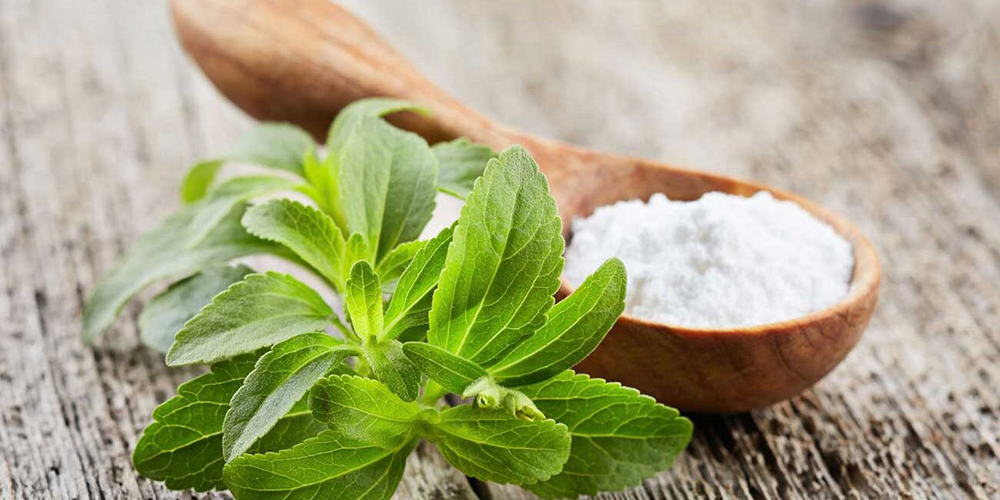
A sweetener commonly found in household kitchens could one day be reimagined as a powerful tool in the fight against one of the deadliest cancers. Researchers at Hiroshima University in Japan have discovered that an extract derived from the stevia plant, when fermented with a specific bacterial strain, demonstrates significant potential in combating pancreatic cancer cells.
The study, recently published in the International Journal of Molecular Sciences, explored the anti-cancer properties of stevia leaf extract in a laboratory setting. While the natural extract of stevia–a plant best known for its role as a sugar substitute–has not been found to directly combat cancer, scientists found that when the substance is chemically altered through fermentation, its effectiveness increases dramatically.
As reported by Fox News Digital, the fermented stevia extract displayed “significantly enhanced antioxidant activity and cytotoxicity” against pancreatic cancer cells. This means that, under laboratory conditions, the altered extract showed the ability to fight oxidative stress and actively damage cancerous cells. These early findings led researchers to conclude that fermented stevia extract could be a “promising candidate” for future treatment development.
The stevia plant (Stevia rebaudiana) has long been a staple in natural sweetening, particularly valued for providing a calorie-free alternative to sugar. However, its potential therapeutic properties have not been widely recognized until now.
According to the information provided in the Fox News Digital report, researchers found that by fermenting stevia leaf extract with a certain strain of bacteria, they could amplify its bioactive properties. The result was a substance with elevated antioxidant capacity–crucial in protecting cells from oxidative damage–and cytotoxicity specific to pancreatic cancer cells.
This distinction is critical. As Dr. Paul E. Oberstein, a medical oncologist and assistant director of the Pancreatic Cancer Center at NYU Langone’s Perlmutter Cancer Center, explained in an interview with Fox News Digital, “As the authors point out, the actual stevia plant does not seem to have any benefit for stopping cancer, so they had to use a chemical process to change the plant and make it stronger with a fermentation process.”
In other words, the naturally occurring plant in its raw form does not inhibit cancer cell growth. It is only after undergoing laboratory manipulation that the compound begins to show therapeutic promise.
Medical experts have been quick to weigh in on the study’s findings, urging both excitement and caution.
“This is an interesting study because it evaluated something derived from a natural plant (stevia) and showed that it may have utility in stopping cancer cells from growing in the laboratory,” Oberstein told Fox News Digital. He stressed, however, that “it is unknown whether altering the plant will lead to side effects or toxicity.”
Importantly, the research remains at a pre-clinical stage. As the report at Fox News Digital emphasized, the study has not yet been performed on humans, leaving significant uncertainty as to whether these laboratory results can be replicated safely and effectively in patients.
Oberstein underscored this gap: “The study suggests that if the stevia can be changed in the lab, it may have an impact, so hopefully they will further test this and determine whether this effect happens when tested in people and if it doesn’t cause new side effects.”
Dr. Kristen Arnold, a surgical oncologist specializing in pancreatic cancer at the Orlando Health Cancer Institute, offered a complementary perspective in an interview with Fox News Digital. She described the findings as “encouraging,” while acknowledging the long path between early laboratory data and real-world clinical application.
“I think the data’s very early to know if it’s ultimately going to be a game-changer, but it’s very exciting to know that we’re finding some positive pre-clinical data,” Arnold said. She added that the study fits into the broader landscape of cancer research: “This is the process of how we discover new treatments–some of which turn out to be absolute game-changers and make dramatic changes in the lives of our patients.”
The significance of even modest progress against pancreatic cancer cannot be overstated. The disease is one of the most lethal forms of cancer, with survival rates lagging behind those of many other malignancies.
“Pancreatic cancer is a very aggressive malignancy,” Arnold told Fox News Digital. “And we know that even with the most aggressive of therapies, unfortunately, our outcomes are not good.”
Pancreatic cancer often progresses undetected until late stages, limiting the effectiveness of surgery and conventional therapies. For this reason, the discovery of new therapeutic modalities–particularly those that can target cancer cells in novel ways–remains a pressing priority within oncology.
While the findings from Hiroshima University are promising, experts caution that the road to clinical application is long and filled with challenges.
As Fox News Digital reported, Oberstein and Arnold both highlighted the need for further testing. Rigorous trials must determine whether fermented stevia extract retains its cancer-fighting properties in animal models and eventually in humans, without introducing harmful side effects.
The oncologists also stressed the importance of clinical trials in advancing new treatments. Arnold encouraged patients with pancreatic cancer to seek out opportunities to participate in such studies. “The clinical trials are ultimately what determine how we treat patients on a day-to-day basis,” she told Fox News Digital.
The potential of stevia extract joins a broader body of research investigating the medicinal properties of plant-based compounds. Over the past several decades, natural products have inspired numerous treatments, from chemotherapy drugs derived from the Pacific yew tree to anti-malarial therapies sourced from sweet wormwood.
The novelty of this research lies in the chemical alteration process. The fact that raw stevia extract alone does not demonstrate anti-cancer effects but gains potency through fermentation is a reminder of the complex interplay between natural substances and scientific manipulation.
The cautious optimism voiced by experts reflects a familiar balance in cancer research: enthusiasm for innovative discoveries tempered by recognition of the hurdles ahead.
Oberstein summarized this balance in his remarks to Fox News Digital, urging researchers to keep testing while maintaining realistic expectations. “I hope the researchers keep testing this in various formats and in people,” he said.
Arnold echoed this sentiment, recognizing both the promise and the uncertainty of early-stage studies. “Not all of it pans out, but it’s a process of discovery,” she told Fox News Digital.
The possibility that a common sweetener could one day inform treatments for one of the world’s deadliest cancers captures both the challenges and the promise of modern medicine. The research from Hiroshima University highlights the power of scientific innovation to transform everyday substances into potential medical breakthroughs.
As Fox News Digital has reported, the study represents an important early step but leaves many questions unanswered. Whether fermented stevia extract can ultimately be harnessed as a safe and effective therapy for pancreatic cancer remains to be seen.
For now, the findings serve as a reminder of the vital importance of pre-clinical research and the cautious optimism that drives the search for new treatments. In the words of Dr. Arnold, “This is the process of how we discover new treatments–some of which turn out to be absolute game-changers.”
