



|
Getting your Trinity Audio player ready...
|
Ozempic and Wegovy Lawsuits Allege Popular Weight Loss Drugs Caused Irreversible Blindness
Edited by: TJVNews.com
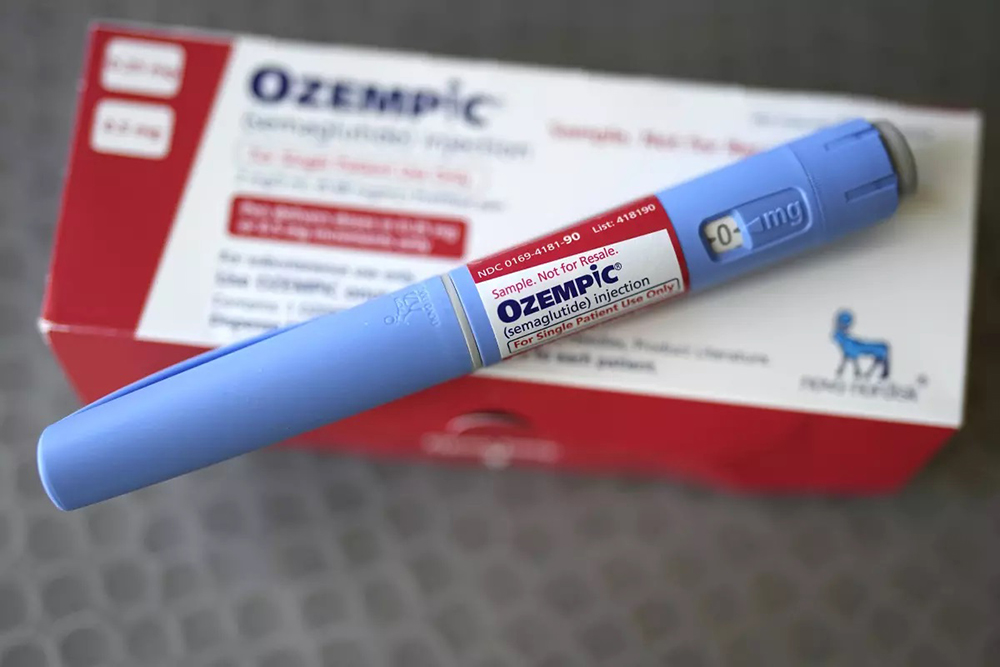
A 64-year-old California grandmother and a New Jersey man have filed devastating new lawsuits against Novo Nordisk, the maker of blockbuster weight loss drugs Ozempic and Wegovy, alleging that the medications not only shed pounds but permanently robbed them of their sight. According to an exclusive report that appeared on Tuesday in The New York Post, the two patients are now part of a growing wave of litigation targeting the Danish pharmaceutical giant, accusing it of concealing the serious risk of irreversible vision loss.
The lawsuits, filed in New Jersey state court last week, charge Novo Nordisk with being “deceptive and misleading” about the dangers of their GLP-1 class drugs, particularly the potential link to non-arteritic anterior ischemic optic neuropathy (NAION), commonly referred to as an “eye stroke.” NAION is a condition that disrupts blood flow to the optic nerve, causing sudden, often permanent blindness.
According to the report in The New York Post, both plaintiffs began using the medications in 2023 to address weight management issues. While they experienced some success with weight loss, they soon developed alarming vision problems, which, their lawsuits allege, were the direct result of taking semaglutide, the active ingredient in both Ozempic and Wegovy.
One of the plaintiffs, Cilette Mitchell, a former vice president at a major commercial bank and mother of four and grandmother of eleven, shared her heart-wrenching story with The New York Post.
“It pains me to think I won’t be able to fully see my grandchildren’s faces and fully experience the biggest moments of my loved ones’ lives,’’ Mitchell said.
She began her treatment with Wegovy and then transitioned to Ozempic. Just three months into the regimen, she noticed “dark, cloudy shadows” creeping into her right eye. Her ophthalmologist urgently referred her for an MRI, which confirmed she had suffered NAION in the affected eye. But the crisis escalated dramatically just a few weeks later.
“While playing with my grandchildren [on Easter Sunday], the dark clouds started to creep in on my other eye,” Mitchell recalled. “The next day, the doctor confirmed that I developed NAION in that eye as well, with the result being permanent vision loss.”
Mitchell, who had been nearing retirement, attempted to attend classes at the San Diego Center for the Blind to regain some functionality. However, the condition’s impact on her vision and balance made working impossible. As she told The Post, “Now I need help doing daily activities and navigating life.”
The second plaintiff, a New Jersey man who requested anonymity, declined to speak publicly but detailed his ordeal in court filings obtained by The New York Post. He too was diagnosed with bilateral NAION — affecting both eyes — just weeks after starting semaglutide.
According to the lawsuit, the condition has left him unable to drive, read, or function independently, forcing him to rely on his wife for basic needs. His neuro-ophthalmologist reportedly confirmed that his vision loss is permanent.
In a statement to The New York Post, Novo Nordisk insisted that NAION is rare and has not been identified as an adverse reaction in patients using semaglutide. The company cited both its own internal data and a study by the University of Southern Denmark, concluding that the drug’s “benefit-risk profile remains unchanged.”
But the legal team representing the plaintiffs strongly disagrees. Craig Silverman, of Sullivan Papain Block McManus Coffinas & Cannavo, slammed Novo Nordisk’s position:
“My two plaintiffs strongly reject Novo Nordisk’s dismissive attempt to minimize the serious risks associated with its blockbuster weight loss drugs,” Silverman told The New York Post.
The lawsuits cite multiple scientific studies, including a 2024 publication in the Journal of the American Medical Association (JAMA), which observed a higher likelihood of NAION among users of GLP-1 medications like Ozempic and Wegovy. While the JAMA study stopped short of establishing definitive causation, it emphasized the need for further investigation into the possible link.
Despite this emerging body of research, the lawsuits note that Novo Nordisk’s product labels make no mention of NAION, leaving both physicians and patients uninformed about the potential risk of blindness.
As The New York Post reported, Ozempic and Wegovy generated over $25 billion in global sales last year, making them among the most widely prescribed and discussed drugs in the world. Initially approved to manage type 2 diabetes, semaglutide’s role in appetite suppression and rapid weight loss has turned it into a pop culture phenomenon, frequently cited in celebrity and social media circles.
But the surge in popularity is now shadowed by a cascade of lawsuits and reports of serious adverse effects, including gastroparesis, suicidal ideation, and now, potential vision loss.
These latest legal actions follow a string of other lawsuits filed in recent months by former users of GLP-1 drugs who also allege they developed NAION after starting the medication. If a causal relationship is confirmed, the implications could be enormous — not only for Novo Nordisk but for the millions of users who have turned to semaglutide for weight management.
As Novo Nordisk faces mounting legal scrutiny, patients and physicians alike are being urged to approach these drugs with caution and full awareness of potential risks. For plaintiffs like Cilette Mitchell, however, that warning came too late.
“Had I known that Ozempic would take my vision,” she told The New York Post, “I would have never taken it.”
