



|
Getting your Trinity Audio player ready...
|
By: Fern Sidman
In a development that leading clinicians are characterizing as nothing short of transformative, Israeli hematologists have unveiled real-world data showing unprecedented survival rates for patients undergoing a newly coordinated chemotherapy–biologic treatment for Hodgkin lymphoma. According to a report that appeared on Tuesday at themedialine.org, which closely tracked the data as it was prepared for presentation at a major U.S. blood cancer conference, the findings suggest that Israel may be on the cusp of redefining international standards of cancer care.
The treatment regimen—tested across 15 medical centers nationwide—demonstrated outcomes that surpass not only Israel’s previous benchmarks but also many of the best global expectations for the disease. As themedialine.org report emphasized, the initiative’s design, scope, and speed reflect a rare instance of national clinical alignment, one that allowed researchers to generate comprehensive conclusions from routine clinical practice rather than the narrow confines of a controlled trial. The result is a dataset whose power lies in its authenticity—and its irrefutable success.
The newly released results would be remarkable under any circumstances. Yet the numbers, as summarized by themedialine.org report are extraordinary even in the context of a cancer type already considered highly curable.
Researchers found that the one-year survival rate among participating Hodgkin lymphoma patients was 100%, a milestone virtually unheard of in previous clinical studies or routine oncology practice. Ninety-five percent of patients achieved what clinicians term a complete recovery, while 83% saw an almost total disappearance of the malignancy after just two treatment cycles. The need for radiation therapy—long a hallmark of lymphoma protocols—fell to only 4%, a dramatic reduction from historic rates and a meaningful advance in sparing patients from the long-term toxicities of radiation exposure.
As themedialine.org report noted, this level of rapid disease control, often occurring within mere weeks, represents a decisive narrowing of the interval during which the cancer might evolve, metastasize, or become resistant. It also disrupts traditional assumptions about the necessity of extended treatment durations.
The study’s success is attributable to an unusually broad collaboration that stitched together the expertise of specialists across Israel’s leading medical centers. The effort was spearheaded by Dr. Zvi Forgas of Soroka Medical Center and Dr. Tzofia Levy of Rambam Health Care Campus, whose cooperative oversight ensured methodological consistency and data harmonization on a national scale.
In comments highlighted in the report at themedialine.org, Levy described the achievement as a “turning point” in the global battle against lymphoma. By unifying the data streams of so many institutions—spanning both academic and regional hospitals—Israeli researchers were able to present a unified national experience to an international audience at the American Society of Hematology (ASH) conference.
For Levy, the decisive impact of the combined chemo-biologic regimen is both scientific and symbolic. Scientifically, it proves that enhanced outcomes can be achieved with fewer side effects and shorter treatment windows. Symbolically, it elevates Israel’s status as a global oncology innovator, capable of not only following global trends but shaping them.
According to the information provided in themedialine.org report, this is the first time Israeli oncology teams have coordinated such a sweeping nationwide lymphoma study—an effort made possible in part by the small but technologically robust nature of the country’s health system. Unlike larger nations with disparate governance, Israel’s integrated digital medical records and culture of inter-hospital collaboration allowed for rapid aggregation of real-world data.
Hodgkin lymphoma represents roughly 10% of all lymphoma cases worldwide and disproportionately affects adolescents and young adults. Though treatments today are highly successful, oncologists remain deeply concerned about the short- and long-term collateral damage of intensive chemotherapy and radiation, especially for patients in their 20s and 30s who may live for decades after their cure.
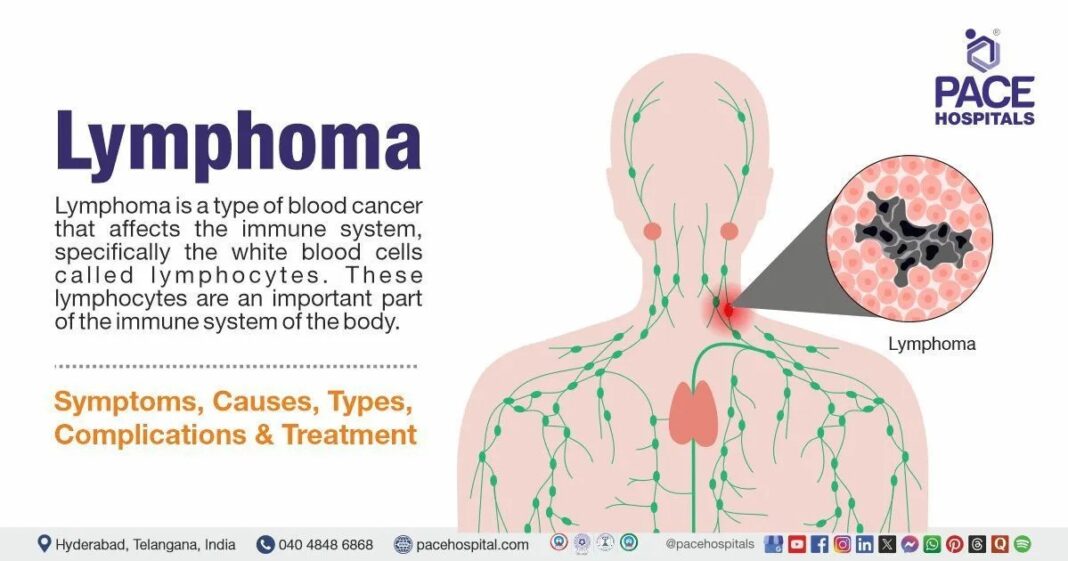
As themedialine.org explained in its background reporting, Hodgkin lymphoma typically presents with swollen lymph nodes, fevers, night sweats, and unexplained weight loss. Diagnosis is confirmed through tissue biopsy and PET-CT imaging, while treatment relies primarily on chemotherapy and biologic agents that modulate the immune system. Radiation therapy is used more selectively today than in past decades, but its risks—including secondary malignancies and cardiovascular damage—remain substantial.
This is precisely why the new Israeli results are so significant. They indicate not only better cancer control but also less need for radiation, which long-term survivors and patient advocates have fought hard to minimize. The trial therefore represents a dual victory: superior oncology outcomes and reduced treatment burdens.
The impetus for Israel’s rapid adoption of the combined chemo-biologic protocol can be traced back to a landmark German study published in The Lancet last year. That study showed near-universal cure rates and reinvigorated the international hematology community’s interest in intensified early treatment strategies.
Dr. Roy Vitkon of Ichilov Medical Center, one of the Israeli clinicians central to implementing the protocol, told themedialine.org that expectations rose sharply following the German findings. While earlier regimens were effective, they carried substantial toxicity, leaving many patients grappling with nausea, fatigue, neuropathy, and fertility impacts. The new protocol, by contrast, appeared “both stronger and easier for patients to tolerate,” Vitkon said.
According to themedialine.org report, Israel moved swiftly—faster than most of its global counterparts—to evaluate the protocol in the broadest possible clinical setting. Nearly 100 patients were treated over the past two years, creating what Vitkon described as the world’s first real-world dataset validating the German trial.
This, he emphasized, is not merely supplementary information. It is essential clinical evidence. While randomized trials provide proof of concept, real-world data show whether those concepts work in everyday practice among diverse populations, varying levels of disease severity, and differing comorbidities.
Vitkon characterized the multicenter effort as a national achievement in its own right. The consistency between Israel’s real-world data and the German trial’s results, he told themedialine.org, gives Israeli oncologists—and the global hematology community—new confidence that the protocol should be widely adopted.
What emerges from the latest findings is not just a scientific breakthrough but a reaffirmation of Israel’s growing a role in global oncological innovation. As themedialine.org frequently underscores in its reporting on medical advances, Israel’s research infrastructure—anchored by hospital-embedded laboratories, innovative biotech companies, and advanced genomic capabilities—has increasingly propelled it to the forefront of cancer care.
Israel is already a pioneer in CAR-T immunotherapy research, targeted cancer diagnostics, and radiopharmaceutical development. The new lymphoma results add to a robust portfolio of contributions that have earned the country an outsized influence on international oncology debates despite its relatively small population.
Moreover, the model of nationwide coordination showcased in the new study could become a template for future rapid-response clinical assessments. At a time when medical knowledge is expanding faster than regulatory systems can adapt, the ability of a health system to iterate quickly and gather national data may become as important as any individual scientific advance.
The implications for patients are enormous. A treatment that produces near-universal remission while reducing toxicity and shortening treatment time represents a profound shift in patient experience and prognosis. For many, it could mean avoiding the radiation-associated risks that have haunted Hodgkin lymphoma survivors for decades. For others, it offers the psychological salvation of seeing measurable improvement after only two treatment cycles—a potentially life-altering emotional reprieve.
Clinicians, too, may find that the new protocol transforms their practice. As themedialine.org reported, physicians across Israel already see the regimen as a new standard of care. The level of inter-hospital alignment has created a community of practice in which oncologists routinely compare results, share best practices, and troubleshoot complex cases collectively.
What makes the moment especially notable is that the breakthrough did not emerge from a single institution or research giant. Instead, it surfaced from a nationwide collaboration, demonstrating that innovation can occur not only in elite laboratories but across an entire health ecosystem.
The Israeli team’s presentation at the ASH conference is expected to draw strong international interest, particularly from countries seeking to modernize lymphoma treatment protocols. As themedialine.org report observed, the global oncology community relies on real-world data to determine whether trial-demonstrated outcomes can be translated into day-to-day practice. Israel, by producing the first such dataset, has effectively invited the world to scrutinize and adopt its findings.
If international oncologists follow the evidence, the Israeli-validated protocol may soon become a cornerstone of global Hodgkin lymphoma care. And as the medical world looks increasingly toward real-world data to guide decision-making, Israel’s model of highly coordinated nationwide research may emerge as its own global export.
The achievement is, at its core, a testament to what modern oncology strives to become: collaborative rather than competitive, data-driven rather than tradition-bound, and global in its aspirations rather than siloed within national borders. Through rigorous science, broad cooperation, and a willingness to adopt emerging evidence with speed and precision, Israeli researchers have illuminated a promising new path forward.
As themedialine.org report noted, the significance of this moment lies not only in the remarkable survival rates but also in the broader paradigm shift the data represents. If the world takes heed, the future of lymphoma care may well be brighter—and more humane—than ever before.