



|
Getting your Trinity Audio player ready...
|
Gender Reassignment Surgery? How NYU Langone Mutilated America’s Youth
There are moments in the life of a nation when the language of compassion is conscripted to justify practices that compassion itself ought to restrain. The contemporary rush to medicalize childhood distress about sex and identity is one such moment. The rhetoric of affirmation has been elevated into an orthodoxy, and institutions once defined by scientific caution have been urged to move with a haste ill-suited to the gravity of irreversible interventions. The result has been a profound ethical dissonance: medicine, whose first obligation is to do no harm, has been asked to proceed as though uncertainty were a virtue rather than a warning.
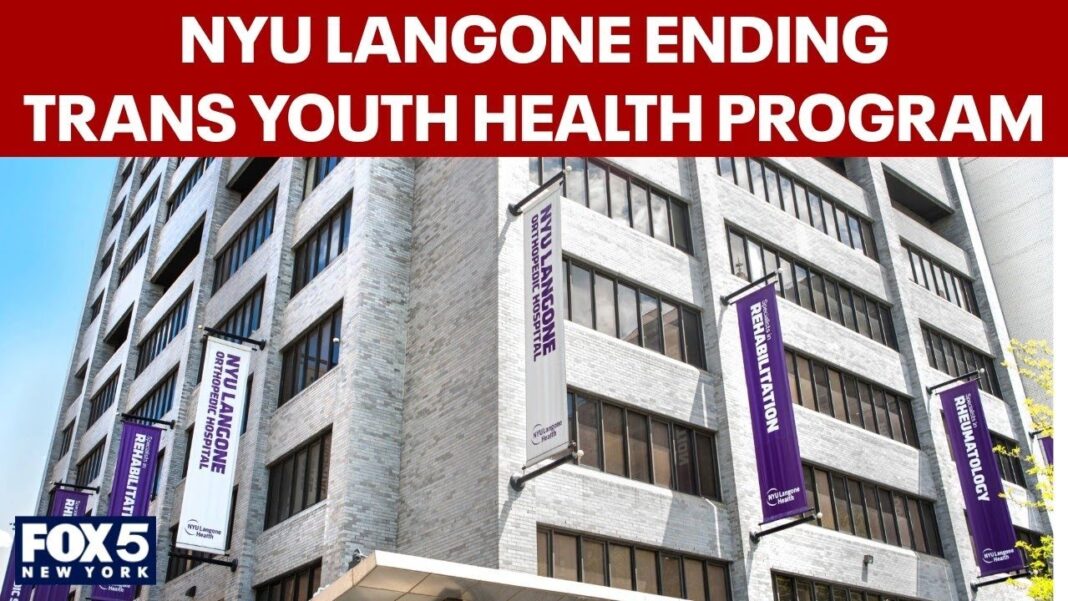
On February 18, 2026, The Guardian of the UK reported that NYU Langone Health in New York City announced it would discontinue its gender-affirming care program for minors amid an intensifying regulatory environment and a recalibration of institutional leadership. The hospital stated that pediatric mental health services would continue, even as medicalized pathways for minors were halted. The development, whatever one’s view of the surrounding politics, marks a necessary pause in a field that has sprinted ahead of its evidentiary footing. It is not an admission of malice; it is an implicit recognition of risk. And risk, in pediatrics, demands humility.
The central moral question is not whether adolescents experience anguish about their bodies or identities. The question is whether a medical system should answer that anguish with interventions that permanently alter healthy organs, suppress normal pubertal development, or commit young people to lifelong pharmacological regimens before the long arc of outcomes is known. The record is sobering. The adolescent brain is still under construction; identity is still in formation; comorbid anxiety, depression, trauma, and social contagion effects complicate the clinical picture. To treat such complexity as though it were a narrow endocrine problem is to mistake the map for the territory.
NYU Langone stands guilty of acquiescing to the progressive, far-left, deep state driven agenda of transforming the gender of children and causing the kind of permanent malaise that is beyond horrifying. The campaign to purportedly liberate children from the bondage of the bodies that society has taught them to abhor has led to genital mutilation, a panoply of endocrinological problems and ultimately a lifetime of palpable despair.
A sober reading of medical ethics yields three imperatives. First, irreversible interventions in minors require an extraordinary evidentiary threshold, one that demonstrates durable benefit across physical, psychological, and social domains over time. Second, consent in pediatrics is not a talismanic signature; it is a process rooted in maturity, comprehension, and the protective involvement of parents or guardians. Third, psychological care is not ancillary. It is the core of responsible practice when a young person’s distress intersects with identity, belonging, and mental health.
Any clinical model that marginalizes psychotherapy in favor of rapid biomedical escalation betrays the vocation of medicine. NYU Langone is completely aware of this and has still strongly advocated for gender youth surgery sans parental consent. A doctrinaire attitude towards placating left wing ideological aspirations has permeated medical teams at NYU Langone, leaving some doctors in a tremulous state for even entertaining the notion of speaking out against these horrendous practices.
Yet the prevailing culture of pediatric gender medicine in recent years has often treated restraint as cruelty and skepticism as bigotry. This inversion of values has been abetted by a broader progressive movement that has at times collapsed the distinction between respecting persons and endorsing protocols whose long-term consequences are unknown. The conflation is dangerous. Respect for persons means protecting children from permanent decisions made at the height of developmental turbulence. It means insisting that no clinic, however well-intentioned, be permitted to substitute ideology for longitudinal data.
Once again, NYU Langone has violated this ethical and moral code, all in the quest to put “transgenderism” on the table as a viable menu option for a confused and distressed child.
The administration’s stance, as reported, draws a clear line: federal support will not underwrite the medical transition of minors. Public funds should not propel irreversible pediatric interventions in a field still marked by contested evidence and unsettled outcomes. The state’s legitimate interest in protecting children from harm does not evaporate when the harm is dressed in the language of care.
Long ago, NYU Langone should have boldly taken an ethical stance and called for a moratorium on surgical interventions for minors, coupled with stringent limits on medicalization and an expansion of comprehensive mental health services. But they did not. Rather they doubled down on a course to inflict permanent anguish on America’s youth. Taking such a stance against mutilation is not a retreat from compassion; it is a return to prudence.
Institutions such as NYU Langone that rushed into this domain must now reckon with their responsibility. The cessation of a program for minors, accompanied by a commitment to pediatric mental health services, gestures toward a more defensible model: one that prioritizes exploration over escalation, therapy over transformation, and time over irrevocability. It is not punitive to say that academic medical centers such as NYU Langone with their immense authority, ought to have demanded more rigorous evidence before normalizing practices that permanently alter bodies that were not diseased. It is an ethical demand proportionate to the stakes.
None of this denies the dignity of individuals who identify as transgender or nonbinary. Adults, acting with full consent and comprehension, may choose medical paths for themselves. The ethical line is drawn at childhood precisely because children are not adults and NYU Langone is cognizant of this. They are entrusted to us during a season of becoming, when self-understanding is malleable and the consequences of error are lifelong. To convert transient adolescent distress into permanent medical status is to confuse empathy with endorsement and immediacy with wisdom. And that is precisely what NYU Langone has done in its ill-conceived plans.
The social ramifications of precipitous medicalization further complicate the picture. When medicine signals that the appropriate response to discomfort with one’s body is alteration of the body rather than exploration of the discomfort, it risks narrowing the horizon of possibility for young people who might otherwise find reconciliation with themselves over time. Regret, where it occurs, is not a talking point; it is a human tragedy compounded by the irreversibility of certain interventions. NYU Langone should be advised that a healthcare system worthy of trust must take regret seriously, not minimize it as statistical noise.
What, then, should replace the haste of recent years? A child-centered model grounded in rigorous assessment, extended therapeutic engagement, and genuine equipoise about outcomes. A requirement that parents be meaningfully involved, informed not by slogans but by the best available evidence and its limits. A national research agenda committed to long-term follow-up, adverse event reporting, and the transparent publication of outcomes. Above all, NYU Langone needs to give serious contemplation to a cultural reset that reaffirms the difference between affirming a child’s worth and affirming a medical pathway whose risks are not yet fully known.
The pause at NYU Langone, reported by The Guardian, should be read as a warning flare. Not a victory lap, not a culture-war trophy, but an opportunity to recalibrate. Medicine advances when it learns to say “not yet” as well as “yes.” NYU Langone should know that the protection of children demands the courage to resist fashionable certainties and to restore the slow, disciplined virtues of clinical ethics. Our children deserve a healthcare system that treats their suffering with seriousness, their development with patience, and their futures with reverence.
