



|
Getting your Trinity Audio player ready...
|
By: Carl Schwartzbaum
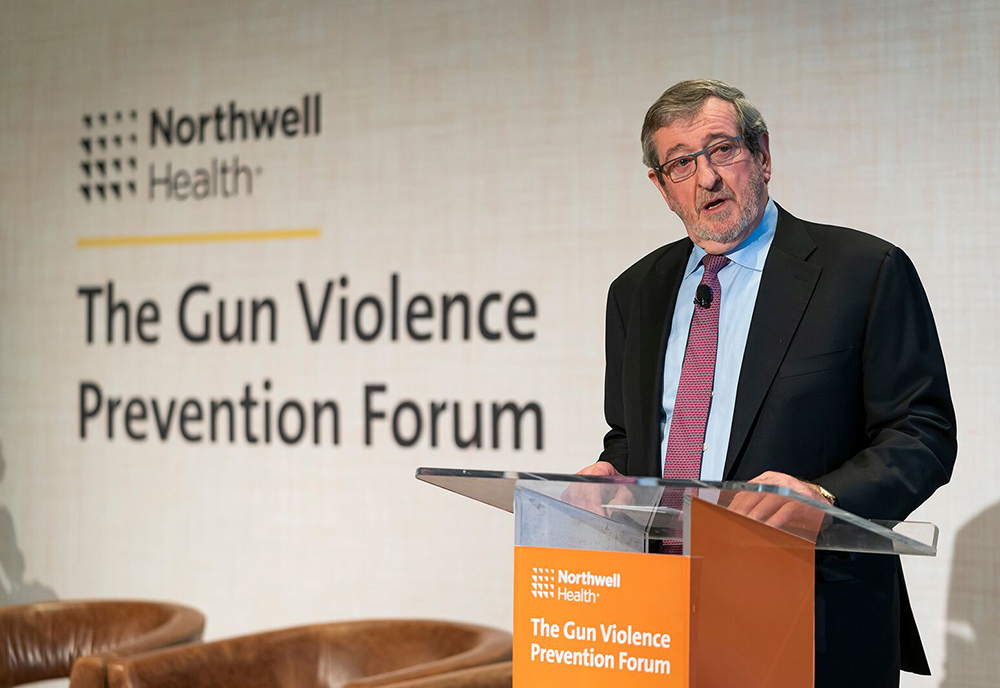
Michael Dowling, the departing CEO of Northwell Health, has never been one to take the easy route. As he prepares to step down from the leadership of New York’s largest health system, Dowling’s legacy reads like a study in ambition, discipline, and defiance of odds. In an expansive interview with The New York Post, the 75-year-old Irish immigrant reflected on a journey that began in a thatched-roof cottage with no running water and ended at the helm of a $23 billion health care empire.
“It’s been an interesting journey,” Dowling said, modestly understating a career that has spanned decades and transformed the medical landscape of the tri-state region. From sweeping floors as a custodian to managing a network of 28 hospitals and over 1,000 outpatient facilities, Dowling’s climb is a testament to perseverance over privilege.
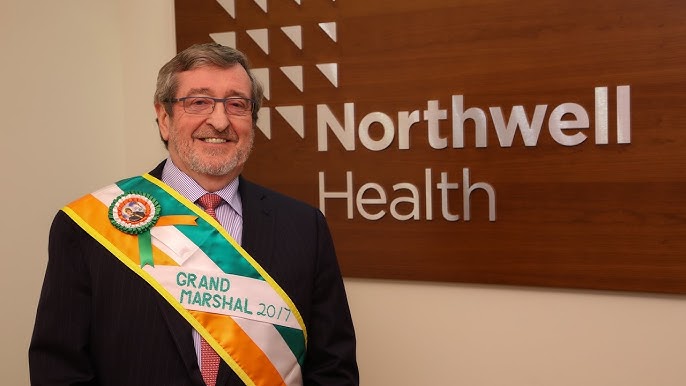
Born in Knockaderry, a small village in County Limerick, Ireland, Dowling grew up in poverty. His childhood home lacked basic amenities, and economic opportunity was nonexistent. At just 16, he left for America alone, armed only with determination and a willingness to do hard work.
Speaking to The New York Post, he recalled a series of gritty, unglamorous jobs that kept him afloat: boat work in Manhattan, construction gigs in Yonkers and the Bronx, plumbing jobs based in New Rochelle, and cleaning bars in Queens. “It was great to be able to put a little money in your pocket,” he said. That humility never left him.
After saving enough, Dowling enrolled in college and later earned a master’s in human services policy from Fordham University in 1974. From there, he transitioned into academia, teaching social policy and eventually rising to assistant dean.
In 1995, Dowling entered the healthcare sector full-time, joining North Shore University Hospital in Manhasset. By 2002, he was CEO. At the time, regional health systems were a novel concept. “There were no health systems in existence at all in this part of the country,” he told The Post. But Dowling saw a fragmented system and envisioned consolidation—not as a corporate power grab, but as a means to deliver better care.
His first major initiative was to absorb Glen Cove Hospital, a failing facility on Long Island. That acquisition began a pattern. By 1996, North Shore had acquired nine hospitals, prompting skepticism from critics who wondered if such expansion was wise—or even legal.
The most dramatic moment came when Dowling spearheaded a controversial merger between North Shore and its rival, Long Island Jewish Medical Center. Federal regulators, under pressure from insurance companies, took the new entity to court. “The Justice Department sued us and took us to trial to prevent the merger,” Dowling recalled. It was a two-week legal battle, but Northwell prevailed.
That victory not only cemented Dowling’s leadership but also set the foundation for an empire that would extend beyond Long Island to New York City, Westchester, Connecticut—and soon, perhaps, New Jersey.
Despite running a vast operation with over 105,000 employees, Dowling has remained unusually hands-on. One of his trademarks is a two-hour Monday orientation he personally leads for new hires. “This is not done that often by CEOs,” he told The Post. The sessions are more than symbolic. Dowling says they shape culture and offer a window into employee character.
“There have been occasions when I’ve asked employees at orientation to leave,” he said. “But most of the time, I love the interaction.” During the pandemic, Dowling walked COVID floors daily. He dines monthly with staff, reinforcing a people-first ethos rare in executive leadership.
To Dowling, leadership is about values—and toughness. “Life is about opportunity. It’s not about challenges,” he said. “People whine too much… ‘It was a hard day’—it’s supposed to be hard! Suck it up and deal with it for God’s sake.”
Dowling’s insistence on accountability and optimism shaped Northwell’s culture from the top down. Unlike many large bureaucracies where staff feel like cogs in a machine, Northwell under Dowling emphasized initiative and ownership. That clarity of mission allowed the health system not only to survive but to lead through moments of crisis, including the COVID-19 pandemic.
From investments in cutting-edge medical research to partnerships that spanned academia and the private sector, Dowling positioned Northwell as a hub of innovation. Under his stewardship, the system became New York’s largest private employer and a national model of integration.
As Dowling prepares to transition into a CEO emeritus role in October, his legacy is not just about bricks and budgets. It’s about a vision for healthcare that marries efficiency with compassion. It’s about the belief that the janitor and the surgeon deserve to be heard in the same boardroom. And above all, it’s about never forgetting where you came from.
“When you climb the ladder of life, you don’t know where the top rung is,” he told The New York Post. For Dowling, that ladder has been long—and ascendant.
The next chapter at Northwell will begin under incoming CEO John D’Angelo, a seasoned ER physician. But Dowling isn’t going far. He will continue to mentor future leaders and shape strategic priorities. True to form, he’ll remain engaged, asking tough questions and insisting on high standards.
For now, the man who built a health system out of a dream—and a great deal of sweat—takes a rare moment to reflect. “You do the best work you possibly can. You treat people well. You work harder than anybody else,” he said. “That’s the formula.”
In an era of institutional mistrust and leadership fatigue, Michael Dowling has offered something rare: a reminder that integrity, grit, and humility still matter. And that sometimes, the janitor really does become the boss.
