



|
Getting your Trinity Audio player ready...
|
One approach prioritizes pandemic response and vaccines, while the other focuses on health promotion, such as nutrition, sanitation, and economic development.
By: Beige Luciano-Adams
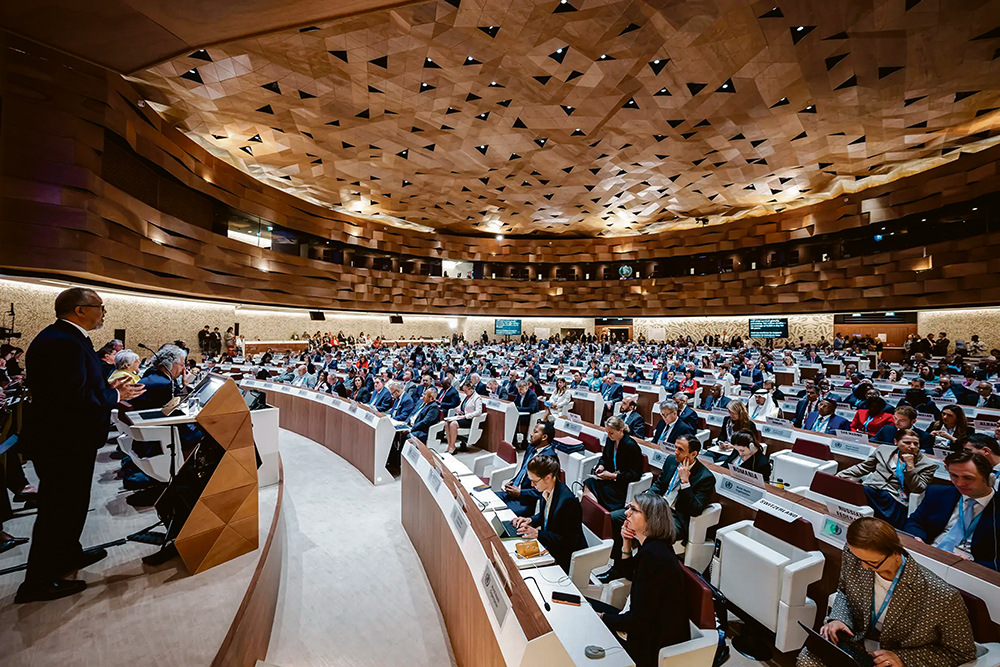
As the World Health Organization celebrated the adoption of a landmark pandemic treaty in May, the United States deepened its criticism of the U.N. agency–which it contends has become corrupt, beholden to special interests, and diverted from its core mission.
While a U.S. delegation was absent from the 78 th World Health Assembly in Geneva–where member states approved the world’s first pandemic agreement with 124 votes in favor, no objections, and 11 abstentions–U.S. Health Secretary Robert F. Kennedy Jr. delivered an address via video.
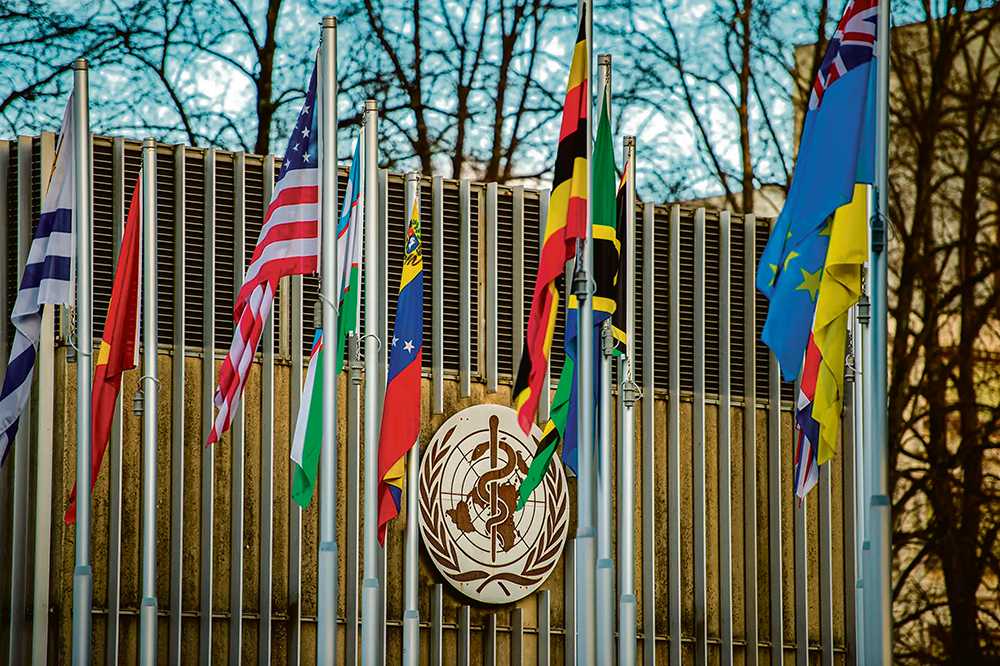
“I urge the world’s health ministers and the WHO to take our withdrawal from the organization as a wake-up call. It isn’t that President Trump and I have lost interest in international cooperation–not at all,” Kennedy said, adding that the United States was already in contact with “like-minded” countries. He proposed an alternative global system, inviting fellow health ministers around the world to cooperate outside the limits of a “moribund” WHO.
President Donald Trump signed an executive order in January initiating the year-long process of withdrawing from the agency. Trump’s first administration started the process in 2020, but President Joe Biden reversed course.
In a statement, the WHO said it hopes that the United States will reconsider, highlighting a successful partnership that has, since its founding in 1948, “saved countless lives and protected Americans and all people from health threats,” and pointing to ongoing reforms.
Without a solid plan, Kennedy’s proposal may be unlikely to draw many defectors beyond Argentina, which has also withdrawn from the WHO. But his criticism of the agency points to a much deeper debate over the future of global public health.
In the long shadow of COVID-19, there is an increasing trend toward prioritizing pandemic response–billions of dollars for vaccines, surveillance, and high-tech attempts to find and control diseases, including those that don’t yet exist.
In a world of limited resources, this paradigm often abrades with one that prioritizes health promotion–the more banal work of strengthening local health systems and addressing underlying determinants such as nutrition, sanitation, and economic development.
The Trump administration’s Make America Healthy Again (MAHA) agenda, with its focus on holistic health promotion and the root causes of chronic disease, philosophically aligns with the latter approach.
At the same time, its exit from the WHO and its cuts to foreign aid, including the dismantling of the U.S. Agency for International Development (USAID), are sending shockwaves through the system.
The United States’ retreat raises concerns that an ensuing power vacuum could further empower authoritarian governments, such as China, and special interests, such as pharmaceutical companies.
But some insiders say the Trump administration’s move may finally force a reckoning with systemic dysfunction laid bare by the COVID-19 pandemic, and with a funding system that has allowed special interests to dictate the direction of global health.
The Next Pandemic
In an April podcast, the Geneva-based Health Policy Watch interviewed Tulio de Oliveira, a virus expert who directs Stellenbosch University’s Centre for Epidemic Response and Innovation in the Western Cape province of South Africa.
De Oliveira is credited with leading teams that first detected both the beta and omicron variants of SARS-Co V-2.
He suggested that the United States was wrong to exit the WHO.
“We just came from a pandemic and how many trillion dollars used, that cost the global economy,” De Oliveira said.
“The U.S. donates less than 1 percent of the GDP [to global public health]. A pandemic will cost them much more than 1 percent a year,” he said, noting that the bird flu was spreading rapidly, decimating avian populations and driving up the cost of eggs and poultry.
In late May, the Trump administration canceled a contract with Moderna for more than $700 million to develop, test, and license vaccines for flu subtypes including the H5 N1 bird flu virus.
The Moderna bird flu vaccine uses messenger ribonucleic acid (m RNA), which is also used in its COVID-19 shots.
HHS communications director Andrew Nixon told The Epoch Times in an email, “The reality is that m RNA technology remains under-tested, and we are not going to spend taxpayer dollars repeating the mistakes of the last administration, which concealed legitimate safety concerns from the public.”
The Centers for Disease Control and Prevention maintains that the current public health risk from H5 N1 is low, with no human-to-human transfers, and it is monitoring outbreaks in poultry and dairy cows.
De Oliveira said he hopes that the United States and other countries–including the UK, which weeks earlier had announced that it would cut roughly 40 percent of its foreign aid budget–will reconsider.
“You have to defend your population and now you have a bigger chance of epidemics to emerge. … It’s about investing money,” he said, adding that there is a “much better benefit” to doing so than from being hit “by waves of new pathogens and epidemics.”
In recent years, international organizations including the WHO, the World Bank, and the G20–a forum for economic cooperation among the world’s largest economies–have sought tens of billions of dollars in annual funding for pandemics, largely for vaccine development, surveillance, and digital technologies.
But some experts say their risk assessments are based on misrepresented or weak data, and come at an opportunity cost to traditional programming.
‘Grossly Exaggerated’
“The whole messaging on the risks of pandemics and the risks of outbreaks that these are based on is false,” Dr. David Bell, a clinical and public health physician who has spent more than two decades in global health, including as a medical officer and scientist with the WHO, told The Epoch Times.
With colleagues at the University of Leeds, Bell analyzed evidence that the WHO and others use to justify pandemic spending. They contend in a policy brief, the result of several studies, that the evidence is often misrepresented to exaggerate threats from speculative pathogens that don’t yet exist–called Disease X–or from existing ones that already have successful control mechanisms.
“We have gone through carefully the WHO messaging on all this and their citations and their evidence–as well as that [used by] the World Bank, the G20, et cetera. They’re all giving grossly exaggerated or false messaging around the risks of pandemics,” Bell said.
His research group, REPPARE (Re-Evaluating the Pandemic Preparedness and REsponse Agenda), which is funded by the Brownstone Institute, argues that the data these organizations use to justify pandemic investment shows that risk is likely decreasing.
Of nine diseases that the WHO has identified for emergency research and development because of their epidemic potential, one is COVID-19, one doesn’t yet exist (Disease X), and only one of the other seven, the Ebola virus, has caused an outbreak of more than 10,000 deaths in recorded history.
A 2021 G20 report identifies pandemics and climate change as the primary human security issues of our time, and notes that the past two decades have seen major global outbreaks of infectious diseases every four to five years.
But remove COVID-19 and the 2009 H1 N1 (swine flu), according to Bell, and the combined burden of all outbreaks referenced between 2000 to 2020 is fewer than 26,000 deaths.
“Swine flu killed less people than seasonal influenza normally does, and we already have well-established surveillance mechanisms for influenza,” Bell and the co-authors wrote. “In this context, COVID-19 appears as an outlier rather than reflecting a trend.”
While the G20 panel argues that $15 billion per year is the absolute minimum the world must invest in pandemic prevention, Bell said the total requested is closer to $34 billion, or $171 billion over five years.
In a May 2024 report on the cost of pandemic preparedness, he warned that estimated spending for pandemic prevention–which could be as much as 55 percent of global overseas development aid spending for health–threatens to shift scarce resources away from “high-impact” investments on greater disease burdens.
Neither De Oliveira nor the WHO responded to emailed inquiries from The Epoch Times regarding Bell’s analysis and related questions.
Core Mission, Shifting Priorities
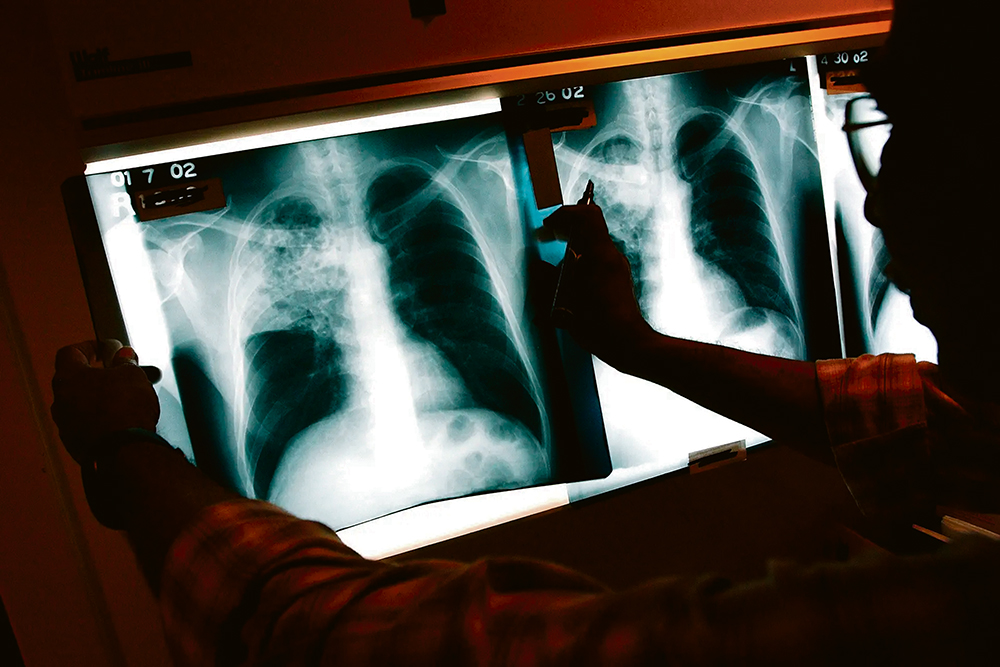
While billions are being invested in speculative pandemic planning, the greatest emerging disease threats in 2025 are not unidentified viruses but the same “slow pandemics” that the WHO has been fighting for decades–tuberculosis, HIV and malaria–according to GAVI, the public-private vaccine alliance of which WHO is a founding member.
According to the WHO, these “diseases of poverty and marginalization” still kill more than 2 million people each year; in 2023, tuberculosis was the leading infectious disease killer, outpacing COVID-19.
“You’re much more likely to die of tuberculosis, of malaria, of diarrhea, if you are malnourished and your micronutrients are depleted,” Bell said, explaining that nutrition used to be a major WHO focus but that funding has since dropped.
“If you want to build resilience against pandemics and all other diseases, then the first thing you do is look at nutrition,” he said. “We are not making great progress against these big killer diseases.”
He pointed to the fact that malaria kills mostly children younger than age 5, and tuberculosis and HIV impact mostly young and middle-aged adults, as well as children, whereas COVID-19 impacted mostly older adults.
“So where would you put your resources? Not in COVID. But that’s what the WHO did and the reason for that is because there was a financial imperative to do so,” he said, of the vaccine-driven COVID-19 response.
According to a forecast by Precedence Research, the global vaccine market is predicted to increase from $91.97 billion in 2025 to $161.4 billion by 2034.
When it comes to overseas development assistance, requests for pandemic aid are more than triple the total malaria spend, Bell said. Meanwhile, new organizations such as GAVI, the Vaccine Alliance, and the Coalition for Epidemic Preparedness Innovations, are dedicated exclusively to pandemics and vaccines.
“So all of this money in addition to diversion of WHO spending,” Bell said. He noted that the Global Fund–whose stated purpose is to fight AIDS, tuberculosis, and malaria–is also increasing allocations to pandemics over those diseases.
In a video posted to X on June 26, Kennedy criticized GAVI for neglecting vaccine safety and partnering with the WHO to help censor dissenting views and stifle free speech during the COVID-19 pandemic. He said the United States would not provide further funding for the organization until it justifies the $8 billion that the United States has given it since 2001.
Donor Driven
More broadly, the context for shifting priorities at the WHO has to do with how the organization is funded.
As the agency has become increasingly reliant on “specified” voluntary contributions–from the private sector, governments, and now public-private alliances–these earmarked funds now make up a larger part of its budget than core fees paid by member states.
For example, in 2024–2025, the Gates Foundation, which is the second-largest overall contributor to the WHO after the United States, accounted for the largest voluntary specified contributions, followed by GAVI and the United States.
“If you go back 40, 50 years, the whole emphasis was horizontal-based health care where community control is emphasized and the basic drivers of good health, such as nutrition, sanitation, living conditions,” Bell said.
Now, he said, focus has turned to commodity-based responses to disease, such as vaccines, implemented by a vertically controlled and increasingly centralized bureaucracy.
It’s not the WHO driving this change, Bell said, “It’s the funders.”
