



|
Getting your Trinity Audio player ready...
|
By: Amber Yang
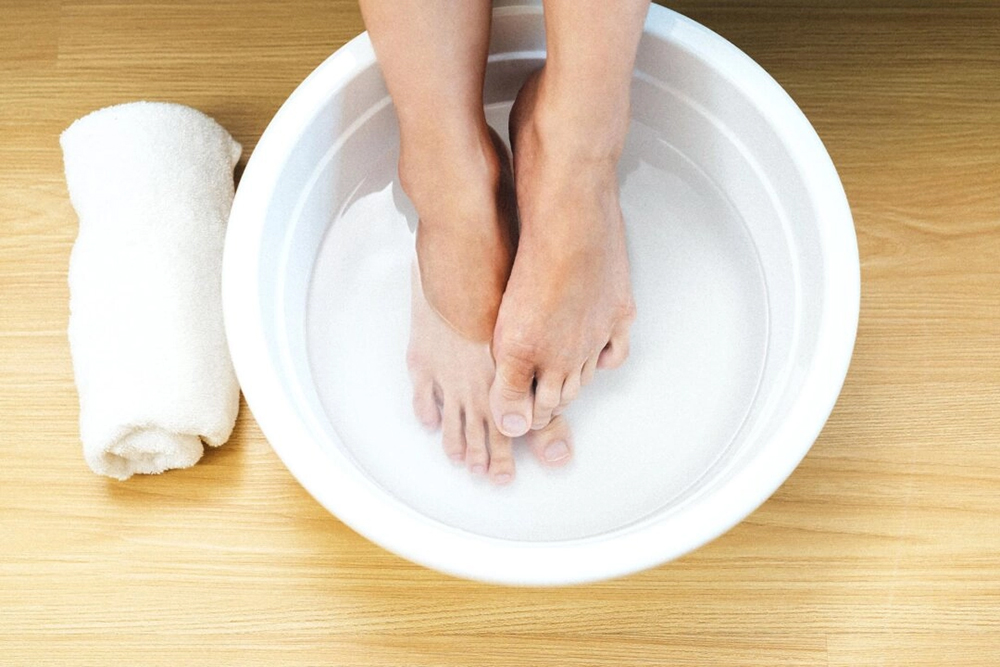
With the sudden drop in winter temperatures, many people experience cold hands and feet, which can affect sleep quality. Dr. Wu Hung-Chien, director of Yi Sheng TCM Clinic, told The Epoch Times that soaking your feet before bed not only warms and relaxes the body from stress, but from a traditional Chinese medicine (TCM) perspective, also nourishes the five internal organs and stabilizes the autonomic nervous system. He also shared proper ways to perform a foot massage after soaking to enhance health benefits.
TCM holds that “cold enters via the feet.” Because the feet are at the far ends of the body, poor circulation can slow the flow of blood and qi (vital energy), thereby affecting the body’s overall function. TCM considers the body’s “meridian” system to be the channels through which energy (qi) and blood flow throughout the body. Qi is the energy or power that constitutes human life and TCM broadly refers to substances that replenish nutrients in the body, such as blood.
Qi and blood circulate continuously, maintaining the balance and stability of various tissues and organs. When the body experiences an imbalance or deficiency of qi and blood, illness or other conditions may arise. Therefore, effectively warming the lower limbs and promoting overall circulation during the cold of winter are crucial for health preservation.
Major Health Benefits of Foot Baths
Beyond comfort and sleep support, foot baths are regarded in TCM clinical practice as a gentle yet comprehensive form of body conditioning. Through warmth and acupoint stimulation, they influence circulation, the nervous system, and internal organ function at the same time.
- Stimulate Meridians, Acupoints to Support Whole-Body Balance
The soles of the feet are rich in reflex zones and acupoints and are considered a “micro-map” of the body. Hundreds of acupoints on the feet connect with six major meridians—the stomach, gallbladder, bladder, spleen, liver, and kidneys.
During a foot bath, heat gently stimulates these areas, producing effects similar to a mild full-body massage. In TCM theory, this helps regulate organ function and promotes overall balance.
Meridians are understood as pathways that connect the internal organs with the limbs and surface of the body, while acupoints are specific sites along these pathways where stimulation can influence physiological function.
- Promote Peripheral Circulation
The calves are often described as a “second heart” because they help pump blood back toward the heart. Warming the feet and lower legs improves circulation in the lower extremities, supporting venous return and reducing strain on the heart.
This effect is particularly helpful for people who sit or stand for long periods or exercise infrequently. Clinically, regular foot soaks are often associated with reduced leg heaviness, fatigue, coldness, and ankle swelling.
- Relax the Nervous System and Support Sleep
Foot baths temporarily raise body temperature. As the body cools afterward, it naturally shifts into a relaxed, parasympathetic state that supports sleep. Many people feel drowsy during or shortly after a foot soak—an indication of its calming effect on the nervous system.
- Ease Stress-Related Discomfort
Chronic stress can contribute to symptoms such as acid reflux, irritable bowel syndrome, muscle tension, and anxiety. From a TCM perspective, acupoints such as Yongquan (Bubbling Spring, KI1) on the sole of the foot and Taichong (Great Surge, LR3) on the top of the foot are associated with calming the mind and regulating emotional tension.
When combined with warmth, stimulation of these areas may help balance the autonomic nervous system, relieve stress, and promote emotional stability.
3 Key Points for Foot Baths
Foot baths seem simple, but if the water temperature is too high or the time is not properly regulated, it may cause fatigue or discomfort. Mastering the correct way to perform a foot bath is essential to achieving true health benefits.
- Ideal Water Temperature: 104 to 108 Degrees Fahrenheit
To effectively promote circulation while avoiding burns, Wu suggests the ideal water temperature for foot baths is 104 to 108 F. If you’re unsure of the temperature, a cooking thermometer can be used. Moreover, many commercially available foot bath machines are equipped with a constant-temperature function that automatically maintains a suitable temperature.
- Water Level: Up to the Knees Is Best
The knees are the lower limbs and are most prone to getting cold. If the water level reaches the knee joint, it promotes circulation and helps prevent degeneration. If the container cannot offer that height, you can wrap your knees with a hot towel after soaking your feet to achieve a similar effect.
- Soak Time: 2 Hours After Meals or Before Bed
Wu said that foot soaks can be done almost any time, but he recommends the following two periods as most desirable:
2 Hours After Meals: To avoid affecting digestion.
2 Hours Before Bedtime: To avoid heat stimulation too close to sleep time, which can lead to over-excitation of the sympathetic nervous system.
Slight sweating and a relaxed, not tired, feeling after soaking your feet usually indicate that the time and temperature were good.
What to Add to a Foot Soak
Many people buy various Chinese medicinal herb packs or commercially available foot bath powders, but Wu pointed out that for busy people, “simple and sustainable” is the most important principle. He suggests the following two readily available substances at home are sufficient for this purpose:
Salt: Salt can help eliminate edema through osmotic pressure and has a blood-activating effect. Dissolve 1/2 to 1 teaspoon of salt in 3 ounces of hot water before adding it to the foot bathtub.
Old Ginger: Old ginger has warming, blood-activating, and uterine-warming effects. Boil sliced old ginger in water, then add it to the foot bath water to help improve cold intolerance and circulation. If fresh old ginger is unavailable, commercially available ginger essential oil can be used.
For those who enjoy fragrances, adding a little of their favorite essential oil to the hot water is also acceptable. Wu said that the energy of scent resonates with our bodies. TCM also holds that fragrance can provide healing effects for the mind and body. For example, lavender can aid sleep and calm the nerves, while ginger essential oil helps activate blood circulation and warm the body, enhancing the pleasure of foot baths.
Who Should Avoid Foot Baths
Foot baths are a form of thermotherapy and, in this respect, might not be suitable for everyone. Taking foot baths should be carefully evaluated based on individual needs. According to Wu, foot soaking should be avoided by those with:
Wounds or Ulcers on the Feet: Foot soaking is not recommended to avoid infection and delayed healing.
Eczema: TCM considers eczema to be “damp-heat,” and any further heating may worsen the condition.
Insufficient Qi and Blood, Prone to Dizziness or Anemia: When soaking feet, a large amount of blood flows to the lower limbs, which may cause dizziness or fainting in people with insufficient qi and blood or prone to anemia.
High Blood Pressure: The high temperature environment during foot soaking can cause fluctuations in blood pressure.
4 Foot Massage Techniques
Blood circulation is at its prime after a foot soak, making this the optimal time for foot massage. The effects are often twice as effective, and it is a maintenance method recommended by TCM clinicians.
Wu noted that because the skin’s sebum decreases after soaking in hot water, it is best to apply lotion first to help keep the feet moisturized, then add a small amount of massage oil or petroleum jelly for massage to avoid skin friction and injury.
- Calf Relaxation
Step 1: Place both hands on either side of your calves.
Step 2: Rub your calves from bottom to top with your palms to help blood flow and relieve stiffness.
- Ankle Rotation
Step 1: Place both hands on either side of your ankles.
Step 2: Massage your ankles clockwise and counterclockwise 10 times each to help improve ankle flexibility.
3: Pushing Open the Foot Fascia
Step 1: Make a fist with one hand and place it on the instep.
Step 2: Use your knuckles to press along the top of your foot, stimulating the Taichong acupoint, which helps to calm the mind and relax.
4: Foot Pressing
Step 1: Use your palm to press in a circular motion from the front toes towards the arch of the foot and then towards the heel.
Step 2: Press the Yongquan acupoint on the sole of the foot using your thumb or fingertip. Yongquan is located on the sole, in the depression about one-third of the distance from the toes toward the heel, roughly where the foot naturally sinks inward when the toes are curled. Apply steady pressure or small circular motions for 30 to 60 seconds on each foot.
