



BY JV Staff
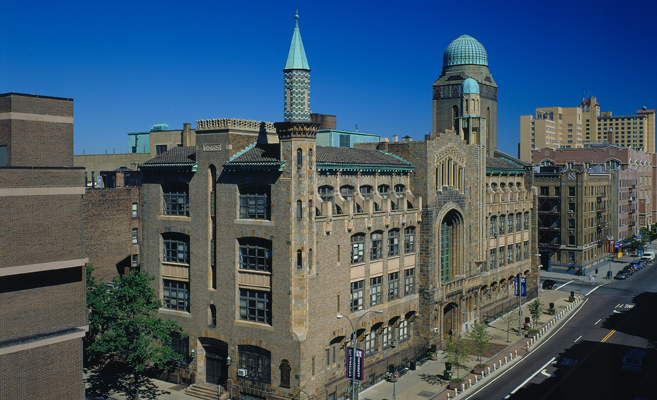
Once considered a highly prestigious school for modern Orthodox Jewish men, both Yeshiva University High School and their undergrad college in the Washington Heights section of Manhattan, it has been reported that the school has plummeted in the national rankings.
According to the college rankings survey that is presented annually by US News & World Report the 2020 ranking for Yeshiva University is #97. In previous rankings, YU had come is as #47, so the precipitous drop is a real eye opener and begs the question, “What Happened to YU?”
Due to consistent scandals that have rocked this institution of higher learning to its core, YU is now struggling to stay competitive on all fronts.
In August of 2019, it was reported Jewish world was stunned when some 40 former students of Yeshiva University High School for Boys filed a civil lawsuit for sexual abuse in the New York Supreme Court.
According to a September 2019 article that appeared in the Jerusalem Post, a 120-page lawsuit was filed in New York in August of last year which provided nuanced details of the victims’ accounts of their abuse. The JPost reported that “many said they were assaulted on multiple occasions throughout the 1970s and 1980s, and the details are shocking. It describes one of the abusers as “preying upon children of Holocaust survivors” and “threatening to accuse his victims of cheating” and lowering their grades. Only a handful of the plaintiffs have revealed their identities, and most are listed in the document as “John Doe.” Many of the victims live in Israel now as well.”

One of the students who was victimized by teachers at YUHS and has chosen not to remain anonymous is Mordechai Twersky. He is joined by four others in the lawsuit who also wish to reveal their identities and to publicly address this onerous matter. The JPost reported that even after multiple suicide attempts following years of alleged abuse at the hands of adult men that he trusted, Twersky wants to prevent this from happening to others.
He says the protection of these “pedophiles” by the Jewish community is “shameful and reckless, both in the United States and Israel.”
In addition to the August 2019 lawsuit, AP reported that 34 of the plaintiffs attempted to sue Yeshiva University for sexual abuse and facilitating sexual abuse in 2013 but the case went nowhere because it was barred by the statute of limitations at the time. JPost reported that The Child Victims Act, which was introduced last year gives victims a one-year window to file old civil claims. Since then, more than 500 victims have come forward across the United States, 38 of them in this lawsuit alone. One of their attorneys, Kevin Mulhearn, called the plaintiffs “trailblazers.”
AP reported that one of the accused rabbis, George Finkelstein, targeted children of Holocaust survivors, according to the lawsuit, telling them they would increase their parents’ suffering if they spoke about the abuse. The other, Rabbi Macy Gordon, who taught Jewish studies, allegedly sodomized boys in a “vicious and sadistic” manner using objects, the lawsuit says. Gordon died in 2017 in Israel. Both he and Finkelstein have denied the allegations in the past.
Finkelstein was promoted from the school’s assistant principal to principal even after some of the boys’ parents reported the alleged abuse to school officials, the plaintiffs said. He eventually moved to Israel, where he worked at Jerusalem’s Great Synagogue.
Financial scandals have also rocked this venerable institution to the core and undoubtedly contributed to the significant drop in national rankings for YU.
In June of 2014, Business Insider reported that Yeshiva University lost an estimated $105 million with convicted Ponzi schemer Bernie Madoff, who was also a trustee of the university. The article also intimated that according to the credit-ratings agency known as Moody’s, the school would eventually find themselves in a permanent state of insolvency.
At the conclusion of a two-year investigation by The Jewish Channel and renowned journalist, Steven I Weiss of Takepart.com, evidence emerged about YU’s mishandling of investment funds and the colossal losses that they sustained.
At one point before the 2008 financial crisis, the university allocated 65% in hedge funds, which was the third-highest of any university endowment, the June 2014 report said.
According to the Takepart.com story:
“The school lost more than $500 million on its high-risk investment portfolio—after selling off nearly $500 million of ultrasafe U.S. Treasury bonds when the new regime took over a decade ago, plowing the proceeds mostly into hedge funds and corporate stocks. Assuming the strategy of increasing risk in its investment portfolio would pay off with higher returns, the new president and the board that hired him took on a bevy of new expenses, spending down their cash reserves and resting much of Yeshiva’s fate on their hedge fund gambles. Now that those investments have proved to be losses, Yeshiva faces more than $550 million of debt, and it appears to have been tapping into the principal of its investment portfolio to cover annual deficits. On their own, any one of these changes—the half-billion-dollar hit to its portfolio, the diminution of liquidity, and the mass of debt—would be a significant, though bearable, difficulty for a university; together, their effect has been devastating.”
The report adds that in order for YU to stay “in the black” financially and avoid the insolvency crisis, the school would need to become creative in devising ways to generate growth in the school’s student and donor base, such as tuition increases, expansion of student enrollment and funding solicitations. The report emphasized that these efforts would need to be sufficient in terms of balancing its budget and paying down its debt, while slashing its budget and selling off assets while trying not to slow its growth.
The 2014 Business Insider report indicated that the two-year investigation involved the review of more than 10,000 pages of legal and financial documents, dozens of interviews and many New York State Freedom of Information Law requests and it showed precisely how Wall Street titans helped create these devastating losses for YU.
According to the Business Insider report:
“Some of the most prominent names in investing—Berkshire Hathaway’s David S. Gottesman, Redwood’s Jonathan Kolatch, Oppenheimer’s Ludwig Bravmann, and Salomon’s Gedale Horowitz—guided the school’s finances in a way that was quite exceptional among universities. The portion of Yeshiva’s assets allocated to specific risky investments ranked near or at the top of all schools by the time the 2008–2009 crash came, and Yeshiva’s losses rank among the largest in the country.”
Moreover, when former Yeshiva University President Richard Joel was about to leave his position, Jewish Voice publisher David Ben Hooren asked him if he believed anything would change at the school once he was vacated his post. Joel told Ben Hooren in no uncertain terms that there would be no substantive changes in school policy or otherwise, unless and until the members of the board of directors would change. Joel added that such a scenario would be highly unlikely.
After repeated attempts to reach Yeshiva University for comment on the issues discussed in this article, the Jewish Voice has received no response to their inquiries. Current YU President Ari Berman was also contacted via e-mail by the Jewish Voice and no response was received.
