



|
Getting your Trinity Audio player ready...
|
UMass Amherst Faces Outcry Over Planned Academic Boycott of Israeli Scholars at Women in German Conference
By: Fern Sidman
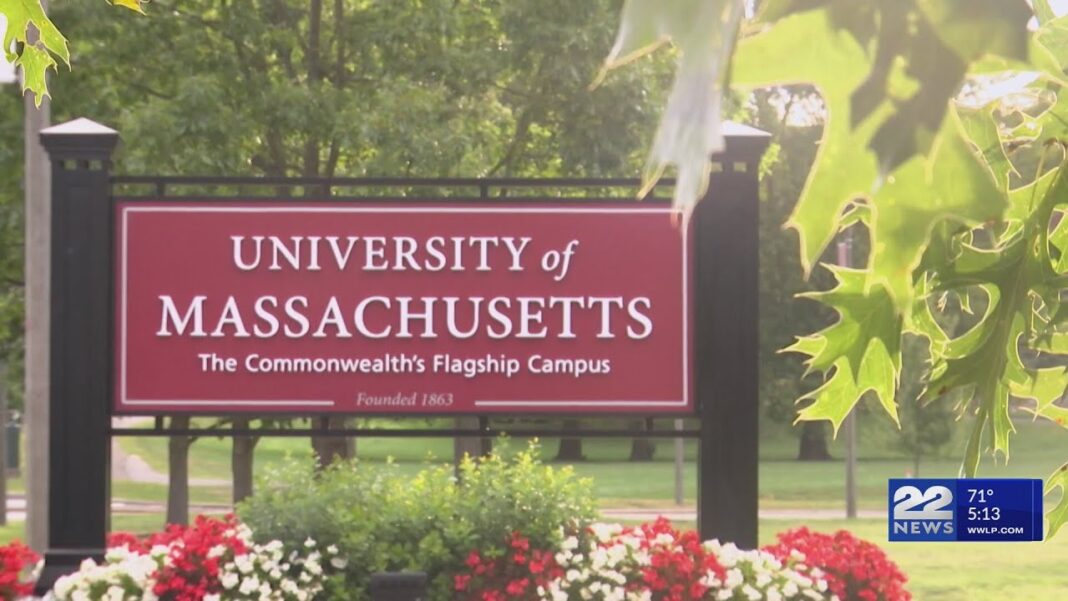
The University of Massachusetts Amherst, one of the state’s flagship public institutions, has found itself at the center of a heated controversy ahead of an academic conference that promotes unlawful discrimination against Israelis. At stake are not only the rights of Israeli scholars, but also the integrity of the university’s anti-discrimination policies and Massachusetts law.
The storm erupted after it was revealed that the Coalition of Women in German (WiG), an academic association hosting its annual conference on the UMass Amherst campus from November 6–9, will enforce a Boycott, Divestment, and Sanctions (BDS) policy excluding anyone whose attendance relies on funding from “Israeli institutions.” The measure explicitly bars scholars supported by Israeli universities or governmental agencies — in effect, blocking nearly all Israeli academics from participating in the conference.
In response, the Louis D. Brandeis Center for Human Rights Under Law, a national legal advocacy group dedicated to combating antisemitism, sent a sharply worded letter to UMass leadership demanding immediate intervention. The letter, which has also been shared with the Massachusetts Special Commission on Combatting Antisemitism, insists that the university suspend the policy as a condition of hosting the conference, calling it a blatant case of illegal national origin discrimination.
According to the Brandeis Center, the WiG policy is not an abstract or symbolic gesture but a calculated mechanism to exclude Israelis outright.
The group noted that Israeli scholars — like their counterparts around the world — depend heavily on national and university-administered research funds such as the Israeli International Science Relations Fund to cover travel and conference costs. By barring all such support, WiG has effectively engineered a scenario in which Israelis are unable to attend, regardless of their field of study or political views.
“The policy’s intent, purpose, and effect are to deny Israelis the same access, opportunities, services, and benefits that WiG offers to citizens and residents of every other country on earth,” the Brandeis Center’s letter states.
Hon. Rory Lancman, Senior Counsel at the Brandeis Center and a former New York State Assemblyman, minced no words: “This is essentially a UMass Amherst-sanctioned boycott based on Israeli national origin — one that is contradictory to UMass’ self-professed commitment to welcoming students and scholars from around the world and a clear violation of UMass’ anti-discrimination policy.”
Lancman added that the boycott harms not only the Israeli academics barred from attending, but also UMass students and faculty who will be denied access to the perspectives and scholarship those Israelis could contribute.
The Brandeis Center stressed that the boycott directly contravenes UMass Amherst’s anti-discrimination policy, which explicitly prohibits unlawful discrimination “on the basis of… national origin… in any aspect of the access to, admission, or treatment of students in its programs and activities.” Importantly, the policy also extends these protections to “all those operating on the UMass Amherst campus – to guests and visitors as well as matriculated students and university employees.”
This means that a conference held under university partnership cannot carve out exceptions for discriminatory practices, even if WiG is an independent academic association.
Beyond institutional policies, the boycott may run afoul of Massachusetts state law, including the Massachusetts Public Accommodation Law and the Massachusetts Equal Rights Act, both of which bar exclusion based on national origin in spaces and programs that are open to the public.
Lancman underscored the gravity of the violation: “Israeli scholars must be allowed the same opportunities as scholars from every other country. UMass is better than this. Israeli scholars — and those UMass scholars who would benefit from their expertise — deserve better than this.”
The Brandeis Center has a track record of holding academic institutions accountable for antisemitism and discriminatory boycotts. It has filed federal lawsuits against MIT and Stanford over alleged targeting of Jewish and Israeli faculty.
In a particularly significant case earlier this year, the Brandeis Center reached a landmark agreement with Harvard University after allegations of antisemitism. Harvard committed to incorporating the International Holocaust Remembrance Alliance (IHRA) definition of antisemitism into its non-discrimination and anti-bullying policies, affirming that conduct which would be prohibited if directed at Jews or Israelis would also constitute a violation if directed toward Zionists.
The Harvard precedent suggests that universities can and should take concrete steps to ensure campus policies address the subtler ways antisemitism manifests — including the targeting of Zionists or Israelis under the guise of political protest.
WiG’s explicit policy extends beyond governmental agencies to include “all Israeli academic and cultural institutions.” This phrasing is particularly alarming to critics because it makes no distinction between Israeli state actors and independent scholars. By design, the rule excludes even those Israelis engaged in purely academic work, such as research on German history, culture, and language — areas at the heart of WiG’s own mission.
As the Brandeis Center pointed out, the policy “makes a mockery of the University’s professed commitment to welcoming students and scholars from around the world.”
The move is also seen as part of a larger pattern in which BDS-aligned groups seek to weaponize academic and cultural spaces to stigmatize and exclude Israelis, even when the subject matter has little or nothing to do with Israel or the Middle East.
UMass Amherst, like many universities across the United States, has faced increasing pressure from activists aligned with the BDS movement, which calls for boycotts of Israel in academic, cultural, and economic spheres. While supporters frame the movement as a nonviolent form of protest against Israeli policy, opponents — including Jewish advocacy groups and many lawmakers — view it as discriminatory in nature and effect.
The timing of the WiG conference adds another layer of controversy. It comes amid heightened tensions on American campuses following Hamas’s October 7, 2023, massacre of over 1,200 Israelis and the subsequent war in Gaza. In this context, Jewish organizations argue that BDS boycotts are especially harmful, fueling a campus environment that is increasingly hostile toward Jewish students and faculty.
If UMass Amherst does not intervene, the Brandeis Center warns the university could face significant reputational and legal fallout. The Special Commission on Combatting Antisemitism in the Commonwealth is already monitoring the situation, and civil rights litigation could follow if Israeli scholars are barred from participating.
Moreover, the decision risks alienating a significant portion of the university’s academic community and alumni base. UMass has long marketed itself as an institution that welcomes diverse perspectives and global scholarship. Allowing a conference on its campus to implement discriminatory rules would directly contradict that image.
The Brandeis Center’s letter to UMass Amherst was as much a legal argument as it was a moral appeal. “UMass must require, as a condition for conducting its conference on the UMass Amherst campus, that the WiG BDS policy not be in effect for any part of the conference,” Lancman emphasized.
The statement reflects a growing expectation that universities cannot hide behind the technical independence of academic associations when such groups use university facilities. By permitting discriminatory policies to operate on campus, critics say, the university becomes complicit.
The WiG conference is still scheduled to proceed in early November, but pressure is mounting on UMass to intervene before then. How the university responds could set a precedent for other institutions grappling with similar tensions between academic freedom and anti-discrimination obligations.
Jewish organizations, citing the Harvard agreement as a model, are urging universities nationwide to explicitly ban discriminatory boycotts from being hosted on campus. For many, the issue goes beyond one conference: it touches on whether universities will uphold their commitment to inclusivity at a time when antisemitism is rising on campuses across the country.
As the Brandeis Center framed it, the stakes are simple yet profound: equal access for Israeli scholars, respect for university policy, and fidelity to the law.

Amherst is a State University, and as such as governed by the federal and its state constitutions. It will be interesting to see how the Democrats running Massachusetts and its university will respond politically to this direct assault on Jews, which implicates its faculty and students.
(It is also interesting that after laying low for years, the Germans are now again publicly aggressive antisemites.)
After years of blatant antisemitism being considered an embarrassment after World War
II, and being relegated to oblique indirect attacks on the Jewish people, it has now become socially acceptable to publicly be an avowed poisonous antisemite.
Knowing that the nature of the German people had not changed at all, I was dismayed when Germany was not Balkanized after World War II, and then permitted to reunite. Germany can never truly be rehabilitated, but then again, we are now dealing with a resurgent antisemite France, western Europe, and an Islamized Great Britain.