



|
Getting your Trinity Audio player ready...
|
By: Fern Sidman – Jewish Voice News
A sweeping investigation by the Institute for the Study of Global Antisemitism and Policy (ISGAP) has exposed an extraordinary, years-long campaign by the Qatari government to inject Islamist ideologies into American higher education and K-12 schools, with an estimated $20 billion secretly funneled into U.S. academic and cultural institutions. The report—outlined in detail by Israel National News, has tracked Qatar’s expanding influence operations with growing alarm—suggests that the scale of foreign penetration into American education dwarfs anything previously documented.
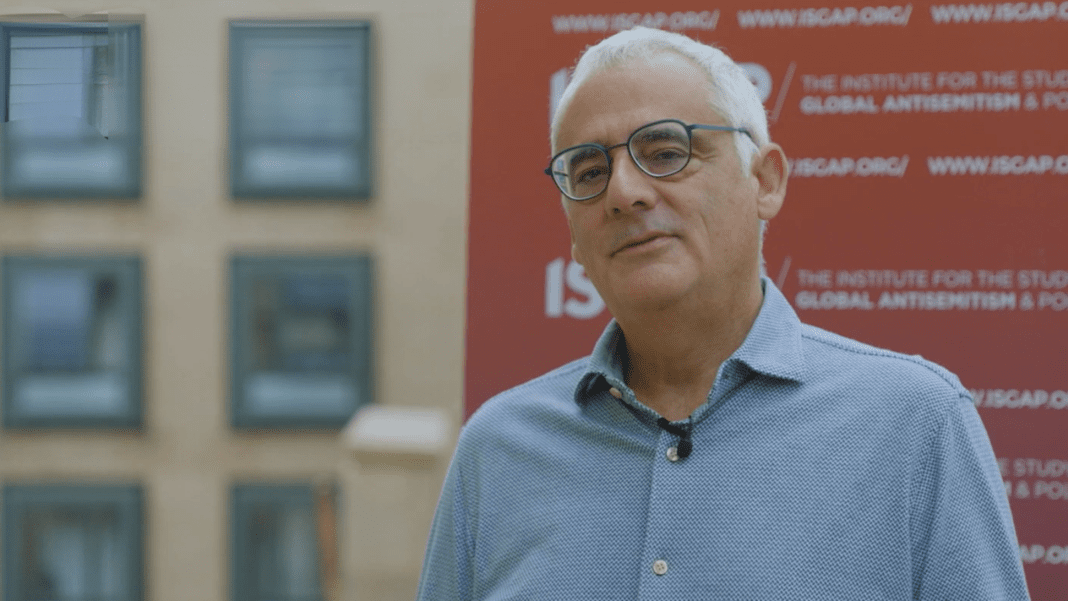
Dr. Charles Asher Small, ISGAP’s executive director, warned in the report that the project is not merely educational philanthropy but an initiative tied explicitly to the Muslim Brotherhood’s long-standing strategic doctrine of subverting Western institutions from within. “The royal family of Qatar has a Bay’ah—a spiritual oath—to the Muslim Brotherhood,” he told the New York Post. According to a report that appeared on Sunday at Israel National News, Small emphasized that Qatar is “pumping many, many billions” into schools and universities in order to reshape American ideological ecosystems in ways that serve Brotherhood interests. This is not incidental funding; it is a deliberate, targeted ideological campaign.
Perhaps the most striking revelation in the ISGAP report, as summarized in the Israel National News report, is that half of the entire $20 billion sum—$10 billion—went to a single institution: Cornell University. Long considered a hub of elite American academia, Cornell has, since the October 7, 2023 Hamas massacre in Israel, become notorious for its difficulties controlling rising antisemitic agitation on campus.
The most dramatic incident occurred in late 2023, when a Cornell student was arrested for threatening to murder Jewish classmates. Screenshots of his online posts, widely circulated and cited by Israel National News, revealed chilling statements such as: “If you see a Jewish person on campus, follow them home and slit their throat.”
Cornell’s administration condemned the threats, but the episode underscored the toxic environment that had been allowed to develop. It coincided with several explosive controversies involving faculty expressions of support for Hamas terrorism. One of the most widely-reported cases involved Cornell History Professor Russell Rickford, who was recorded at an off-campus anti-Israel rally describing the Hamas massacre—which saw more than 1,200 Israelis slaughtered—as “exhilarating” and “energizing.” As the Israel National News report noted, Rickford was later placed on “voluntary leave,” but the university faced growing pressure from donors, lawmakers, and federal agencies to confront its issues more forcefully.
Earlier this month, Cornell struck an agreement with the Trump administration to restore over $250 million in federal funding and end federal investigations into allegations of antisemitism and racial discrimination. Observers say the decision demonstrates the immense stakes of federal oversight for universities taking foreign money, especially from nations like Qatar whose ideological agendas stand in conflict with American democratic norms.
According to the ISGAP report, Qatar’s funds were laundered, so to speak, through the Qatar Foundation, an organization ostensibly dedicated to educational development but in practice functioning as a central vehicle for the regime’s global influence operations. The Qatar Foundation is wholly funded by the ruling Al-Thani family, whose ties to the Muslim Brotherhood are deep and ideologically explicit.
As the Israel National News report highlighted, the Foundation has long supported American chapters of the Muslim Students Association (MSA), an organization originally founded by Brotherhood-linked activists. MSA now has chapters on hundreds of U.S. campuses. The ISGAP report concludes that both MSA and Students for Justice in Palestine (SJP) have become “particularly effective in advancing Brotherhood objectives,” which include normalizing anti-Zionism and grooming future activists to adopt anti-Western ideological frameworks.
The Qatari government’s relationship with these groups is not a matter of coincidence. Qatar has sheltered Hamas leadership for decades, providing sanctuary to figures like Ismail Haniyeh and Khaled Mashal, all while positioning itself as a diplomatic broker in Western capitals. Its dual posture—as both patron of Islamist movements and polished interlocutor with the United States—has allowed it to wield outsized influence without facing the scrutiny typically applied to adversarial states.
The extent of Qatar’s operations is not confined to academia. This month, Israel National News and the Guardian reported an alarming revelation: Doha paid a London-based intelligence firm to conduct a covert campaign aimed at discrediting the woman who accused International Criminal Court (ICC) chief prosecutor Karim Khan of sexual harassment.
The firm—referred to in internal documents as acting on behalf of “Q Country,” a code widely interpreted as Qatar—collected extensive personal data on the accuser and her family, including her child. Another affiliated firm, Highland, sought to uncover nonexistent links between the accuser and Israel, hoping to manipulate public opinion by painting the woman as an agent of a “foreign influence” campaign.
The alleged victim told the Guardian that the company’s behavior was “disturbing” and “heartbreaking,” adding: “The idea that private intelligence firms have been instructed to target me is incomprehensible.”
This episode sheds light on a much broader and darker pattern: Qatar’s use of private intelligence contractors to harass, intimidate, or smear individuals whose actions threaten the regime’s geopolitical ambitions. The ICC case is especially sensitive because Qatar has aggressively positioned itself as a defender of Hamas and a critic of Israeli policy, lobbying extensively within international legal institutions.
Taken together—the campus funding, the support of MSA and SJP, the infiltration of cultural institutions, and the deployment of intelligence contractors—Qatar’s activities reveal what the Israel National News report described as a “comprehensive, multifront strategy to delegitimize Western norms and weaken American resilience from within.”
Dr. Small, whose scholarship on modern antisemitism has long emphasized the interplay between Islamist ideology and Western apathy, argues that Qatar’s funding is not accidental but structural. The ISGAP report frames the funding operation as an extension of the Muslim Brotherhood’s longstanding “civilizational jihad” doctrine, which envisions ideological penetration, institutional capture, and cultural subversion as essential to eroding Western cohesion.
Unlike Iran, whose hostility toward the West is explicit and militarized, Qatar prefers subtler instruments: elite universities, cultural exchanges, think tanks, and philanthropic foundations. The goal is influence, not confrontation; alignment, not overt hostility.
But the downstream effects, as Israel National News has documented, are measurable: surging antisemitic incidents on campuses, radicalization of student organizations, faculty expressions of support for violent extremism, and administrative paralysis in the face of ideologically aggressive protests.
The silence of many academic institutions—who eagerly collected Qatari checks without scrutinizing the ideological strings attached—has allowed hostile narratives to metastasize. Universities insist they can accept foreign money without compromising their values, but the events since October 7 expose that assumption as dangerously naïve.
Cornell is not an anomaly but an epicenter. Across the country, Israel National News has chronicled faculty and student leaders praising Hamas attacks, intimidation of Jewish students, vandalism of Jewish spaces, and administrative reluctance to discipline offenders.
The Qatar Foundation was not merely funding programs; it was cultivating ideological ecosystems.
ISGAP’s revelations have already triggered calls from members of Congress for a full investigation into foreign influence on American campuses. Several lawmakers have indicated that Qatar’s funding could violate federal transparency requirements, including provisions mandating disclosure of foreign gifts exceeding $250,000.
Furthermore, the targeting of the ICC prosecutor’s accuser may expose Qatar to diplomatic consequences under UK privacy and intelligence laws. If proven, the operation could constitute harassment, foreign intelligence activity and violations of data protection statutes.
The former Biden administration as well as the current Trump administration have maintained strategic ties with Qatar. They may soon face pressure to reassess those relationships in light of documented influence operations aimed at destabilizing American institutions.
The ISGAP report, as noted in the Israel National News report, has opened a crucial debate about academic independence, national security, and the weaponization of philanthropy. Qatar’s $20 billion campaign was not benevolent giving. It was ideological investment. And the return on that investment—visible in campus radicalization and global disinformation campaigns—has already begun to reshape the American civic landscape.
If universities continue to accept foreign money without oversight, if governments fail to implement transparency safeguards, and if ideological subversion remains unchecked, the consequences will not be confined to campus politics. They will reverberate through America’s legal, political, and cultural institutions for years to come.
For now, ISGAP has sounded the alarm. Whether the United States chooses to heed it remains an open—and urgent—question.

For TJV, Fern Sidman, and all readers: WATCH what we are confronted with:
November 21, 2025 | The Forum Roundtable: Anti-Israel Bias in the Media – YouTube
https://www.youtube.com/watch?v=OPm65S-i3BA