



Edited by: TJVNews.com
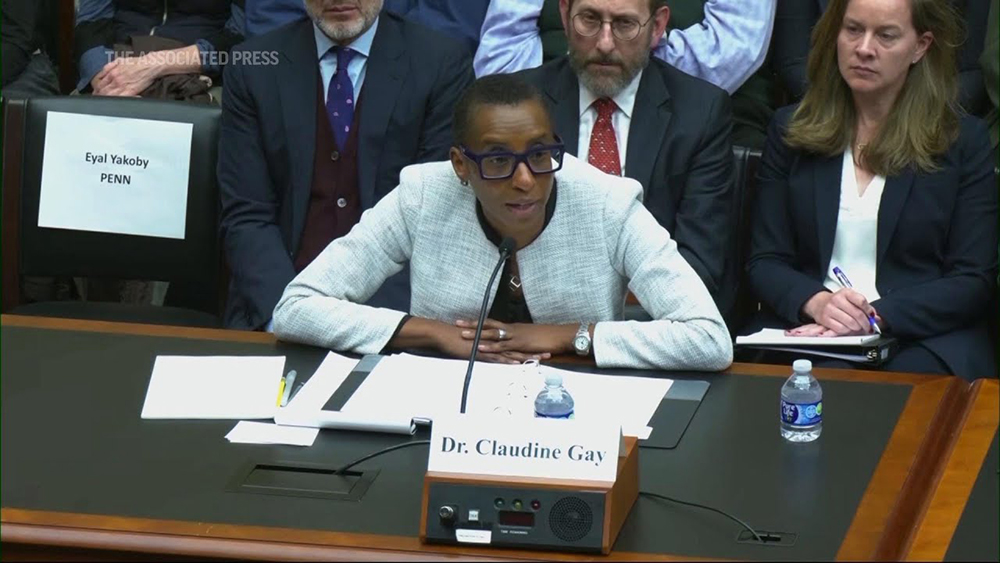
Harvard University’s $51 billion endowment recently embarked on an unusual journey to Silicon Valley, seeking to mend relationships with top venture-capital investors. As was recently reported by the Wall Street Journal, the move comes in response to concerns raised by some venture-capital executives regarding Harvard’s perceived weak response to the October 7th Hamas attacks on Israel and the uptick in campus anti-Semitism during former President Claudine Gay’s tenure.
This internal dynamic reflects the complex interplay between academic institutions, donors, and investment partners in navigating sensitive geopolitical issues.
Harvard Management Company (HMC), overseeing the nation’s largest college endowment, orchestrated meetings with prominent firms such as Sequoia Capital, Kleiner Perkins, and Andreessen Horowitz, according to the WSJ report. Notably, they engaged with influential figures including Elad Gil, an Israeli-born investor, and Patrick Collison, CEO of payments company Stripe – a direct investment of Harvard. The presence of Paul Finnegan, endowment chair and Harvard Corporation member, marked an unusual inclusion in these executive-level discussions, the WSJ report said.
Venture-capital executives managing Harvard’s investments expressed dissatisfaction with what they perceived as the university’s tepid response to the Israel attacks and the significant increase in virulent anti-Semitism, as was indicated in the WSJ report. The endowment’s outreach aimed to assuage concerns and provide insights into Harvard’s commitment to ensuring student safety and upholding freedom of speech. Harvard Management Company acknowledged the importance of engaging with investment partners and fostering open dialogue.
The venture into Silicon Valley highlights the significance of venture capital to Harvard’s endowment, an area where the university historically lagged behind peers. Under Chief Executive N.P. “Narv” Narvekar’s leadership, the endowment increased its venture exposure, seeking to further enhance its position in this dynamic investment landscape, as per the WSJ reported. The tour signifies Harvard’s recognition of venture capital’s role in driving returns and its commitment to fortifying these relationships.
Venture capitalists, including those in Silicon Valley, have criticized perceived pro-Palestinian biases in academia. The industry boasts prominent Israeli-born investors and substantial investments in Israeli startups, as was mentioned in the WSJ report. The internal discussions at Harvard considered potential repercussions, including the university’s standing in future venture funds. While not primarily driven by allocation concerns, the tour sought to address questions and align the university with its investment partners, according to the information provided in the WSJ report.
Harvard executives emphasized in recent meetings that the endowment maintains a non-political stance and does not play a role in selecting the university’s president.
Executives acknowledged frustration among some managers over President Claudine Gay’s initial statement responding to the Hamas attacks, which was deemed by some as insufficiently robust. The information in the WSJ report noted that the statement did not explicitly condemn Hamas and faced criticism for not distancing Harvard from a student group’s statement attributing blame to Israel’s treatment of Palestinians for the brutal, mass slaughter of 1200 people, A subsequent statement explicitly condemned “the terrorist atrocities perpetrated by Hamas” and clarified that student groups do not represent Harvard as a whole.
The resignation of President Claudine Gay has alleviated concerns among some managers, providing an opportunity for a reset in Harvard’s approach, the WSJ report said. Executives underscored the collaborative process involved in crafting statements, seeking input from deans across Harvard’s various schools.
Harvard executives also acknowledged awareness of criticisms regarding the perception that diversity, equity, and inclusion initiatives had gone too far in recent years, as was mentioned in the WSJ report. Concerns were raised about potential self-censorship among students and professors. The university expressed a commitment to evaluating whether adjustments were needed to uphold academic freedom and freedom of speech.
Endowment executives, including CEO N.P. “Narv” Narvekar, investment chief Rick Slocum, and managing director John Shue, played a pivotal role in engaging with venture and other managers during the meetings, the WSJ reported.
Narvekar, hired to revamp Harvard’s endowment, implemented significant changes, including the outsourcing of money management and focusing on making Harvard more attractive to selective funds. Despite recent challenges, Harvard’s endowment has posted respectable returns, with an average of 8.2% over the past 10 fiscal years and 9.1% over the past five years, according to the WSJ report. Narvekar has acknowledged missed opportunities in venture capital, signaling a commitment to enhancing the endowment’s performance.
The dynamics underscore the intricate relationship between institutional leadership, investment strategy, and external perceptions in the ever-evolving landscape of higher education.
The evolving dynamics underscore the intricate relationship between academic institutions, their financial stewards, and the broader investment landscape.
