



|
Getting your Trinity Audio player ready...
|
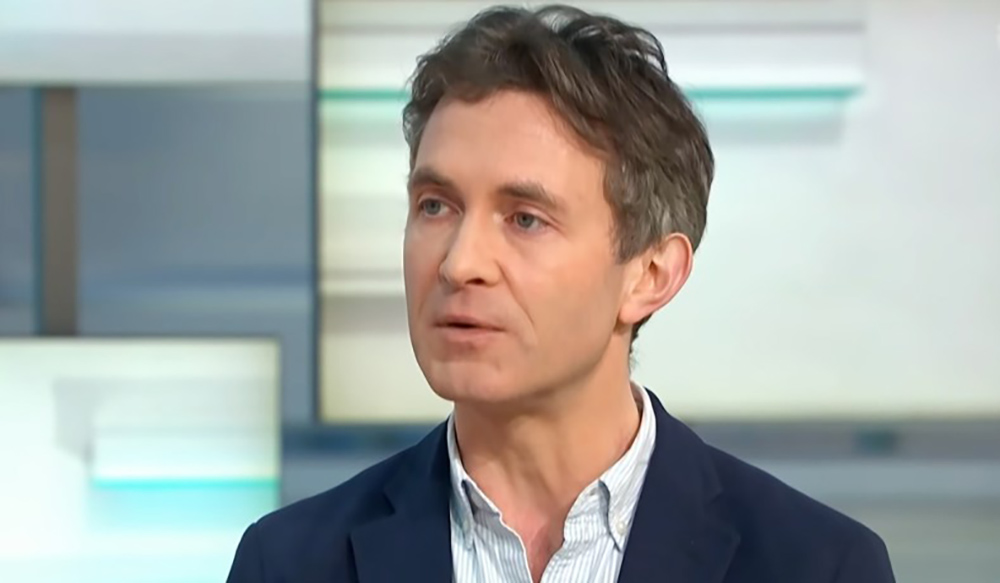
Douglas Murray Appointed as Yeshiva University’s Inaugural President’s Professor of Practice
By: Fern Sidman
In an era marked by ideological fragmentation, cultural amnesia, and an increasingly volatile global discourse, few public intellectuals have devoted themselves as relentlessly to the question of civilizational endurance as Douglas Murray. Now, as Yeshiva University News reported on January 16th, Murray is bringing that lifelong inquiry into one of the most symbolically resonant academic spaces in American higher education. This spring, the bestselling author, journalist, and cultural critic will assume his new role as Yeshiva University’s inaugural President’s Professor of Practice, an appointment that signals not merely an academic honor, but a deliberate philosophical statement about the kind of education the university seeks to cultivate in a fractured age.
According to Yeshiva University News, Murray’s appointment places him in sustained intellectual dialogue with undergraduate students, embedding a globally recognized public thinker within the daily rhythms of academic life. It is a model that resists the modern separation between scholarship and public discourse, restoring a classical conception of the intellectual as both thinker and participant in civic life. The role is designed to complement Yeshiva University’s distinguished faculty by introducing a voice shaped not only by academic study, but by years of engagement with the moral, political, and cultural crises of the contemporary world.
Murray’s career has been defined by his insistence that ideas matter—that civilizations rise and fall not merely through economic forces or military power, but through the stories they tell, the values they preserve, and the moral confidence they sustain. As Yeshiva University News noted, his recent book, “On Democracies and Death Cults: Israel and the Future of Civilization” stands as a culmination of that intellectual trajectory. In it, Murray interrogates the collision between democratic values and extremist ideologies, framing Israel not simply as a geopolitical entity, but as a symbolic battleground in a larger civilizational struggle between moral clarity and nihilistic absolutism.
The significance of Murray’s appointment, as framed by Yeshiva University News, lies not only in his public prominence, but in the pedagogical vision it reflects. A Professor of Practice appointment is not granted for scholarly specialization alone; it recognizes individuals who have shaped public discourse and invites them to transmit that lived intellectual experience into the university environment. In this capacity, Murray will deliver a series of lectures within The Values of Verse: Sacred and Secular Perspectives, a Yeshiva College Honors course that examines poetry not merely as literary artifact, but as a moral and civilizational instrument.
This choice of context is deeply symbolic. As Yeshiva University News emphasized, poetry in this course is not treated as aesthetic ornamentation, but as a vessel of memory, conscience, and continuity. It is within this framework that Murray’s intellectual voice finds a natural home. His work has long returned to the question of cultural memory: what societies choose to remember, what they allow themselves to forget, and what is lost when foundational texts, traditions, and narratives are dismissed as obsolete.
In his own words, quoted by Yeshiva University News, Murray articulates this philosophy with characteristic clarity: “Great poetry is not an ornament of civilization. It is one of the ways civilizations think, remember and endure.” This statement encapsulates not only his literary sensibility, but his broader worldview. For Murray, verse is not escapism from reality; it is a way of confronting it. In an age saturated with digital noise, ideological slogans, and moral relativism, poetry becomes a discipline of seriousness—a medium through which societies grapple with life, love, loss, faith, responsibility, and meaning.
At Yeshiva University, Murray will guide students through close readings of poets who have wrestled with these ultimate questions across centuries. As Yeshiva University News reported, his lectures will span voices such as John Donne, Andrew Marvell, William Blake, the Romantic tradition, and modern poets including W.H. Auden and Seamus Heaney. Yet this is not a purely literary exercise. Murray’s approach situates poetry within ethical and historical frameworks, exploring how verse responds to beauty and belief, but also to rupture, violence, and moral crisis.
This pedagogical vision reflects Yeshiva University’s distinctive educational philosophy. As Yeshiva University News documented, the institution has long insisted on the inseparability of sacred and secular knowledge, viewing intellectual formation as a holistic process that integrates faith, ethics, and scholarship. Murray’s appointment thus becomes more than an academic collaboration; it becomes an extension of Yeshiva University’s civilizational mission.
Dr. Rebecca Cypess, Dean of the Undergraduate Faculty of Arts and Sciences and Vice Provost for Undergraduate Education, articulated this vision in remarks reported by Yeshiva University News. She emphasized that Yeshiva University’s undergraduate programs are designed to immerse students in sustained conversations about great works from both the Jewish canon and the broader humanistic tradition. Murray, she noted, will join a “generations-long conversation” that is already alive and impassioned on campus, contributing insights shaped by his unique position at the intersection of literature, history, and contemporary civic debate.
For students, this represents a rare opportunity. As Yeshiva University News observed, modern universities increasingly compartmentalize knowledge, isolating disciplines from one another and divorcing academic study from public life. Murray’s presence disrupts that pattern. He moves fluently between literary analysis and political commentary, between moral philosophy and real-world events. His lectures promise not only intellectual enrichment, but a model of integrated thinking—where ideas are not abstract exercises, but tools for understanding and navigating the world.
The broader cultural context of Murray’s appointment further amplifies its significance. Western societies are experiencing a profound crisis of confidence, marked by ideological polarization, the erosion of shared narratives, and the weakening of moral consensus. Murray has written extensively about this phenomenon, arguing that civilizations falter not when they lose power, but when they lose belief in themselves. His work, as Yeshiva University News frequently noted, insists that democratic societies must recover the moral courage to defend their values, traditions, and institutions.
At Yeshiva University, this intellectual posture finds a receptive environment. The university’s educational model is rooted in the conviction that truth, tradition, and ethical responsibility are not relics of the past, but foundations for the future. Murray’s engagement with students, therefore, is not merely academic; it is formative. It seeks to cultivate graduates who are not only informed, but grounded—capable of critical thought without cynicism, and moral conviction without fanaticism.
The symbolism of Murray’s presence within The Values of Verse course is particularly striking. Poetry, in this context, becomes a bridge between civilizations and centuries, linking ancient questions to modern dilemmas. Through verse, students encounter the enduring human struggle to articulate meaning in the face of suffering, to affirm beauty in the presence of despair, and to defend dignity against dehumanization. As Yeshiva University News framed it, this is education not as credentialing, but as moral formation.
Murray’s broader body of work reinforces this vision. His essays and books, published in outlets such as The Wall Street Journal, The Times, The Sunday Times, The Spectator, and UnHerd, consistently return to the themes of memory, identity, and responsibility. He has written with particular urgency about Israel, free societies, and the ethical imperatives that accompany freedom. These concerns align closely with Yeshiva University’s commitment to educating students who understand both the privileges and obligations of liberty.
In bringing Murray into its academic life, Yeshiva University makes a statement about the kind of intellectual community it seeks to be. As Yeshiva University News underscores, this is a university that refuses to separate scholarship from conscience, or knowledge from responsibility. It is an institution that understands education as a civilizational task: the formation of individuals capable of sustaining culture, defending values, and transmitting meaning to future generations.
Douglas Murray’s appointment as the inaugural President’s Professor of Practice thus becomes more than a prestigious title. It becomes a symbol of renewal—a declaration that universities can still be places where ideas matter, where texts shape character, and where education serves not only careers, but civilization itself.
In a time when public discourse is increasingly dominated by outrage, spectacle, and superficiality, the image of students gathered around poetry, guided by a thinker devoted to moral seriousness, carries a quiet but profound power. As Yeshiva University News makes clear, this is not nostalgia for a vanished past, but an investment in a possible future—one in which education reclaims its deepest purpose: to form human beings capable of thought, courage, and conscience.
In that sense, Douglas Murray’s arrival at Yeshiva University is not simply an academic appointment. It is a cultural event—a convergence of ideas, traditions, and commitments that speaks to the enduring role of universities as guardians of civilization itself